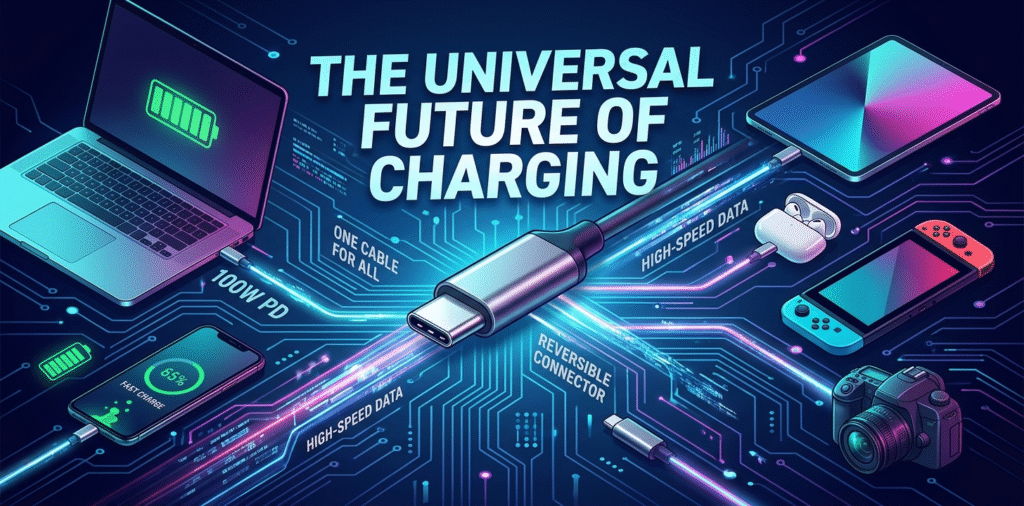
USB-C[^1] is the future because it combines higher power delivery[^2], faster data[^3], a universal reversible plug[^4], and broad industry adoption[^5] into one standard.
If you want a quick reason, USB-C[^1] unifies charging and data in one robust, reversible connector that scales from phones to laptops.
Stop here for a quick summary. Read on to see why it matters for you and the industry.
Why is USB-C[^1] the future?
I grew tired of carrying multiple chargers and saw USB-C[^1] simplify my bag.
USB-C[^1] supports higher wattage, faster data[^3] rates, and smarter power negotiation, making it suitable for all device classes and reducing cable clutter.
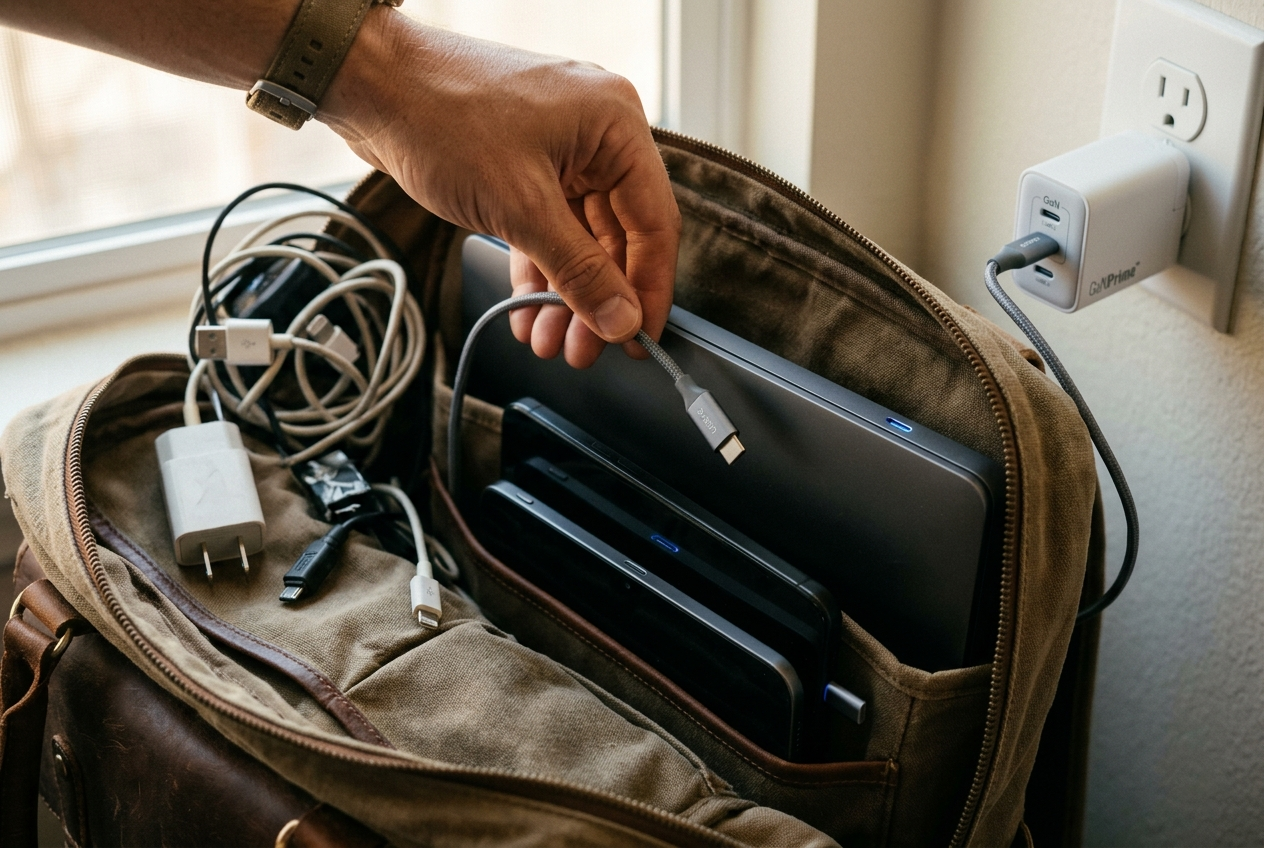
I now carry one USB-C[^1] cable to charge my phone, tablet, and laptop.
USB-C[^1] can deliver much more power than older USB standards. With USB Power Delivery (PD)[^6], USB-C[^1] can negotiate tens to hundreds of watts. That means the same port can charge small earbuds or a 100W laptop. The connector is reversible. I no longer flip the plug three times to insert it. USB-C[^1] also supports higher data bandwidth. USB 3.2 and USB4 over Type-C allow fast file transfers and video output. This reduces the need for separate cables for video, storage, and charging. The power negotiation is smart. Devices and chargers talk and decide the safest and fastest voltage and current. That prevents overcurrent and speeds up charging when possible. Manufacturers and regulators favor USB-C[^1]. Many laptop makers, phone makers, and accessory brands adopt it. Regulators in some regions push a common charging port to reduce e-waste. That momentum drives the ecosystem. Finally, USB-C[^1] supports alternate modes[^7]. I can use a single cable for DisplayPort or Thunderbolt video, Ethernet adapters, and fast storage. That flexibility supports evolving device needs without new connector types.
Why are chargers changing to USB-C[^1]?
I saw retailers phase out older wall adapters and new models all used USB-C[^1].
Chargers change to USB-C[^1] because it reduces SKUs, meets higher power needs, and aligns with consumer demand and regulatory push for a common standard[^8].
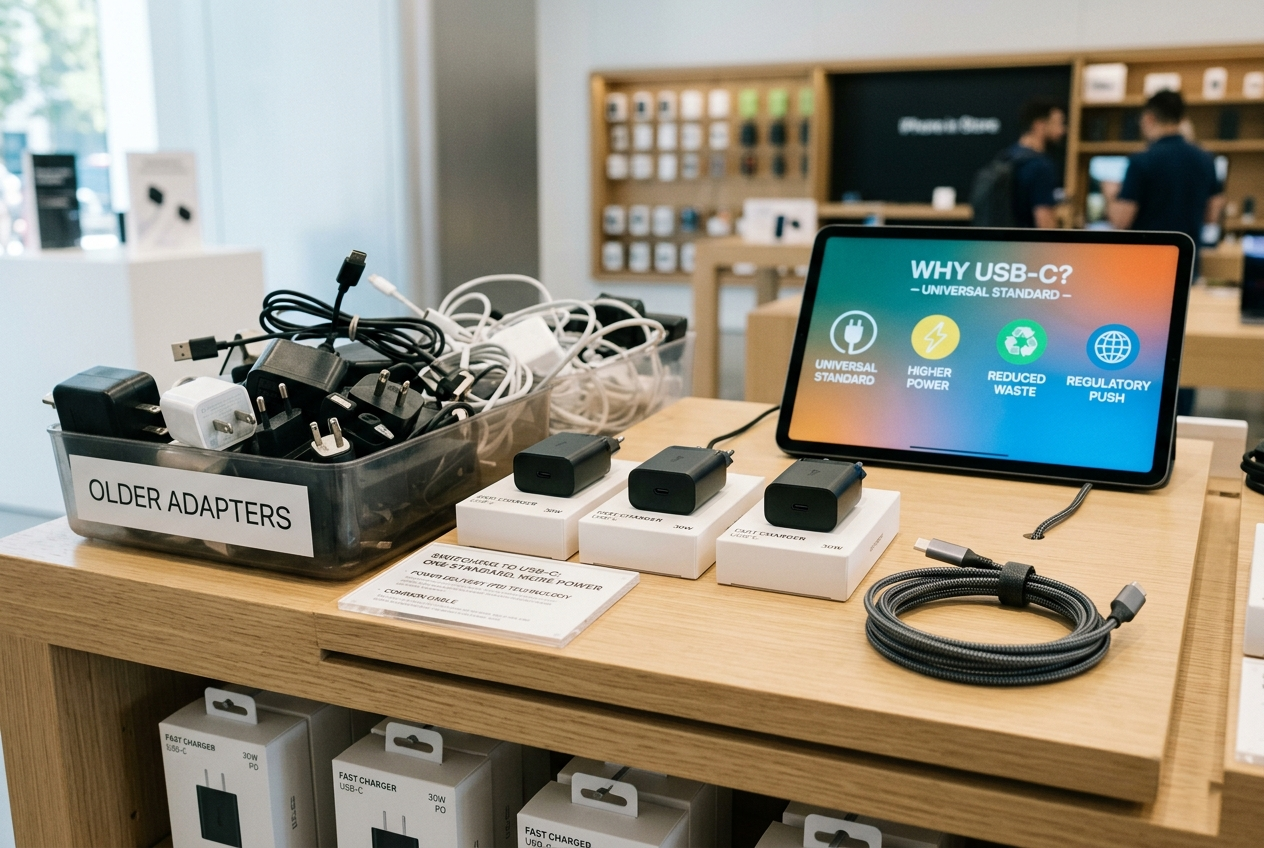
I stopped buying brand-specific adapters and now pick USB-C[^1] chargers for flexibility.
Manufacturers can sell one charger that works with many devices. That cuts costs and simplifies logistics. For example, a 65W USB-C[^1] GaN charger can power phones, tablets, and many laptops. Retailers need fewer models on shelves. Consumers like convenience. One charger can be shared across family devices. Regulators also influence change. Some governments require a common charging standard to cut electronic waste. That forces device makers to support USB-C[^1]. Technical limits of older ports also matter. Micro-USB and older USB-A ports cannot safely or reliably deliver higher power or fast data needed by modern devices. USB-C[^1] fills that gap. Finally, the accessory market adapted. Cable makers, charger makers, and device makers built an ecosystem around USB-C[^1]. That broad support made the switch practical and fast.
Is USB-C[^1] futureproof[^9]?
I wondered if a new connector would replace USB-C[^1] soon, but details eased my worry.
USB-C[^1] is highly futureproof[^9] because its design supports increasing power, faster data[^3], and protocol upgrades like USB4 and Thunderbolt over the same connector.
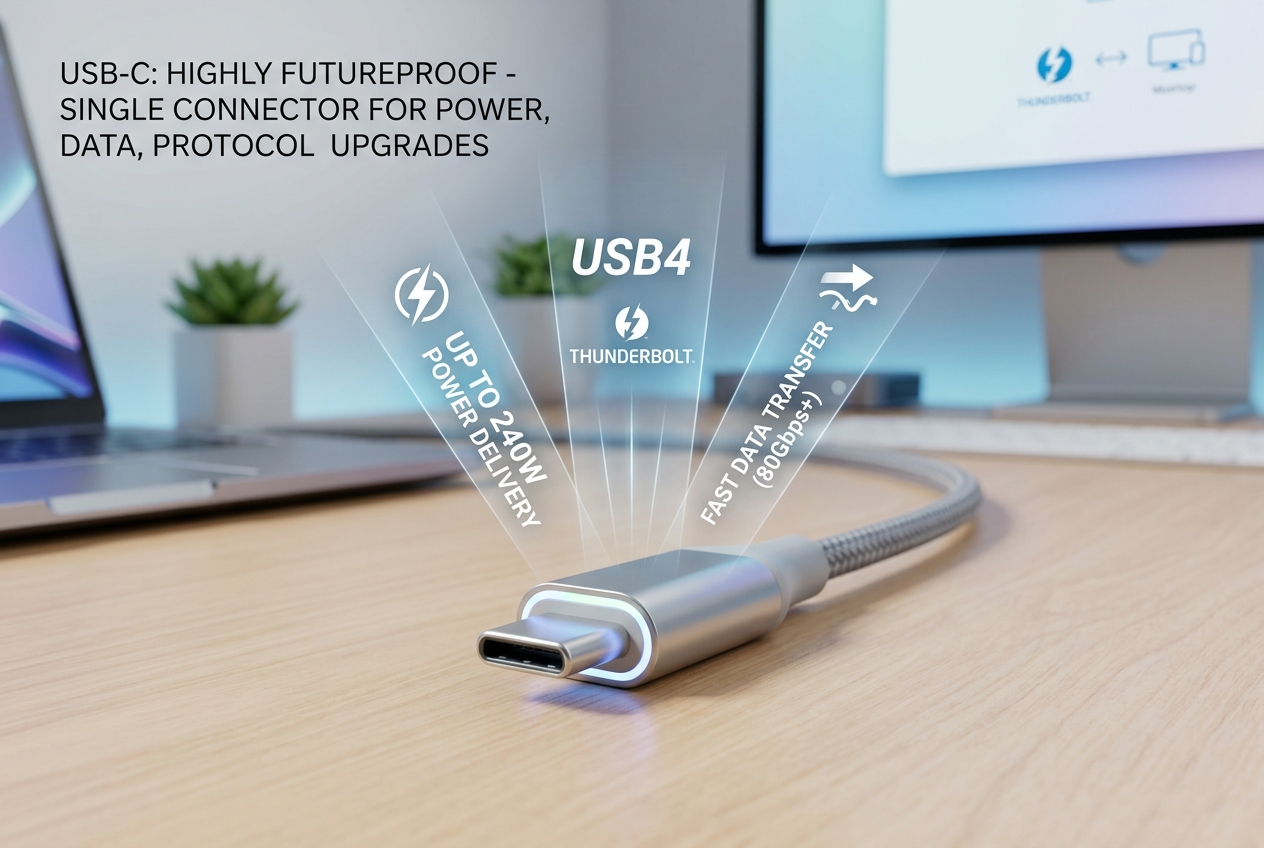
I feel confident using USB-C[^1] for new devices because it can scale with new standards.
USB-C[^1] is a physical connector standard with room to grow. The underlying protocols can improve while keeping the same plug. USB Power Delivery profiles can increase voltage and current within safe limits. That means future chargers can safely supply more watts without new connectors. Data rates also scale. USB4 and Thunderbolt 3/4 can run over USB-C[^1], offering multi-gigabit speeds and video support. That backward and forward compatibility helps longevity. However, not every USB-C[^1] cable or port supports every feature. Some cables only support USB 2.0 speed or limited current. That means futureproof[^9]ing requires choosing the right certified cable and charger. Overall, the connector’s versatility and wide adoption make it a safe long-term choice.
Is USB being phased out for USB-C[^1]?
I kept older USB-A hubs for legacy gear but slowly replaced them with USB-C[^1] hubs.
USB-A and other older USB plugs remain for legacy use[^10], but USB-C[^1] is overtaking them as the primary standard for new devices and chargers.
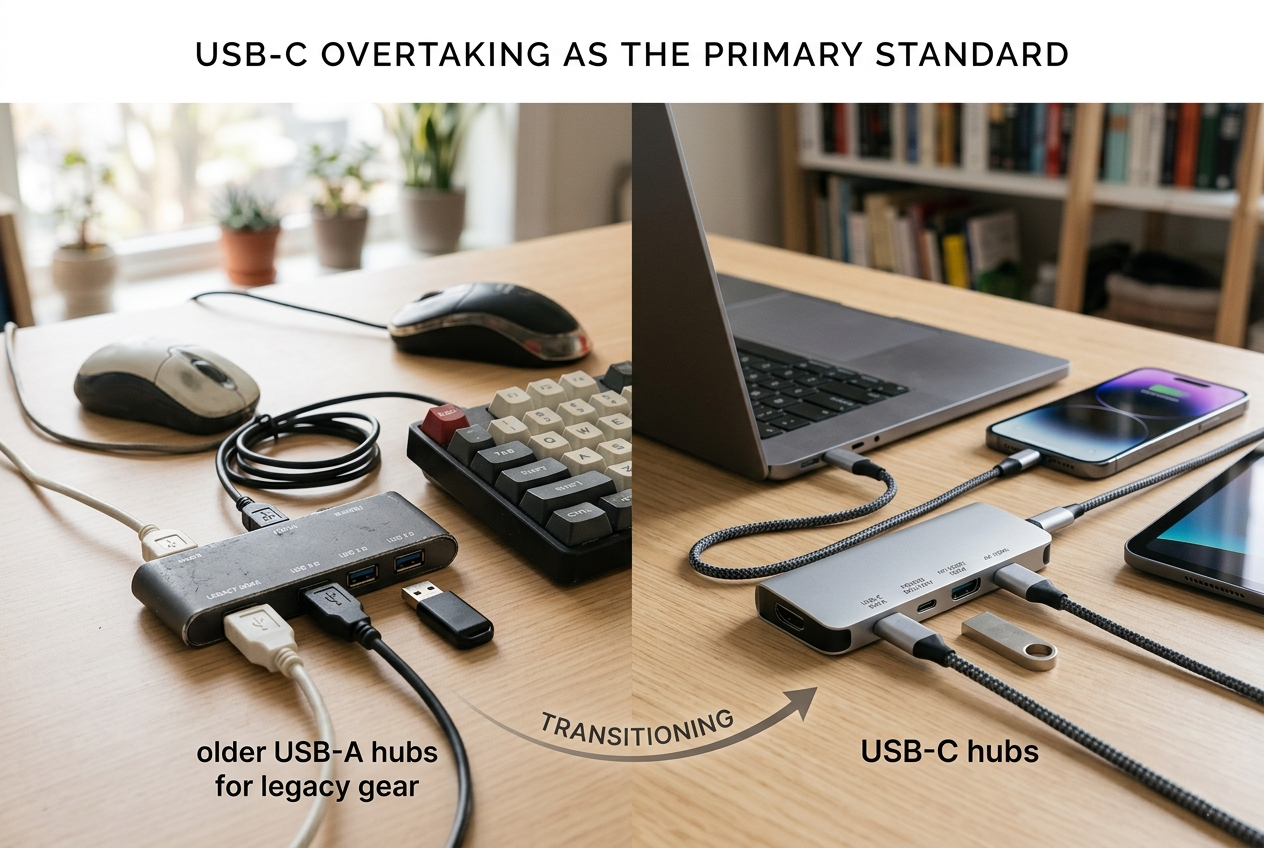
I use adapters for old accessories, then replace them when possible.
The USB ecosystem includes many connector types. USB-A and Micro-USB continue to exist on older devices. Many peripherals still use USB-A for power or data. But new phones, laptops, and chargers mostly adopt USB-C[^1]. Over time, manufacturers phase out older ports. That does not mean immediate disappearance. I still need adapters and hubs for cameras, older drives, or accessories. Many new hubs include both USB-A and USB-C[^1] ports to bridge the transition. The market is shifting, not flipping a switch. Expect a long overlap period where both ports are common. For new purchases, choosing USB-C[^1] ensures better compatibility with future devices[^11]. Keep a couple of adapters if you rely on legacy peripherals.
Conclusion
USB-C[^1] looks set to be the universal charging and data standard because it scales power and speed, simplifies cables, and enjoys broad industry and regulatory support.
[^1]: Explore the advantages of USB-C technology, including its versatility and efficiency in modern devices. [^2]: Learn how higher power delivery in USB-C enhances charging capabilities for various devices. [^3]: Discover the impressive data transfer speeds that USB-C offers for seamless file sharing. [^4]: Understand the convenience of a universal reversible plug and how it simplifies connections. [^5]: Find out why major tech companies are embracing USB-C as the standard for devices. [^6]: Get insights into USB Power Delivery and its role in efficient charging across devices. [^7]: Explore the various alternate modes supported by USB-C for enhanced functionality. [^8]: Understand the regulatory efforts driving the adoption of USB-C to reduce e-waste. [^9]: Discover why USB-C is considered futureproof and how it adapts to new tech advancements. [^10]: Learn about the ongoing relevance of USB-A in the context of transitioning to USB-C. [^11]: Find out how USB-C maintains compatibility with future devices and accessories.