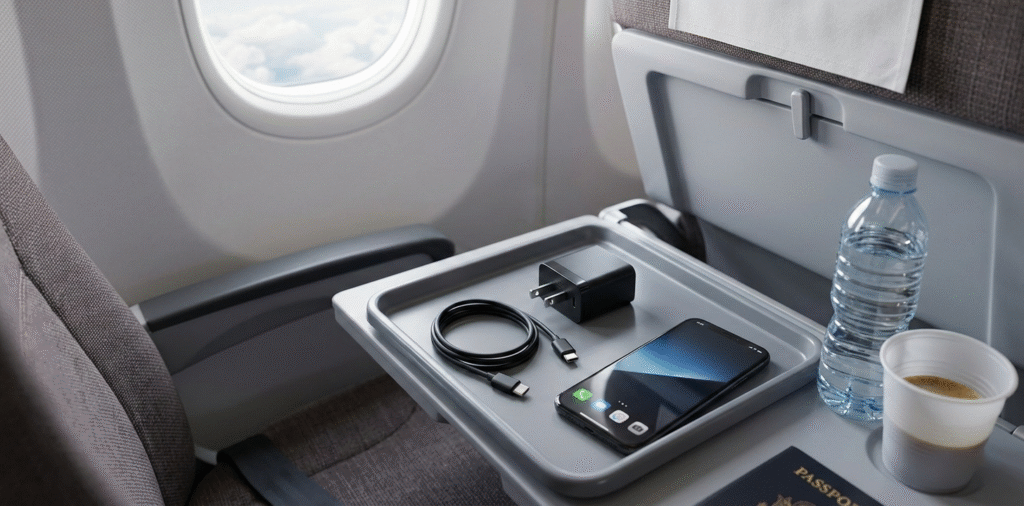
When preparing for air travel, one of the most common questions for travelers is: Can I bring my phone charger[^1] on the plane? The good news is that, in most cases, yes, you can bring your phone charger[^1] on the plane. However, there are certain rules and regulations you should be aware of, especially regarding power banks[^2], external batteries[^3], and other charging accessories[^4].
Yes. You can bring your phone charger[^1] on the plane. Carry chargers and cables in carry-on baggage[^5] for safety and convenience. Follow airline and TSA rules[^6] for batteries and power banks[^2].
In this article, we’ll answer common questions about bringing chargers and batteries on flights, including guidelines for carry-on and checked baggage[^7], specific rules for international flights[^8], and tips for safe packing.
Are there rules for chargers and cables in carry-on and checked baggage[^7]?
I wondered if cables must go in carry-on or checked bags.
Chargers and cables are allowed in both carry-on and checked bags. I recommend keeping them in carry-on for easy access and to avoid loss or damage.
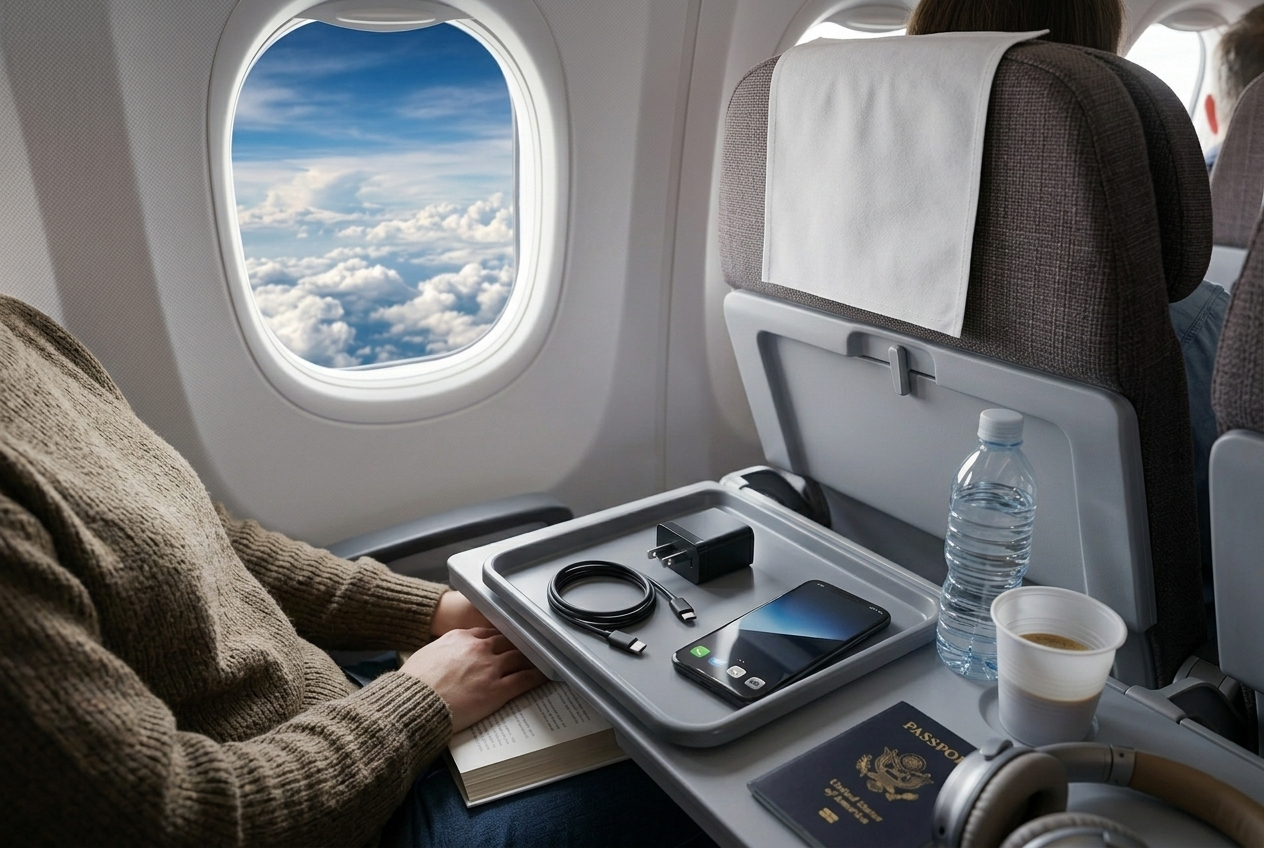
I once had a checked bag go missing. My carry-on charger saved me from a dead phone on arrival. Security may ask you to remove electronic devices from bags for screening. Keep cables tidy in a pouch for faster checks.
practical packing tips and security screening[^9] Carry chargers and cables in your carry-on to keep them safe and usable during travel. Airport security allows them, but loose cords can slow TSA screening. Use a small electronics pouch or zip bag to hold cables, wall chargers, and car adapters. Label the pouch if you have many items. If security asks, remove larger electronics from your bag for X-ray screening. Keep wall plugs and small chargers accessible so you can place them in the bin quickly. For international flights[^8], remember to pack the correct plug adapters separately; some adapters can look like spare batteries, so keep them visible. If you pack chargers in checked luggage, wrap them to prevent damage and keep receipts or original packaging if you have high-value units. This helps with claims if luggage is lost. Finally, consider the airline cabin rules: neat organization makes security faster and reduces the chance of items being confiscated for blocking X-ray images.
What about power banks[^2] and external batteries[^3]?
I was unsure if my 20,000 mAh power bank was allowed.
Power banks are allowed only in carry-on baggage[^5]. Airlines and regulators often limit capacity (Wh) and may require approval for very large units. Do not put power banks[^2] in checked baggage[^7].
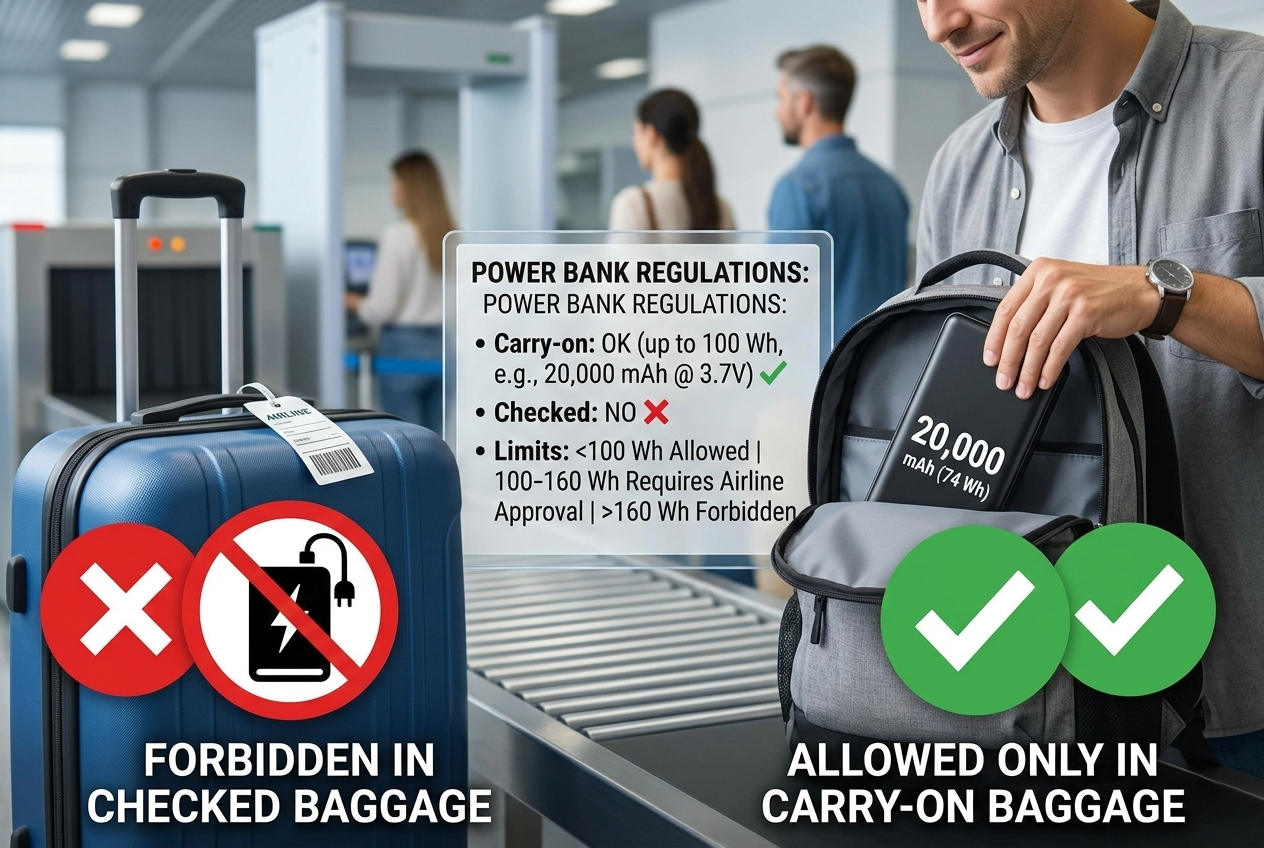
I always check the power bank label for Wh or mAh. My 20,000 mAh bank is usually fine, but I confirm airline rules for high-capacity units before flying.
watt-hour limits, labeling, airline policies[^10], and how to calculate Power banks contain lithium batteries[^11] and pose a fire risk, so regulators restrict them. Most airlines follow IATA rules. Common limits: power banks[^2] up to 100 Wh (roughly 27,000 mAh at 3.7V) are generally allowed in carry-on without airline approval. Power banks between 100 Wh and 160 Wh may be allowed with airline approval and often limited to two units per passenger. Power banks over 160 Wh are usually banned from passenger aircraft. To check your power bank, look for a Wh rating[^12] on the label. If the label shows only mAh, convert using Wh = (mAh × V) / 1000. Use 3.7V for most lithium-ion cells. For example, a 20,000 mAh bank at 3.7V equals 74 Wh (20,000 × 3.7 / 1000 = 74 Wh). Keep power banks[^2] in carry-on, protect the terminals from short-circuit (use original packaging or tape over terminals), and declare large units at check-in if asked. Always check your airline’s specific rules before travel.
Can I use a charger or power bank on the plane?
I wanted to charge my phone mid-flight.
You can use chargers and cables on the plane where power outlets or USB ports are available. Airlines may restrict power usage during takeoff and landing. Follow crew instructions.
I charged on a long flight using an in-seat USB port. The port was slower than a wall charger. Some airlines have AC outlets or dedicated high-power USB-C ports in premium seats.
outlet types, charging speed[^13], safety tips, and etiquette Aircraft offer various power options. Many planes have USB-A ports, low-power USB outlets, or 110V AC sockets. USB ports on planes often supply low current (around 0.5A to 1A), so charging is slow. Newer aircraft may have USB-C PD ports with higher power. If you rely on fast charging, bring a power bank or a multi-port charger for airport use. When using an AC outlet on board, ensure your charger is rated for the airline’s voltage (most US airlines supply 110V). Secure cables so they do not become trip hazards in the aisle. During turbulence, crew may ask passengers to stow devices. Do not attempt to change batteries mid-flight. Avoid plugging high-draw devices into in-seat outlets simultaneously with others in shared power modules. Always respect crew instructions about powering devices during specific phases of flight. If you need guaranteed charging, bring a fully charged power bank that meets airline rules.
Are there special rules for international flights[^8] or specific countries?
I worried different countries might have stricter rules.
Regulations vary by country and airline. Most follow IATA guidance for batteries. Check your airline and departure/arrival country rules before travel.
I once flew a carrier that limited spare batteries. I checked their website and packed accordingly. Airlines may also have limits on USB chargers that look like power banks[^2].
checking airline and country policies, customs, and adapters Before international travel, review the airline’s baggage policy and hazardous materials guidance. Airlines often publish rules about lithium batteries[^11] and power banks[^2]. Some countries restrict the import of high-capacity batteries or require special labeling. If flying to or from regions with strict enforcement, carry original product labels and receipts to prove capacity. Customs may inspect electronics; honest documentation helps. Also check electrical plug types and voltage at your destination. Bring a travel adapter[^14] rather than buying cheap local adapters that might be unsafe. If you plan to ship chargers or batteries, note that postal and cargo rules differ. Many carriers prohibit shipping loose lithium batteries[^11] by air or require special packaging and declarations. When in doubt, contact the airline support or check IATA Dangerous Goods regulations for the latest guidance.
How to pack chargers and batteries safely?
I wanted to avoid damage and prevent accidental activation.
Pack chargers and spare batteries in carry-on. Protect terminals, organize cables, and keep chargers accessible. Use original packaging or plastic bags for spare batteries.
I tape my power bank terminals and put it in a pouch. That prevents short circuits and keeps things tidy at security.
checklist for safe packing and travel-friendly accessories Follow this checklist for safe packing. 1) Put chargers, cables, and power banks[^2] in carry-on. 2) Check power bank Wh rating[^12] and airline limits. 3) Tape over spare battery terminals or store each battery in its original case. 4) Use zip pouches or organizers to prevent cables from tangling. 5) Keep chargers accessible for security screening[^9]. 6) Use certified chargers and avoid damaged cables or frayed insulation. 7) If carrying spare batteries, limit them to the airline’s allowed number and capacity. 8) Avoid placing power banks[^2] in checked luggage. 9) Carry receipts or labels for high-capacity units if asked. 10) For longer trips, bring a small travel surge protector[^15] for hotel rooms, but do not use unapproved high-draw devices on planes. These steps reduce fire risk, prevent confiscation, and help you stay powered during travel.
Conclusion
Yes, you can bring your phone charger[^1] and charging cables on the plane, both in carry-on and checked baggage[^7], with no special restrictions.
Power banks are allowed in carry-on baggage[^5], but must meet capacity limits (usually up to 100Wh without restrictions).
Power banks are generally not allowed in checked luggage due to fire hazards.
International flights may have slightly different regulations, so it’s important to check with your airline.
Pack your chargers and power banks[^2] safely by keeping them in your carry-on, protecting cables, and following airline guidelines to ensure a smooth journey.
By following these simple guidelines, you can keep your devices charged and your journey hassle-free. Safe travels!
[^1]: Explore this link to understand the regulations and guidelines for bringing phone chargers on flights. [^2]: Learn about the specific rules and limitations for carrying power banks on flights to ensure compliance. [^3]: Find out the regulations regarding external batteries to avoid any travel issues. [^4]: Discover which charging accessories are permitted on flights to avoid confiscation. [^5]: This resource provides comprehensive guidelines on what items are allowed in carry-on baggage. [^6]: Explore TSA rules to ensure you comply with security regulations when traveling. [^7]: Understand the rules for checked baggage to ensure a smooth travel experience. [^8]: Learn about the specific regulations for chargers on international flights to stay informed. [^9]: Learn about the security screening process for electronics to prepare for your trip. [^10]: This link will help you understand how different airlines handle chargers and batteries. [^11]: Find out the safety regulations regarding lithium batteries to ensure safe travel. [^12]: Explore this resource to understand how to calculate the Wh rating for your power bank. [^13]: Learn about the charging speed on planes to manage your device's battery effectively. [^14]: This resource will guide you in choosing the right travel adapter for your destination. [^15]: Discover the benefits of using a surge protector during your travels for device safety.