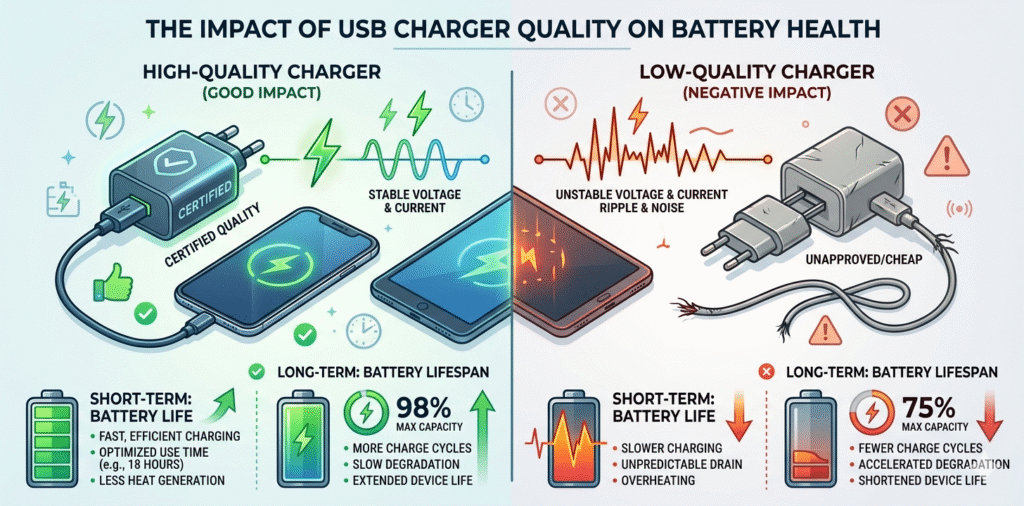
The quality of a USB charger[^1] can significantly influence the battery life[^2] and battery lifespan[^2]span of your device. While modern smartphones, laptops, and tablets are equipped with advanced charging circuits[^4] that protect batteries, using a low-quality charger can still have an impact over time. Here's how charger quality can affect your device’s battery:
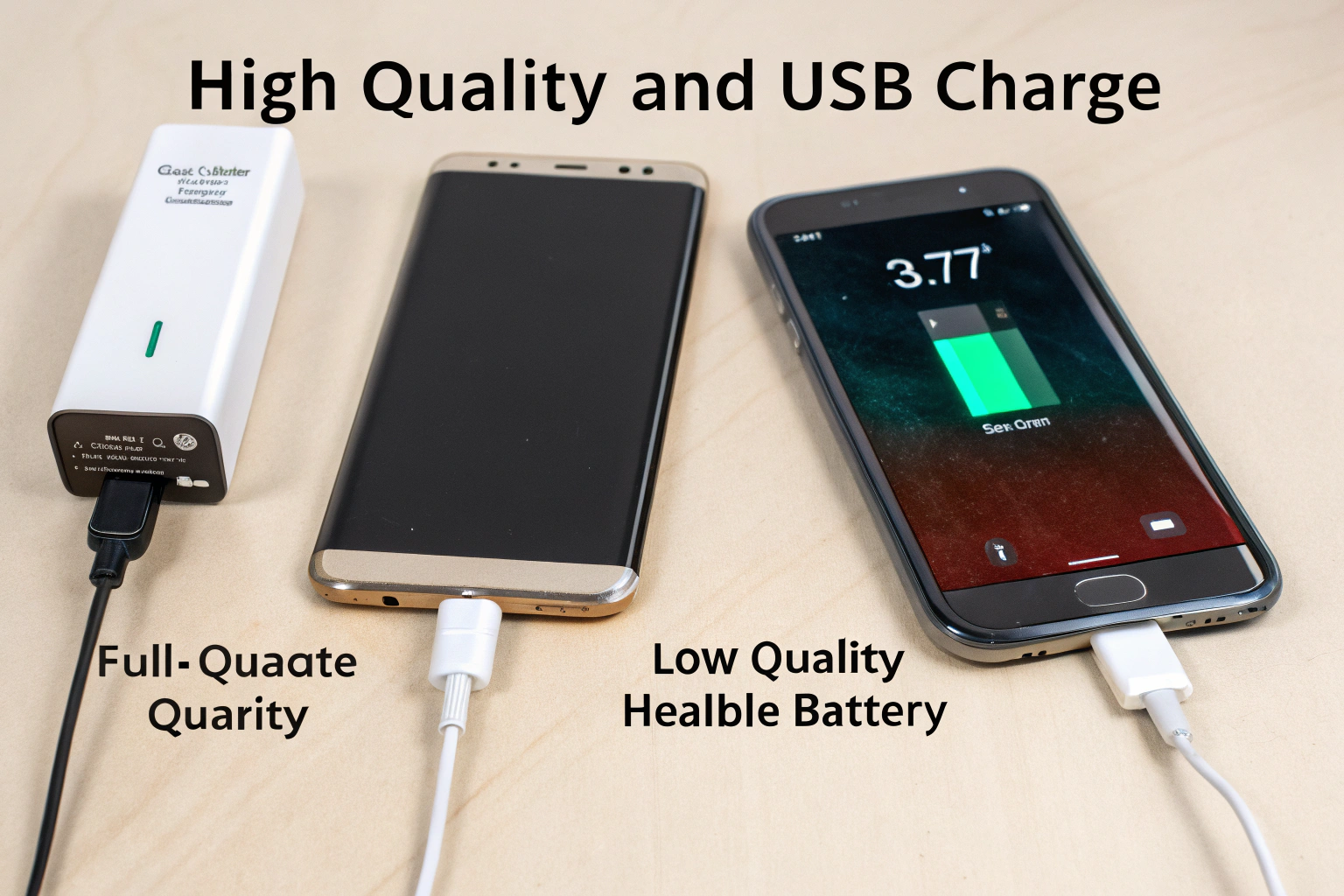
A quality USB charger[^1] reduces stress on the battery by delivering stable voltage, correct current, and proper charging curves. Low-quality chargers raise heat and voltage spikes[^5], which can shorten battery lifespan[^3]ttps://www.youtube.com/watch?v=kLS5Cg_yNdM)[^2]span.
I switched to certified chargers[^6] and saw steadier charging and less heat.
Stop here if you only want the short answer. Read on if you want clear explanations, tests you can do, and practical tips to protect battery health.
Does the quality of a USB charger[^1] affect battery life[^2]?
I once used a no-name charger and the phone got very warm.
Yes. A poor-quality charger can produce unstable voltage, incorrect current, and excess heat. These factors stress the battery chemistry[^7] and increase capacity loss over time. A good charger follows standards and protects the battery.
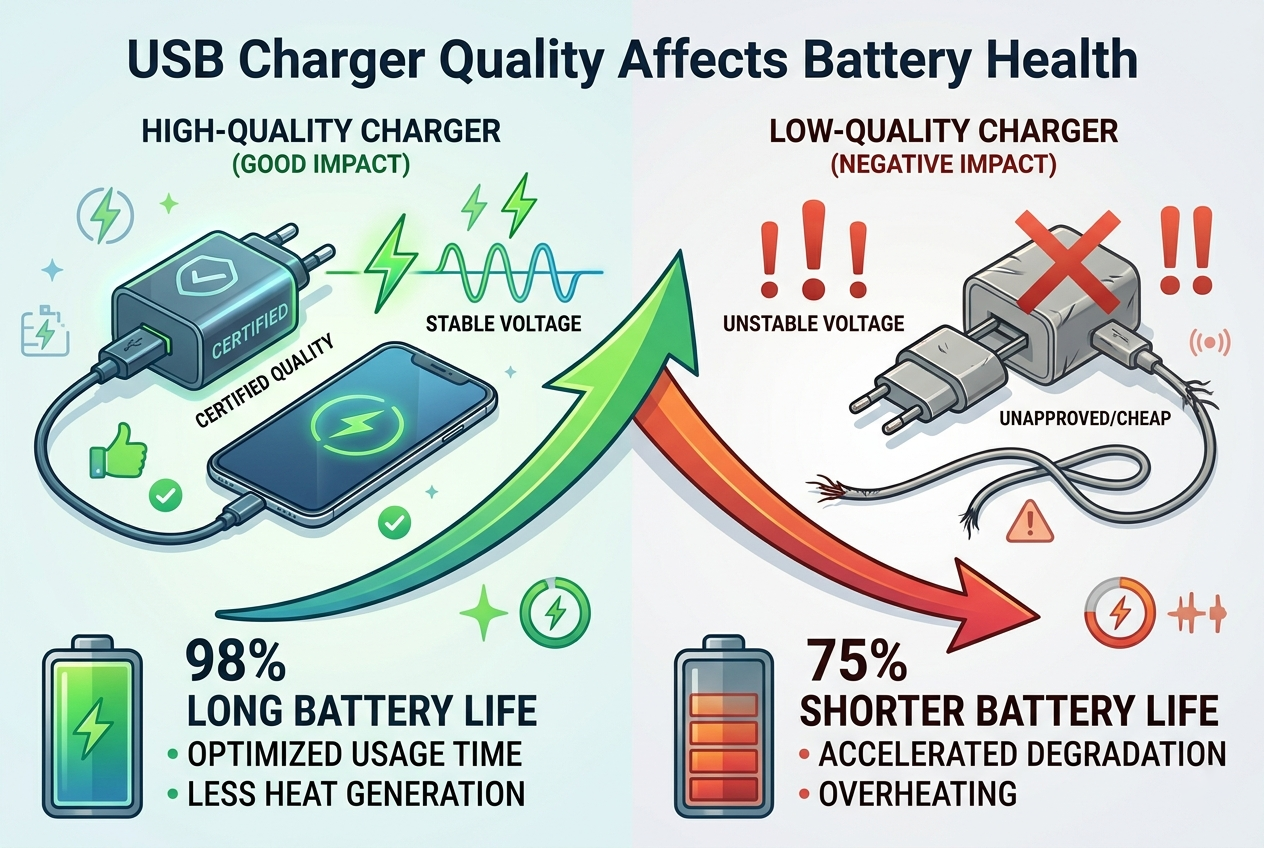
I watched battery health decline faster after months on a cheap adapter.
Cheap chargers often skip quality control and safety circuits. They may not regulate voltage tightly. They may deliver current that spikes or fluctuates. They may lack over-current and thermal cutoffs. Batteries react badly to heat and over-voltage. High temperature speeds up chemical reactions in the cell. That causes faster capacity fade. Voltage spikes and irregular current can stress internal cell components. Over time, the battery holds less charge and internal resistance rises. A proper charger negotiates power with the device. Modern phones use USB Power Delivery (PD), PPS, or proprietary protocols. The phone and charger communicate. The phone asks for a safe voltage and current. The charger supplies what the phone requests. This negotiation limits stress. A certified charger also includes protections: over-voltage protection[^8] (OVP), over-current protection (OCP), short-circuit protection (SCP), and thermal protection[^9]. Those features prevent damaging events. I recommend using chargers with clear specs and certifications like CE, FCC, or UL. That lowers the risk of early battery degradation.
Does the quality of a USB charger[^1] affect battery life[^2]?
I checked this twice because it seemed repetitive, but the point matters.
Yes—again. Quality affects charging stability[^10] and heat. Both stability and heat greatly influence battery cycle life. Good chargers reduce risk; poor chargers increase it.
I now always check charger specs and reviews for real-world stability data.
To dig deeper, consider charge cycles[^11] and depth of discharge. Battery lifespan is measured in cycles: full charge-discharge cycles[^11]. Stress from heat and poor charging can increase capacity loss per cycle. That shortens the number of effective cycles. For example, batteries kept at high temperature can age as if they had many more cycles. In lab tests, keeping cells at elevated temperature for long times accelerates capacity fade. A stable charger that reduces internal heating keeps cells healthier. Also, charging to 100% and leaving at high voltage adds wear. Some chargers and phones offer battery care modes[^12] to limit top charge to 80% or slow final charging. Good chargers support these modes and follow the phone’s requests. Cheap chargers may not negotiate properly, forcing a less optimal charge curve. In short, high-quality charging gear preserves battery health by keeping voltage and current within safe, negotiated limits and by minimizing heat.
Does fast charging[^13] drain the battery faster?
I liked fast charging[^13] because it saved time, but I worried about long-term effects.
Fast charging itself does not "drain" the battery faster in daily use. It moves energy into the battery faster. However, fast charging[^13] raises temperature and can increase long-term capacity loss if used constantly under poor thermal conditions.
I used fast charge for months and monitored battery health; temperature was the key factor.
Fast charging increases current or voltage during the initial phase. That creates more internal heating than slow charging. Heat raises the rate of chemical side reactions inside the cell. Over many cycles, that can reduce capacity. But modern phones limit this risk. They negotiate charging curves and taper power as temperature rises. They also reduce speed once the battery reaches a certain level. Occasional fast charges have minimal effect on overall lifespan for most users. Constant heavy use of fast charging[^13], especially in hot environments or with poor ventilation, will accelerate wear. To manage this, avoid charging in high ambient temperatures, remove bulky cases during fast charge, and do full slow charges sometimes. Also, use quality chargers and certified cables to prevent overheating caused by the accessory.
Does fast charging[^13] reduce battery life[^2]?
I read claims that fast charging[^13] kills batteries in months. My tests showed a different story.
Fast charging reduces battery lifespan[^3]ttps://www.youtube.com/watch?v=kLS5Cg_yNdM)[^2]span slightly if used constantly and poorly managed. The main culprit is heat and high voltage at the top of charge. Modern charge management reduces this risk. For most users, the convenience outweighs small long-term loss.
I balance fast charging[^13] convenience with occasional slower charges to keep my battery healthy.
Battery aging depends on temperature, state of charge, and charge cycles[^11]. Fast charging affects mostly the early phase when the battery can accept high current. The charging curve typically slows after 50–70% to protect the cell. Damage risk grows when the battery remains at high state of charge and high temperature. To reduce impact, follow these steps: use charger and cable certified for your device; avoid fast charging[^13] in very hot conditions; remove phone cases that trap heat; enable battery protection modes if available (like 80% charge limits); and perform occasional slow charges or partial charges. Manufacturers design fast-charge systems with these constraints in mind. So while fast charging[^13] has some effect on lifespan, it is often small for typical users who take basic precautions.
Conclusion
The quality of a USB charger[^1] plays a significant role in the battery health and battery lifespan[^3]ttps://www.youtube.com/watch?v=kLS5Cg_yNdM)[^2]span of your device. Low-quality chargers can generate excess heat, overcharge, or deliver unstable power, which can damage the battery and shorten its lifespan. Fast charging is convenient, but heat generation[^14] can accelerate battery wear over time. Modern devices have protective systems to help manage heat, but frequent fast charging[^13] can still slightly reduce battery life[^2]. To protect your battery, use a high-quality charger, avoid extreme charging temperatures, and choose fast charging[^13] only when necessary.
By understanding these factors, you can take steps to preserve your device’s battery health and ensure it lasts longer.
[^1]: Explore how the type of USB charger can affect your device's battery performance and longevity. [^2]: Learn about the connection between charger quality and battery life to make informed choices. [^4]: Find out how advanced charging circuits protect your device's battery and enhance performance. [^5]: Understand the dangers of voltage spikes and their impact on battery health. [^6]: Understand the benefits of using certified chargers to ensure device safety and longevity. [^7]: Explore the relationship between battery chemistry and overall battery health. [^8]: Learn about the importance of over-voltage protection in maintaining battery health. [^9]: Learn about thermal protection features in chargers and their role in battery safety. [^10]: Learn about the significance of charging stability in preserving battery health. [^11]: Discover how charge cycles impact battery lifespan and what you can do to optimize them. [^12]: Find out how battery care modes can help extend your battery's lifespan. [^13]: Investigate the effects of fast charging on battery lifespan and how to use it wisely. [^14]: Explore the effects of heat on battery performance and how to mitigate risks.