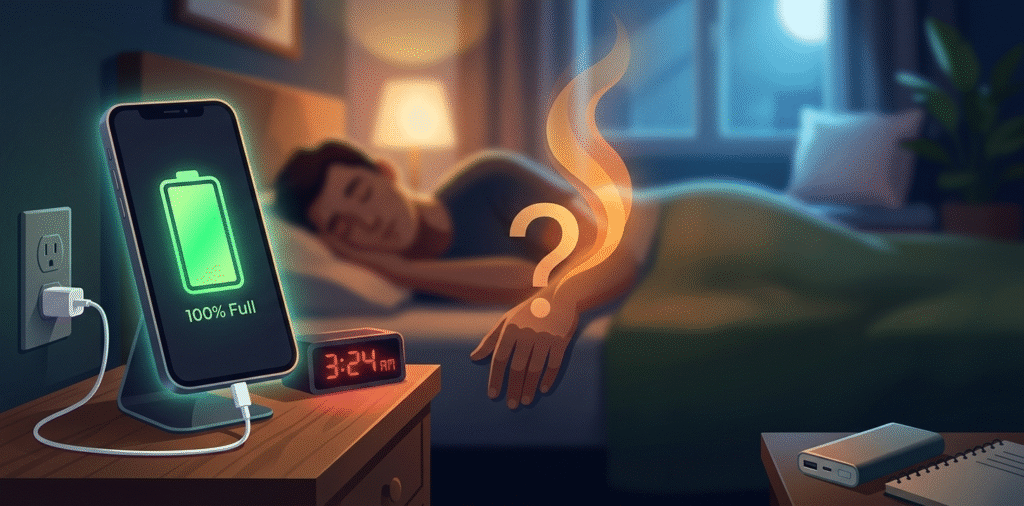
Many people charge their phones overnight as part of their daily routine. But some worry about overcharging, battery damage, or even fire risks. So is it really safe to leave your phone plugged in overnight?
Overnight charging[^1] is generally safe with modern phones and certified chargers[^2], but it can slightly speed battery aging. Use quality chargers, avoid heat, and follow manufacturer tips to reduce wear.
In this article, we’ll answer the most common questions: do modern phones prevent overcharging, does overnight charging shorten battery life, are there safety risks, and how to charge overnight safely.
Do modern phones prevent overcharging?
I worried the battery would keep filling past 100%.
Yes. Modern phones use smart charging circuits[^3] that stop active charging at 100% and switch to trickle or cut power. This prevents continuous overcharge that once harmed batteries.
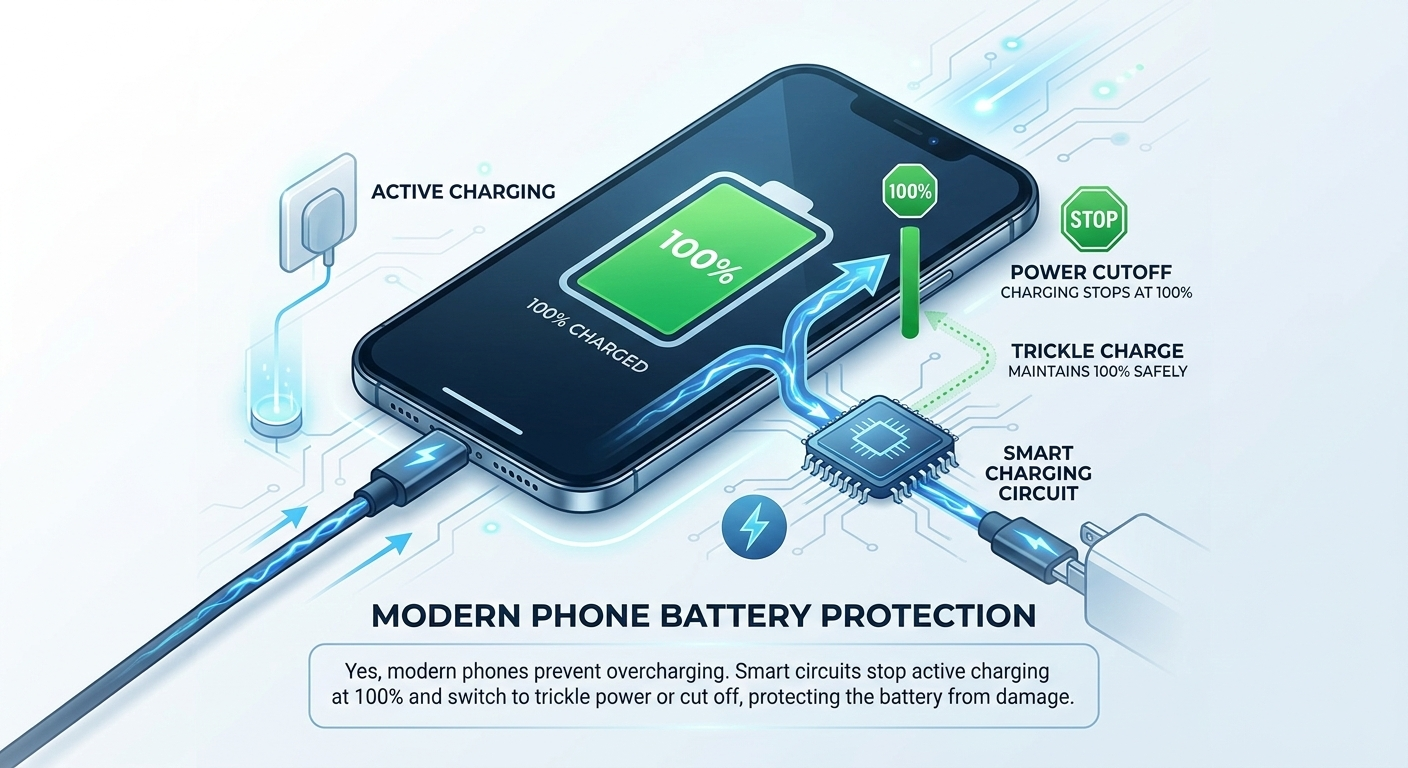
I tested this by watching battery behavior overnight. The percent stayed at 100% and heat stayed low with a good charger.
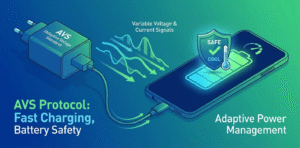
how phone charging circuits[^3] and software protect batteries Phones use a battery management system[^4]. The system monitors voltage, current, and temperature. When the battery reaches full charge, the charger stops supplying high current. The system may let the battery drop a little, then top it to 100% again. This is called trickle or top-up charging. The software also slows charging near full to limit stress. Manufacturers add safeguards like thermal throttling[^5]. If the phone gets too hot, it reduces charging speed or stops charging completely. Some phones include battery health features[^6] that limit maximum charge to 80–90% by setting schedules. These features slow battery aging for users who charge overnight. Still, all these protections rely on good hardware. A cheap or faulty charger can fail and bypass protections. So I always use certified chargers[^2] and reputable cables. That keeps the device within safe charging parameters and reduces the risk of hardware failures that can cause heat and damage.
Does overnight charging shorten battery life?
I wanted to know if nightly charging ruins batteries fast.
Keeping a phone at 100% and at high temperature can accelerate battery wear. The effect is gradual. Occasional overnight charging is fine; constant full-charge and heat raises long-term capacity loss.
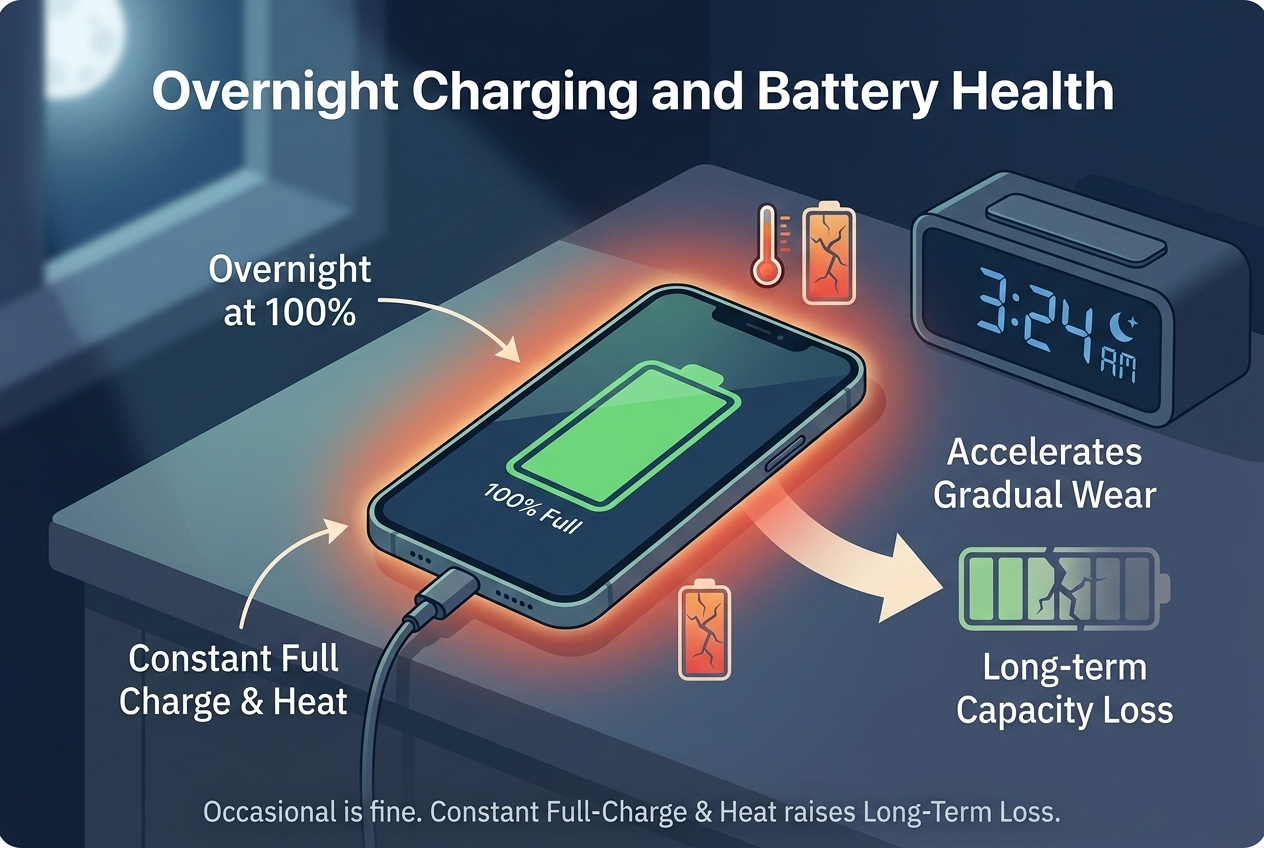
I noticed small capacity drops after many months of constant fast charging. I changed habits to slow nightly charging and saw less battery wear.
battery chemistry, cycles, state of charge, and temperature Phone batteries are lithium-ion cells. They age with charge cycles and with time spent at high voltage and temperature. A full cycle means draining and recharging 100%, but partial cycles add up too. Staying at 100% under heat stresses the battery's chemistry and speeds capacity loss. High charging currents and fast charging create heat. Heat is the main enemy for long battery life. To reduce wear, avoid charging in hot places or under covers. Use slower overnight charging modes if available. Some phones learn your sleep routine and delay the final top-up until just before you wake. This keeps the battery at a lower state of charge for most of the night and cuts aging. In short, overnight charging alone is not catastrophic. But repeated exposure to high charge, fast charging heat, and high ambient temperature will shorten battery life over months to years. Small behavior changes can help preserve capacity.
Are there safety risks like fires or swelling when charging overnight?
I feared a fire or swollen battery.
Fires from overnight charging are rare with certified chargers[^2] and intact batteries. Risks rise with poor chargers, damaged batteries[^7], or blocked ventilation. Swelling happens from cell damage or overheat, not ordinary charging with proper gear.
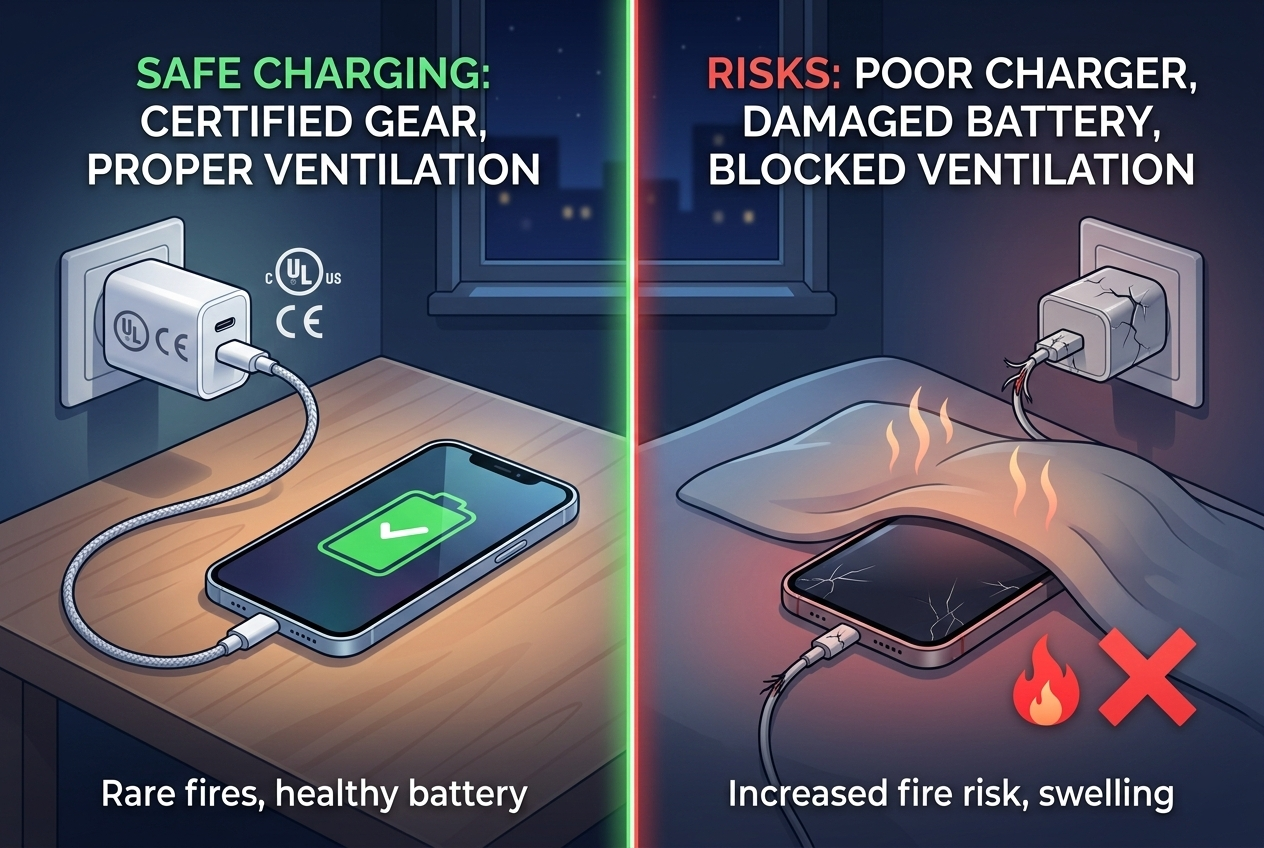
I replaced a damaged cable before it shorted. That reduced my risk and the case never swelled again.
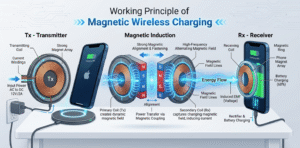
common failure causes and safe charging practices Most charging accidents[^8] come from faulty chargers, counterfeit cables, or damaged batteries[^7]. Cheap chargers can lack protections like over-current and temperature cutoffs. Damaged batteries from drops or water can short internally and heat up during charging. Placing a phone under pillows or on soft surfaces traps heat and raises risk. To stay safe, use certified chargers[^2] (USB-IF, manufacturer-branded, or well-reviewed third-party). Inspect cables and connectors for fraying or bent pins. Replace swollen batteries immediately and stop using the phone. Charge on hard, flat surfaces with airflow. Avoid cheap car chargers or USB hubs that claim very high power without safety certification. If you use a wireless charger, ensure it has temperature and foreign object detection. These steps make overnight charging as safe as normal daily use.
How to charge overnight without harming battery life?
I wanted practical steps to reduce wear while charging overnight.
Use quality chargers, avoid heat, enable optimized charging[^9] features, and consider limiting max charge to 80–90% when possible. Remove thick cases and charge on a firm surface.
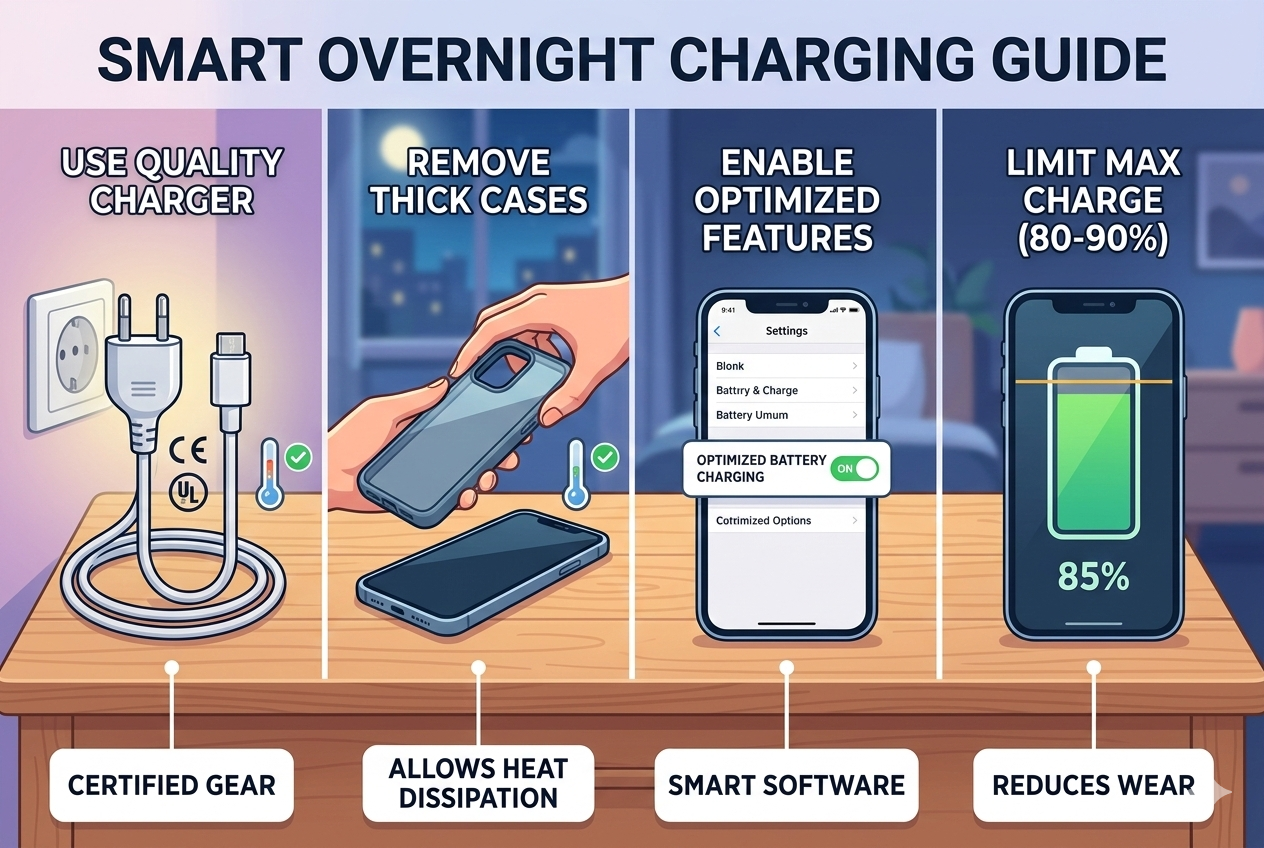 I set my phone to optimized charging[^9] and used a slow 18W charger at night. Battery health remained better after a year.
step-by-step overnight charging strategy First, use the charger that came with your phone or a certified replacement. That ensures proper negotiation between charger and phone. Second, enable battery protection features. Many phones have "Optimized Charging" or "Battery Care." These delay the last 20% of charge to finish just before you wake. Third, reduce heat. Remove thick cases while charging and place the phone on a hard surface. Fourth, limit max charge when practical. Some phones let you cap charge to 80–90%. This reduces time at high voltage and extends battery life. Fifth, avoid fast charging modes at night. Use a lower-power charger or a charger that slows down once it hits 80%. Finally, replace damaged cables and batteries promptly. These steps take little effort and can extend battery lifespan while keeping overnight charging convenient.
Conclusion
Modern smartphones prevent overcharging, so leaving your phone plugged in overnight is generally safe.
Battery life is minimally affected by overnight charging, especially with built-in battery optimization features.
Safety risks, such as fire or swelling, are rare and mostly related to cheap chargers, excessive heat, or poor ventilation.
Safe overnight charging tips: use certified chargers[^2], enable optimized charging[^9], place the phone on a flat surface, and avoid heat traps.
By following these precautions, you can safely charge your phone overnight without worrying about battery damage or safety hazards.
[^1]: Explore this link to understand the safety and implications of overnight charging for your smartphone. [^2]: Learn why using certified chargers is essential for safe and effective smartphone charging. [^3]: Find out how modern charging circuits enhance safety and battery performance. [^4]: Learn about battery management systems and how they protect your phone's battery during charging. [^5]: Learn about thermal throttling and its role in protecting your phone from overheating. [^6]: Explore battery health features that can extend your phone's battery life. [^7]: Find out why using damaged batteries can be dangerous and how to identify them. [^8]: Understand the common causes of charging accidents to ensure safe charging practices. [^9]: Discover how optimized charging can help maintain your battery's health over time.