
As more travelers rely on electronic devices, packing light and efficiently becomes crucial. One product that has gained significant popularity for its compactness and power[^1] is the GaN (Gallium Nitride) charger. These chargers are not only small and portable but also powerful, making them ideal for modern travel. Whether you're traveling for business or leisure, understanding the benefits of GaN chargers can help you choose the best option for keeping your devices charged on the go.
GaN chargers are smaller, lighter, run cooler, and deliver high power safely[^2], so they replace multiple bulky adapters[^3] and simplify travel charging.

I switched to a single GaN charger and never looked back. The charger fit in a pocket, powered my laptop and phone, and stayed cool on long flights. GaN (gallium nitride) changes power electronics. It lets designers use smaller components and higher switching speeds[^4]. That reduces size and heat. For travelers, that means less baggage, fewer items to forget, and more reliable charging on the go.
If you travel often, a good GaN charger clears space in your bag and reduces charging headaches[^5].
What is the advantage of a GaN charger?
I used to buy the biggest charger I could find to avoid slow charging on the road.
GaN chargers offer high power in a small package, better efficiency, and lower heat. That gives faster charging, multi-device support, and lighter travel gear.
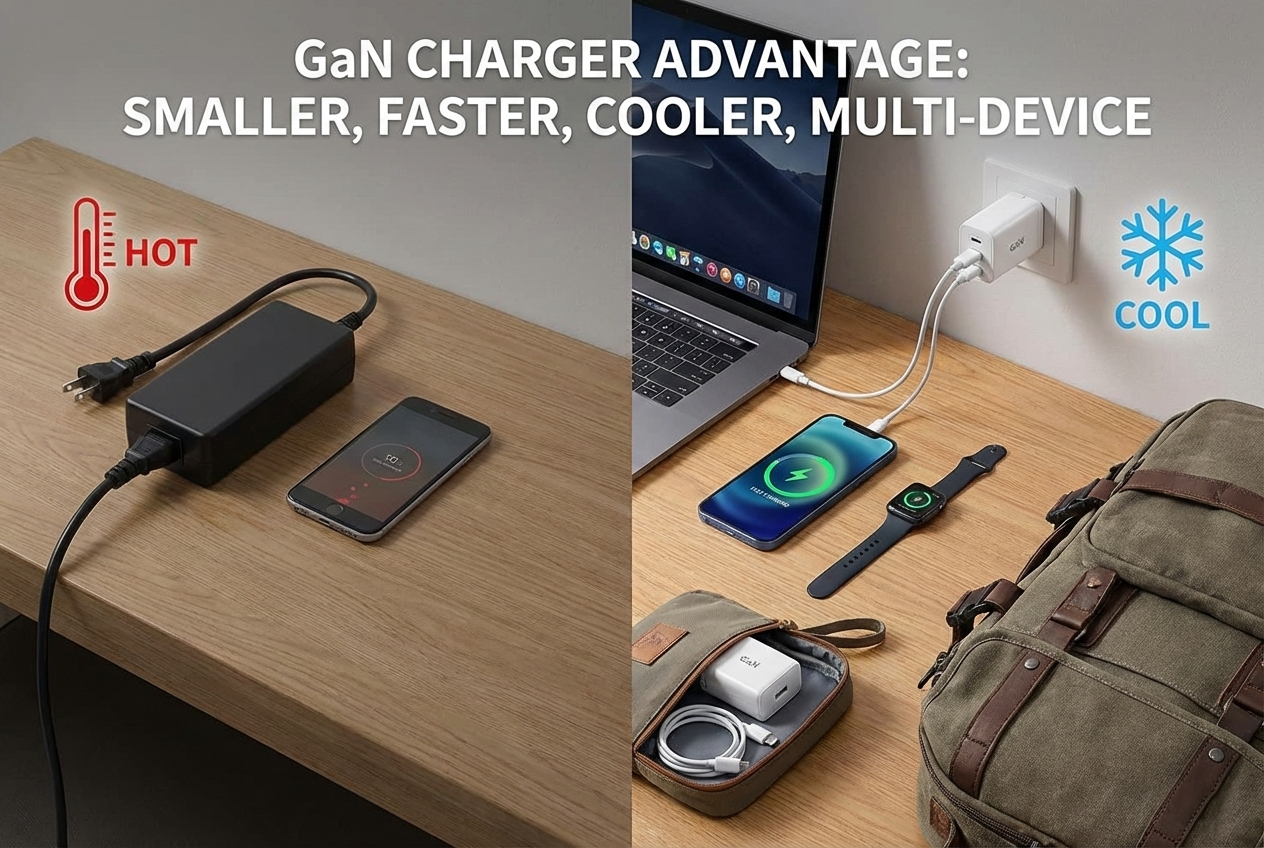
A GaN charger replaces separate chargers for a laptop and phone. It supplies more watts from a tiny brick. The higher efficiency means less wasted energy as heat. That helps during long charging sessions, like flights. A single GaN unit often supports multiple ports. You can charge a laptop and a phone at the same time. The weight and size savings are obvious in my luggage. I pack fewer chargers and cables. That reduces clutter and the risk of losing items. GaN chargers also often include smart protection circuits[^6]. These protect against overheating, short circuits, and overcurrent. In practice, that increases safety while I travel.
Dive deeper: practical travel benefits and port planning (150+ words) When I plan a trip, I list devices I need to charge: laptop, phone, tablet, earbuds, and camera. A GaN charger with two USB-C PD ports[^7] and one USB-A port covers most needs. I pick a GaN unit that supports simultaneous power distribution[^8]. For example, a 100W GaN charger that can supply 65W+30W when two ports are used lets me run my laptop and fast-charge my phone at the same time. The small footprint also matters when packing. I fit a GaN charger into a thin laptop sleeve pocket. That frees space for an extra cable or power bank. On planes and in crowded cafes, a small charger is easier to manage. I also check for foldable prongs, which save space and prevent damage in a bag. Lastly, I consider cable strategy. I bring one high-quality 100W USB-C cable for the laptop and a short cable for the phone. This keeps the kit light and reliable. Over multiple trips, the convenience and reduced weight add up to less stress and fewer forgotten items.
What is so special about GaN?
I read about GaN switching faster than silicon and wondered what that meant for real use.
GaN can switch at higher frequencies and has lower losses than silicon. That allows smaller inductors, capacitors, and heat sinks, which makes chargers compact and efficient.
GaN is a wide-bandgap semiconductor. It handles high voltages and high frequencies with lower resistance when on. That reduces switching and conduction losses in power conversion. Designers can then use smaller passive parts. The whole charger shrinks. Higher switching frequency also improves regulation and makes power electronics more responsive. In travel terms, that means a small charger that can safely deliver tens of watts with less heat. GaN components also tolerate higher temperatures better than silicon in many designs. The net result is higher efficiency, smaller size, and improved thermal behavior. These advantages are not just theoretical. I notice GaN chargers run noticeably cooler and are much smaller than older silicon bricks with similar power ratings.
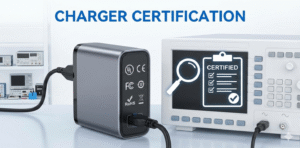
Dive deeper: technical benefits, safety, and what to check (150+ words) The technical edge of GaN affects design and safety. Because GaN switches faster, the magnetic components and capacitors can be much smaller. A smaller inductor and capacitor mean a smaller PCB and case. That makes the charger travel-friendly. Lower losses reduce waste heat. Less heat reduces stress on internal components and increases longevity. Still, GaN alone does not guarantee quality. I check for key design and safety elements. A good GaN charger includes proper thermal management[^9], temperature sensors, overcurrent and overvoltage protection, and short-circuit protection. It should have recognized safety certifications like UL, CE, and FCC where relevant. I also prefer chargers with foreign object detection (FOD)[^10] to avoid heating of stray metal. Finally, firmware and power management[^11] matter. Intelligent power allocation ensures stable voltages when multiple devices connect. In short, GaN gives a powerful foundation. Good design and certification turn that foundation into a safe, reliable travel charger.
Do GaN chargers support fast charging standards[^12] and multiple devices?
I wanted one charger to handle my laptop, phone, and tablet without juggling sockets.
Yes. Most modern GaN chargers support USB Power Delivery (PD), PPS, and multi-port configurations so you can fast-charge laptops, phones, and tablets together.
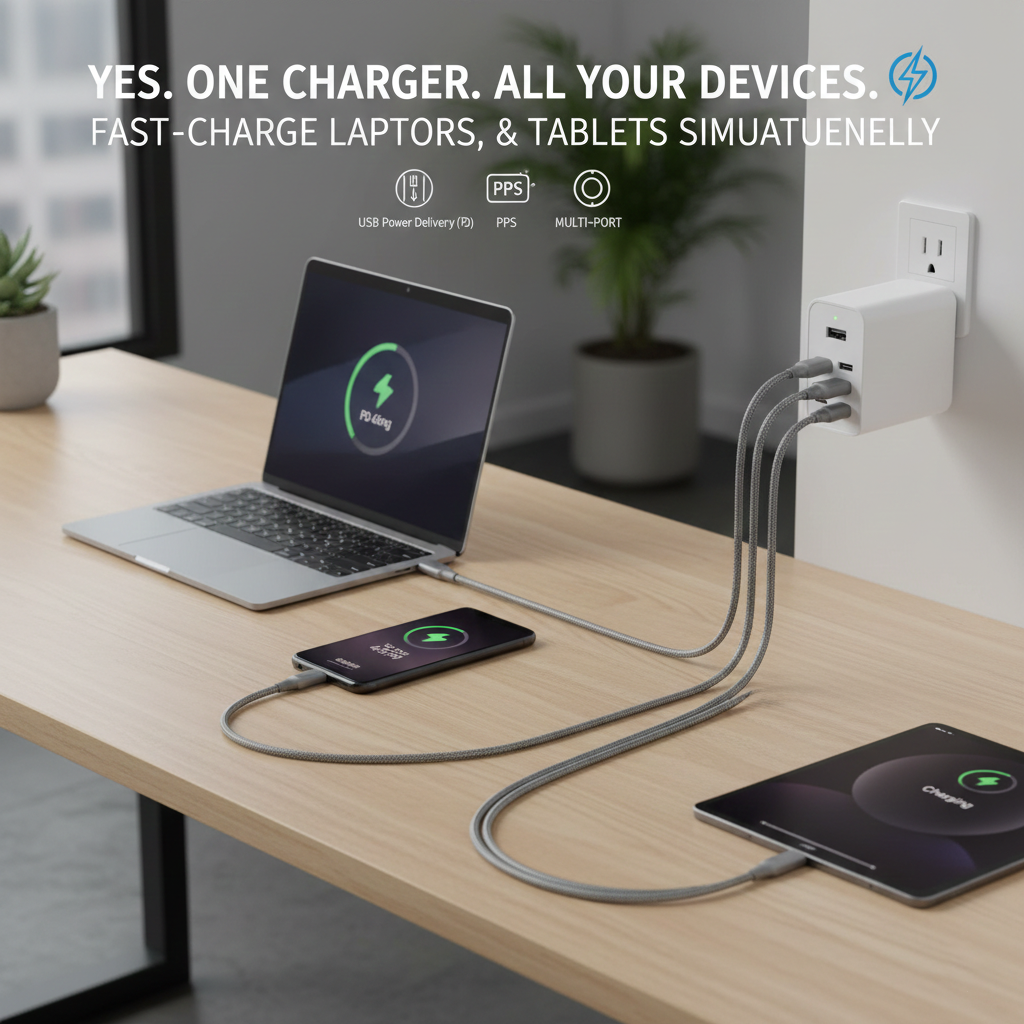
GaN chargers often include high-power USB-C PD ports[^7] capable of 45W, 65W, 100W, or more. They also support PPS for optimized fast charging on compatible phones. Multiport GaN chargers distribute power intelligently. For example, a 100W GaN charger can offer 100W on one port or split to 65W+30W when two devices connect. This fits travel where outlets are limited. I use a single GaN charger to power my laptop and top up my phone during meetings and flights. It reduces the number of plugs and power strips I carry. However, cables and device support matter. The device, cable, and charger must all support the same standard to get maximum speed.
Dive deeper: real-world compatibility[^13], cables, and tips (150+ words) Compatibility determines actual charging performance. A GaN charger may advertise 100W, but the cable and device must also support that wattage. I always pack a certified 100W USB-C to USB-C cable for laptop charging. For phones that support PPS, I choose chargers with PPS support and use quality USB-C cables rated for PD and PPS. When using multiple devices, check the charger's power distribution table. Many chargers list port wattage when all ports are used. For example, a charger might give 65W on port 1 and 45W on port 2 when used alone, but 45W+30W when both are used. That affects whether your laptop charges at full speed. Also, some vendor-specific fast-charge protocols (like proprietary phone fast charging) may not work with third-party chargers. In practice, I test the charger with my devices at home before travel. I confirm that the laptop charges at the expected rate and the phone gets fast-charge notifications. Finally, keep one spare cable and a short adapter for airplane outlets. This prep removes surprises and makes the GaN charger a reliable travel companion.
Pick a certified GaN charger[^14] with the right ports, cables, and safety features to simplify travel charging and avoid surprises.
Conclusion
GaN chargers are an excellent choice for travelers, offering a combination of small size, high efficiency, and fast charging capabilities. Their ability to support multiple devices and fast charging standards[^12] makes them versatile for modern travelers who rely on multiple gadgets. Whether you’re charging your phone, laptop, or tablet, GaN chargers ensure you can stay powered up while minimizing space and weight in your bag. Their superior heat management, energy efficiency[^15], and durability also mean they are built to last, offering a long-term solution for your travel needs. If you want to travel light without compromising on power, a GaN charger is the perfect solution.
[^1]: Learn how compact and powerful chargers can simplify your travel experience and reduce baggage. [^2]: Discover the safety features that allow chargers to provide high power without risks. [^3]: Find out how a single charger can streamline your travel gear and reduce clutter. [^4]: Learn how faster switching speeds improve charger performance and efficiency. [^5]: Understand how GaN chargers simplify the charging process and enhance convenience. [^6]: Learn about the technology that protects your devices from overheating and other risks. [^7]: Explore the significance of USB-C PD ports in modern charging solutions for travelers. [^8]: Discover how chargers can power multiple devices at once without compromising efficiency. [^9]: Understand the role of thermal management in ensuring charger safety and longevity. [^10]: Explore how FOD technology enhances safety by preventing overheating from stray metal. [^11]: Learn about the importance of intelligent power management in optimizing charging. [^12]: Discover the different fast charging standards and their impact on device charging. [^13]: Find tips on ensuring your charger works effectively with all your devices. [^14]: Learn the key features to consider when choosing a reliable and safe GaN charger. [^15]: Understand how energy-efficient chargers can save you money and reduce waste.