
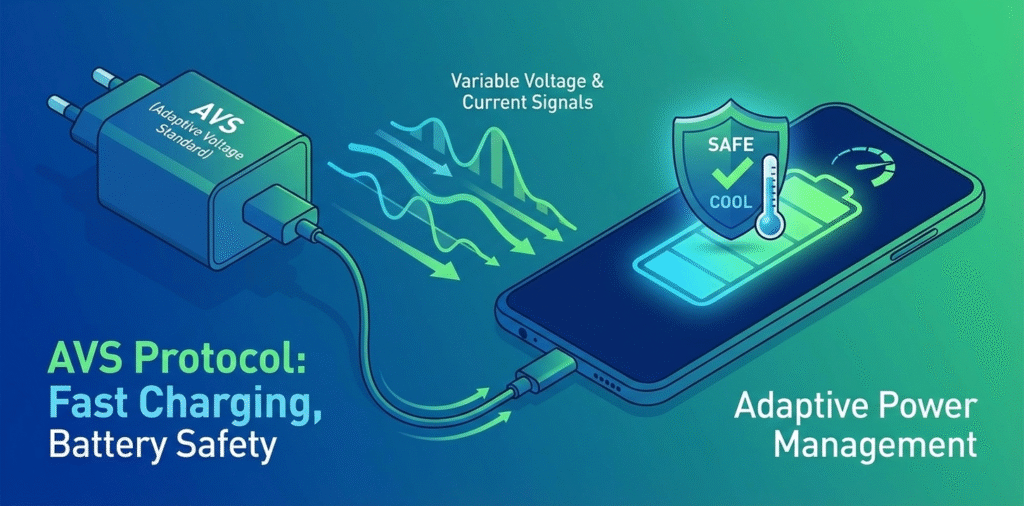
AVS (Adaptive Voltage Standard[^1]) is a fast-charging protocol[^2] that uses variable voltage and current signals[^3] to speed up charging while keeping batteries safe.
I looked into AVS because buyers asked for faster, safer chargers at lower cost. AVS is used in many chargers and phones, especially in markets where cost and interoperability matter. The protocol negotiates voltage and current between charger and device, so both sides work together. Proper implementation reduces heat and shortens charge time compared with fixed-voltage charging.
If you design, buy, or sell charging gear[^4], understanding AVS helps you pick compatible adapters, cables, and devices that deliver faster, safer charging.
How does AVS work?
I tested AVS chargers on phones that support adaptive voltage control.
AVS works by letting the charger and device communicate to pick an optimal voltage and current. They switch between multiple agreed voltage levels to maintain efficient power transfer.
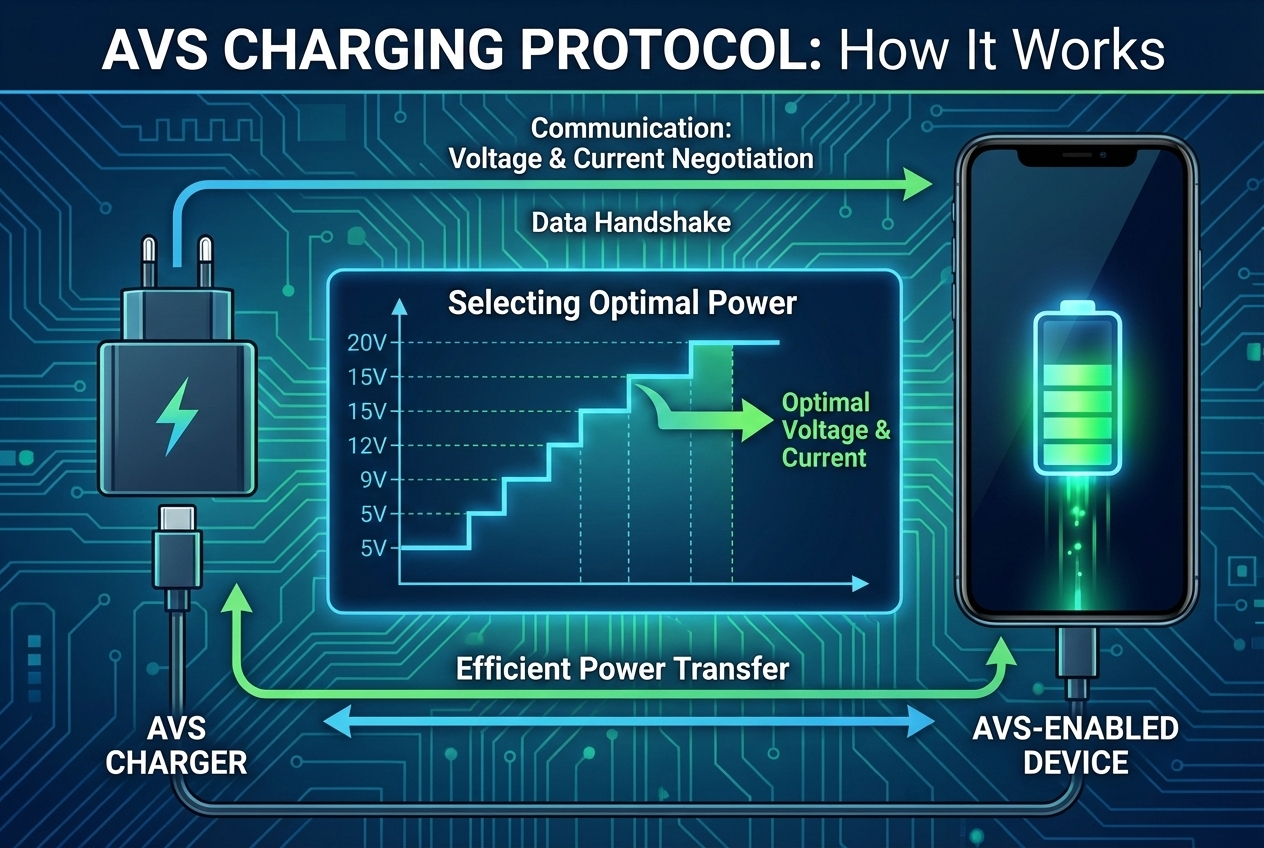
I ran simple tests. The device signals its needs over the charging line. The charger replies by setting a matching voltage rail. AVS uses voltage negotiation[^5] pulses and standardized timing. This allows higher charging voltage when the battery accepts it and lower voltage when the battery nears full state. The approach cuts heat and shortens overall charge time versus constant-current/constant-voltage methods alone.
protocol mechanics, negotiation, and safety measures (150+ words) AVS uses layered signaling on the power line to exchange capability and request information. The charger advertises what fixed or stepped voltages it can output. The device then requests a voltage step that matches its battery management system (BMS) needs. The negotiation often happens with short voltage pulses or coded resistance values on the data lines, depending on the implementation. Once the voltage is set, the charger supplies power at that voltage while the device controls input current and monitors battery temperature and cell voltage. If the device detects high temperature or abnormal cell behavior, it requests a lower voltage or a stop. This handshake repeats during charging to move through higher-power phases early in the cycle and lower-power phases later. Safety is enforced by timeouts, max-voltage limits, and thermal cutoffs. Good AVS implementations also include foreign object detection and short-circuit protection on the charger side. In practical terms, AVS gives flexible power that adapts to battery chemistry and condition, improving charging speed[^6] while reducing stress on the battery.
What is the difference between PPS and AVS?
I compared AVS chargers with PPS adapters to explain choices to clients.
PPS (Programmable Power Supply)[^7] is a USB PD extension that allows fine-grained voltage/current steps; AVS is a simpler adaptive-voltage scheme used in some fast-charge ecosystems. PPS offers tighter control and USB-C integration; AVS focuses on compatibility and lower implementation cost[^8].
I tell buyers that PPS is ideal when you need USB-C PD-based negotiation and precise voltage windows. AVS may appear in legacy or low-cost systems where Qi-like simplicity or backward compatibility[^9] with older chargers matters.
technical contrasts, real-world implications, and compatibility (150+ words) PPS is part of the USB Power Delivery specification[^10]. It allows the source to offer a continuous range of fine voltage steps (for example, 3.3V–21V in 20mV steps) and programmable current limits. The sink (device) directly requests the exact voltage and current combination via USB PD messages. That gives precise control, better efficiency, and reduced heat because the device can choose the optimal operating point. PPS requires USB-C and PD signaling hardware and firmware. AVS, by contrast, often works over simpler signaling methods and may use predetermined voltage steps or coded pulses on legacy lines. AVS can be cheaper to implement on older micro-USB or basic USB-A adapters. It emphasizes cross-vendor interoperability in its target markets, but it may not match the fine control of PPS. In practice, PPS chargers are preferred for modern USB-C phones and laptops because they integrate into the broader PD ecosystem. AVS remains relevant for cost-sensitive products, older phone designs, or regions where established AVS-compatible ecosystems exist. When choosing chargers, match the protocol to the device. Using PPS on a non-PPS device will not grant benefits. Likewise, an AVS-only charger may not provide the full performance of a PPS-capable phone.
What are the main functions of AVS?
I list AVS functions so engineers and buyers know what to check.
AVS main functions include voltage negotiation[^5], dynamic voltage stepping[^11], thermal and safety control[^12], backward compatibility[^9], and simple signaling for reduced implementation cost[^8].
I look for these features when evaluating suppliers. They determine charging speed[^6], safety, and user experience.
feature breakdown, implementation checkpoints, and testing advice (150+ words) The core AVS functions start with voltage negotiation[^5]. The charger advertises supported voltage steps. The device requests the step it needs. Next is dynamic voltage stepping[^11]. AVS moves between higher and lower voltage steps as the battery charges, which reduces heat and shortens charge time. AVS also enforces thermal and safety control[^12]. Devices monitor temperature and cell conditions and ask for lower power or stop charging if needed. Chargers implement hardware protections like over-voltage, over-current, short-circuit, and foreign-object detection. Backward compatibility is another function. AVS often supports basic USB or legacy signaling so older devices get safe charging, even if without fast rates. Simplicity and cost control matter: AVS uses fewer complex messages than PPS, so firmware and component costs stay lower. For implementation, I test chargers across temperature ranges, with different cables and adapters, and with phones at varying charge states. I also require compliance reports, thermal cycle tests, and EMC/ safety certifications. For buyers, ask suppliers for a protocol spec sheet, a compatibility list, and test logs showing voltage stepping and thermal behavior during real charge cycles.
Check those AVS functions and test logs before you buy or certify chargers to ensure safe, fast, and interoperable charging.
Conclusion
AVS is an adaptive voltage fast-charging protocol[^2] that negotiates stepped voltages to speed charging while keeping safety and cost in balance.
[^1]: Explore this link to understand how AVS enhances charging efficiency and safety. [^2]: Learn about the advantages of fast-charging protocols and how they improve user experience. [^3]: Discover how these signals optimize charging speed and battery safety. [^4]: Find insights on selecting the right charging gear for optimal performance. [^5]: Understand the importance of voltage negotiation for efficient power transfer. [^6]: Learn about the key factors that affect how quickly devices charge. [^7]: Explore how PPS differs from AVS and its benefits for modern devices. [^8]: Find strategies to minimize costs while maintaining charging efficiency. [^9]: Discover the significance of backward compatibility for older devices. [^10]: Understand the standards that govern modern charging technologies. [^11]: Explore how dynamic voltage stepping enhances charging speed and reduces heat. [^12]: Learn about the safety measures that protect devices during charging.