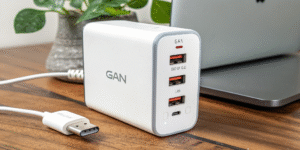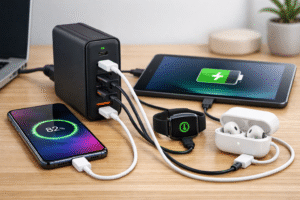
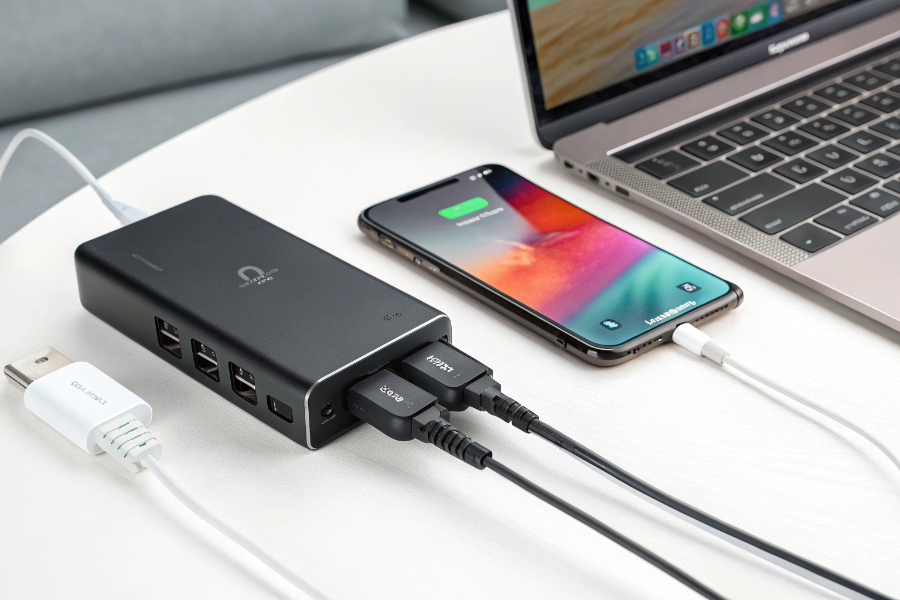
I know the terms are confusing. Cables, ports, chargers, and protocols all sound the same. You want fast, safe charging without guesswork. Let me make PD simple.
PD charging means USB Power Delivery[^1]. It is a fast‑charging protocol[^2] that negotiates voltage and current between device and charger for safe, efficient, and universal charging.
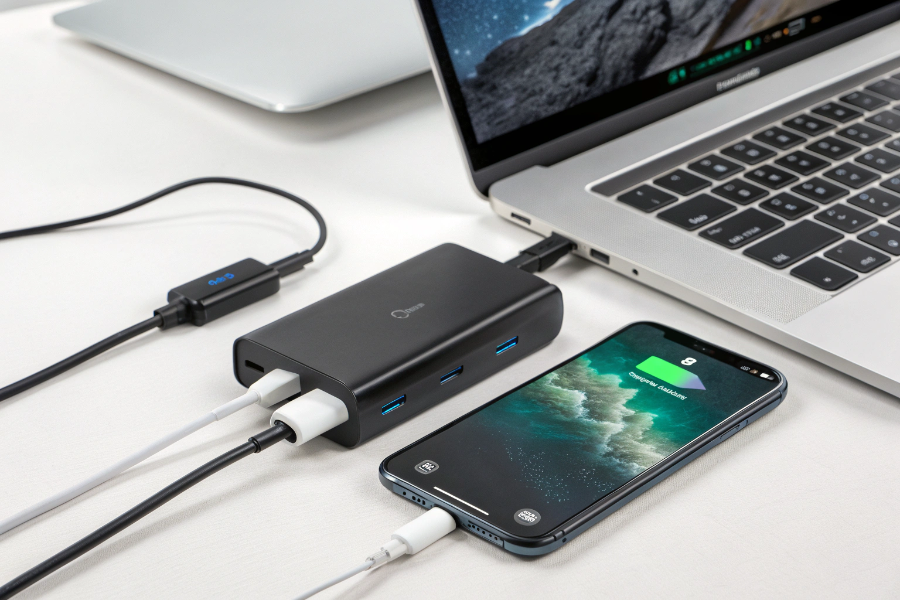
You want one charger for phone, tablet, and laptop. You want speed and safety. PD gives both, and it aims to unify the market.
What does PD charging mean?
Fast charging feels risky when you do not know what is happening inside. Heat rises. Batteries age. You fear damage. The protocol is the missing piece.
PD charging is a USB standard called Power Delivery. It uses data handshakes[^3] to set optimal voltage and current in real time, so devices charge fast while staying safe.
How PD works, and why it matters
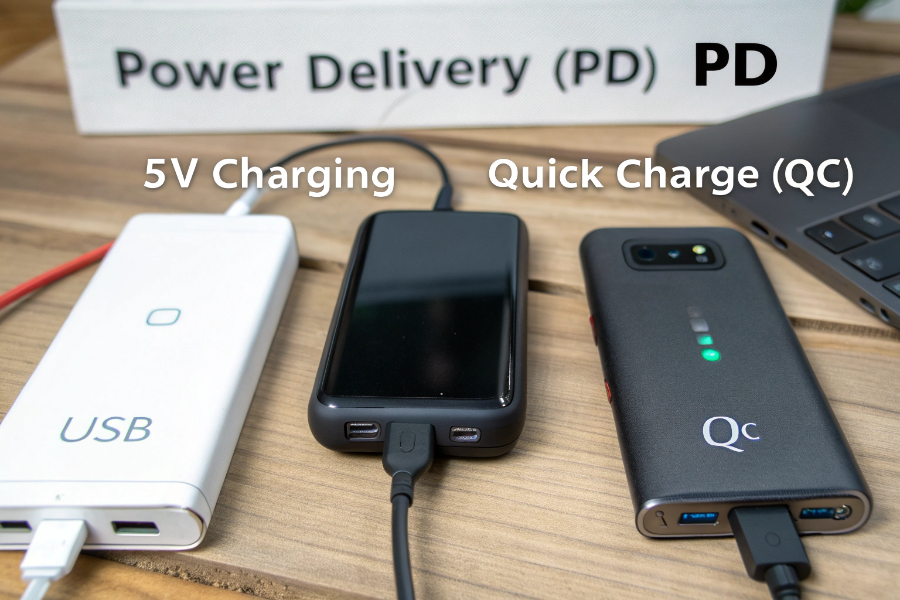
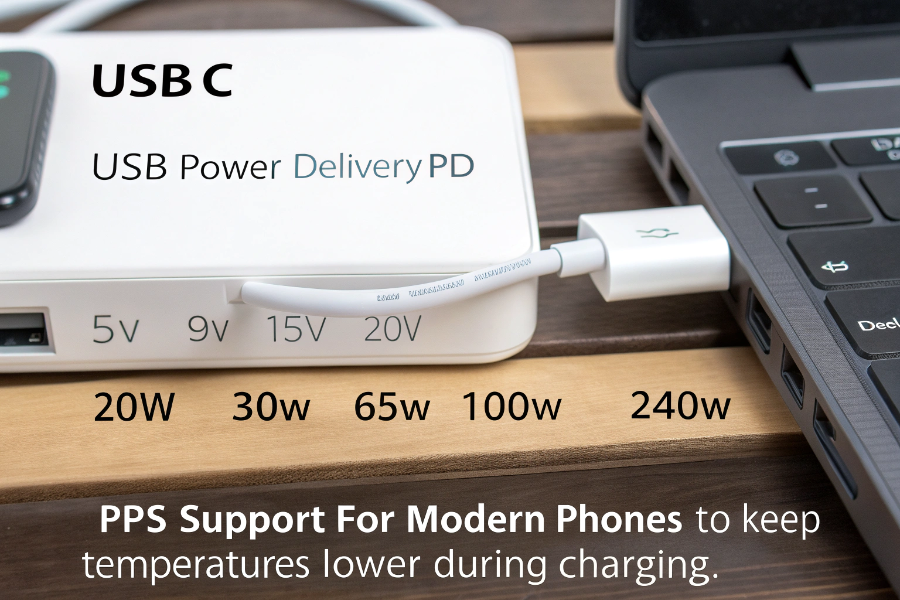
I will break it down in my own words. PD is the language. USB-C[^4] is the plug. A PD charger and a PD device talk first, then start the charge. They pick the best power level based on need and temperature. Old chargers push a fixed output. PD adjusts. It uses set profiles like 5V, 9V, 15V, 20V, and now EPR up to 28V, 36V, 48V for higher power. It scales from earbuds to laptops.
From my factory floor days, I saw two truths. First, bad negotiation fries ports. Second, heat kills cells. PD reduces both by tighter rules and protections. It also supports PPS[^5] (programmable power supply[^6]) in many cases, which lets the charger fine‑tune voltage and current in small steps. That lowers heat and improves battery health.
Here is a simple view:
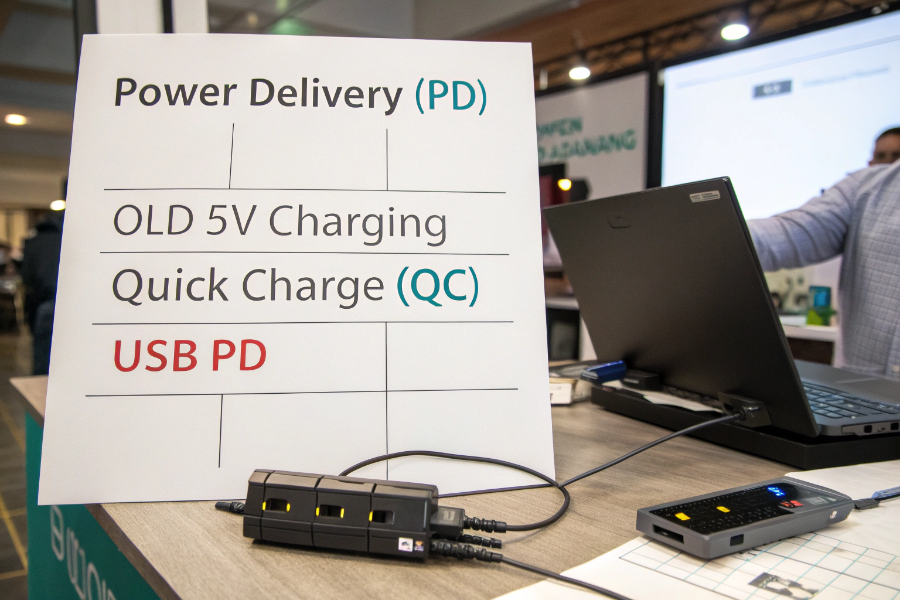
| Aspect | Old 5V Charging | Quick Charge (QC) | USB PD |
|---|---|---|---|
| Control | Fixed 5V | Negotiates within Qualcomm rules | Negotiates within USB standard |
| Connector | USB-A mostly | USB-A/USB-C[^4] | USB-C[^4] preferred |
| Power Range | ~5–12W | Up to ~27–36W (varies by version) | Up to 240W (USB PD 3.1 EPR) |
| Safety | Basic | Good | Strong, cross-vendor |
| Compatibility | Limited | Good on QC devices | Broad, cross-brand, cross-device |
PD is not just faster. It is a better system design.
Is a PD charger the same as a USB-C[^4]?
USB-C[^4] only tells you the plug fits. PD tells you the charger can talk smart and push safe power. A non‑PD USB-C[^4] brick may lock at 5V and trickle a laptop. A true PD charger will ramp to 20V or higher for notebooks and drop to 9V for phones. That is the real difference.
| Item to check | Why it matters | What good looks like |
|---|---|---|
| PD logo/spec | Confirms protocol support | “USB PD 3.0/3.1” on label |
| Wattage | Matches your device needs | 20–30W for phones, 65–140W for laptops |
| PPS[^5] | Smoother fast charging | “PPS[^5]” or 3.3–11V/5A ranges |
| Cable rating | Prevents throttling | e-marked cable for >60W |
Is PD better than quick charge?
You may own QC chargers already. They work fine with some phones. You do not want waste. You want to know if PD is worth the switch.
PD is better for most users because it is more universal, scales to higher power, and works across brands and devices. QC is fine for QC phones, but PD now leads for laptops and multi-device charging.
PD vs QC in the real world
Let me be blunt. I build and test chargers for a living. QC was great for early Android fast charging. But the market moved. Laptops, tablets, cameras, and game consoles all adopted USB-C[^4] and PD. Apple, Google, Samsung, and many PC makers made PD the baseline. Even when a phone supports QC, it often also accepts PD at good speeds.
PD also pairs with PPS[^5] on many chargers. That helps modern phones from Apple and Samsung manage thermals better. QC has its own versions and can be fast on supported models, but it is less universal outside phones.
A quick scorecard:
| Criteria | Quick Charge (QC) | USB Power Delivery[^1] (PD) |
|---|---|---|
| Ecosystem | Mostly phones | Phones, tablets, laptops, accessories |
| Max Power | Moderate (varies) | Up to 240W (PD 3.1 EPR) |
| Cable Standard | Mixed | USB-C[^4] required for full PD |
| Thermal Control | Good on supported devices | Strong, plus PPS[^5] on many chargers |
| Travel Simplicity | Okay if phone-only | Best for one-charger-for-all |
So yes, for most buyers, PD is the better long-term bet.
Conclusion
PD is the universal fast‑charging protocol[^2]. It is safer, faster, and more compatible than QC for most devices, and it pairs best with USB‑C.
[^1]: Understanding USB Power Delivery is crucial for safe and efficient charging across devices. [^2]: Learn about fast‑charging protocols to enhance your device charging experience. [^3]: Explore how data handshakes optimize charging for safety and efficiency. [^4]: Understanding USB-C is essential for choosing the right charging solutions. [^5]: Explore how PPS enhances charging efficiency and device safety. [^6]: Discover how programmable power supplies improve charging performance and battery health. [^7]: Discover the importance of universal fast‑charging protocols for modern devices.