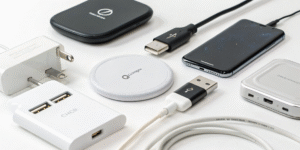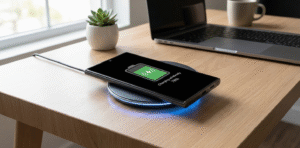
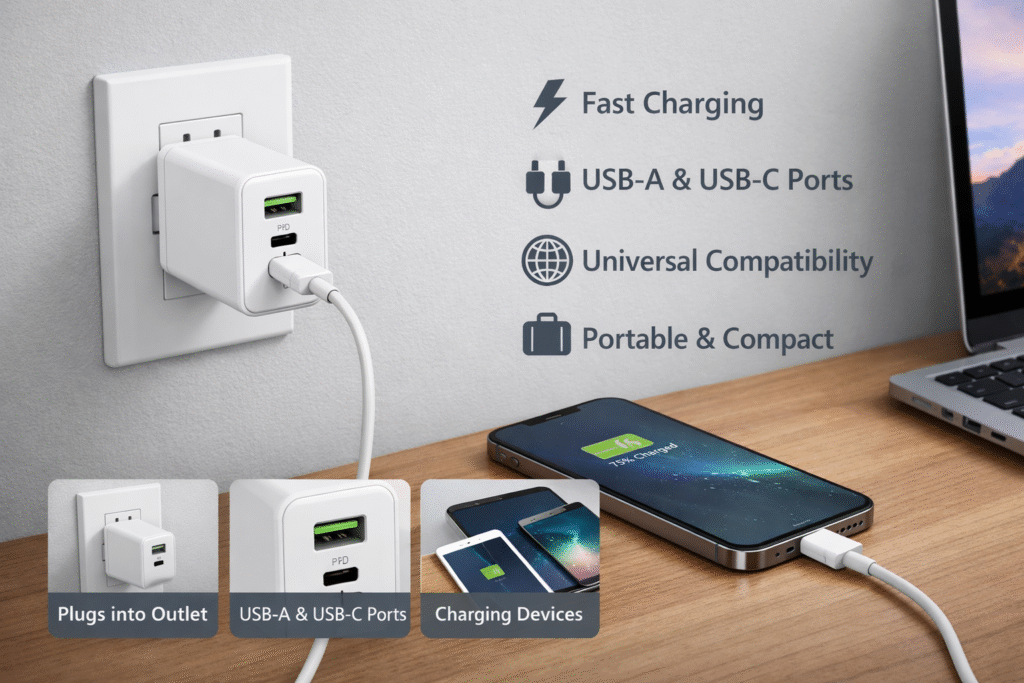
A USB wall charger[^1] is a power adapter that plugs into a standard electrical outlet and converts AC (alternating current) power from the wall into DC (direct current) power that can charge USB-powered devices such as smartphones, tablets, and other electronics. It typically features one or more USB ports (USB-A, USB-C, or both) where you can plug in your charging cable[^2] to power your device.
A USB wall charger[^1] is a small power adapter that plugs into a mains socket and converts AC to the low-voltage DC that USB devices need to charge.
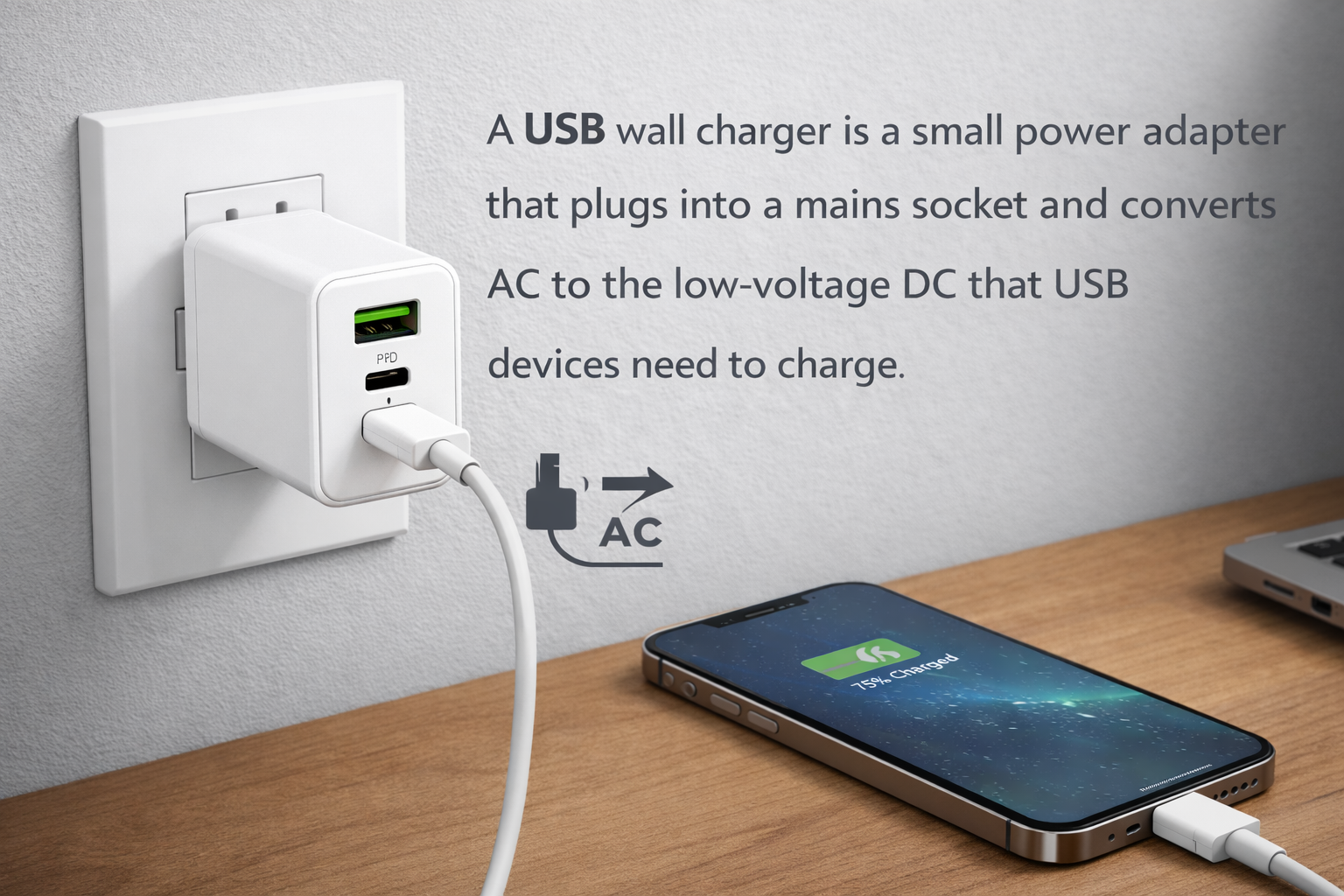 Unlike regular charging cable[^2]s that only transfer power, a USB wall charger[^1] has built-in circuits to manage and convert the power for safe and efficient charging. They are essential for providing power when charging devices that require a USB connection but lack the ability to plug directly into a traditional AC outlet.
How does a USB wall charger[^1] work?
I opened a few adapters to see the components and the circuit design.
A USB wall charger[^1] takes AC mains, uses a transformer or switching regulator to drop voltage, rectifies and filters it, then uses control circuits to produce stable DC output with the correct USB voltage and current.
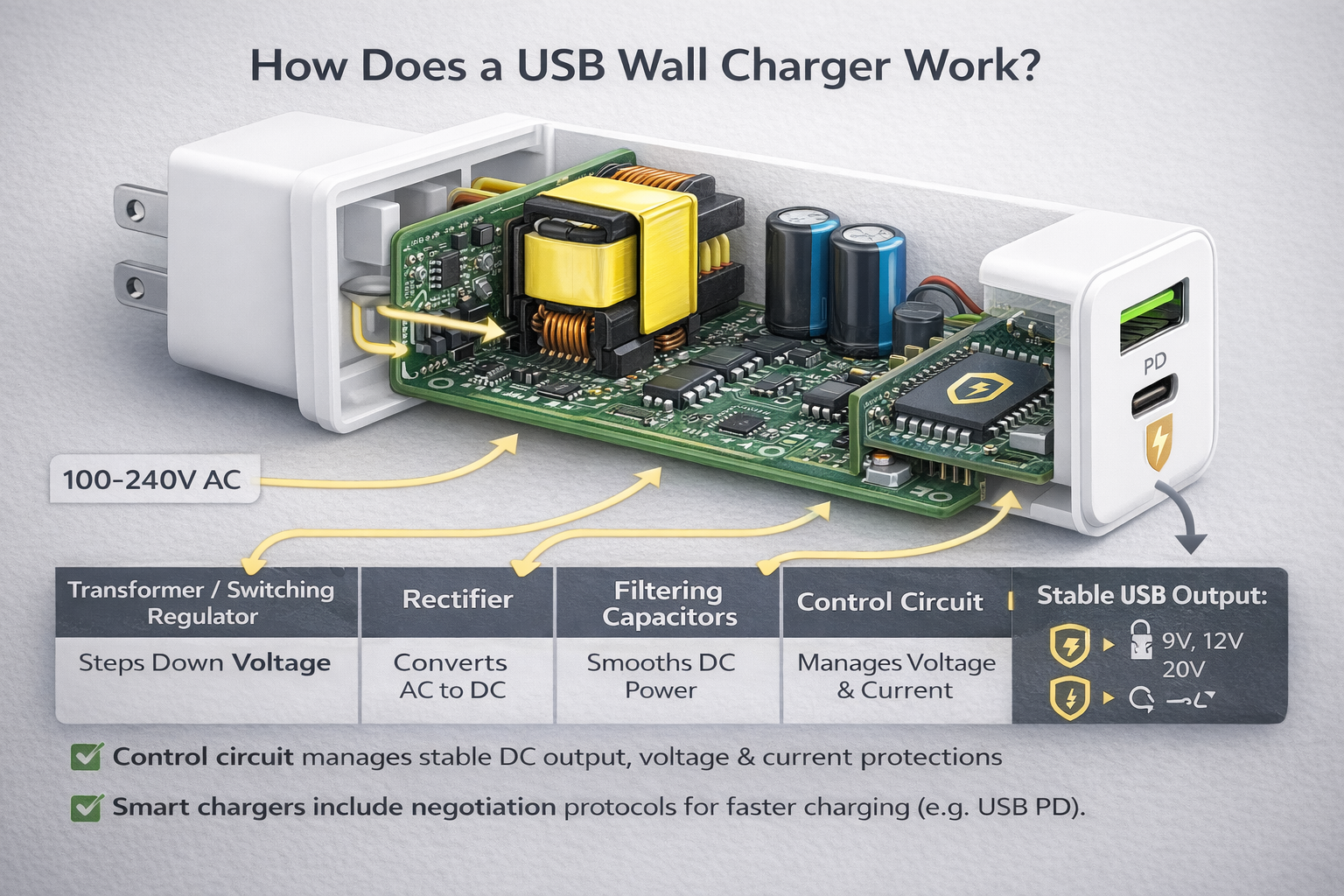
A typical charger has a few basic parts. First, it has an input stage that accepts 100–240V AC. Then a switching power supply reduces voltage efficiently. That stage uses high-frequency switching, a transformer or inductor, and a rectifier to turn AC into DC. Next, filtering capacitors smooth the output. Finally, control chips manage voltage and current and add protections like over-voltage, over-current, and short-circuit cutoffs. Smart chargers include negotiation protocols. These let the charger and device “talk” and choose a higher voltage or current for fast charging. For example, USB PD[^3] can raise voltage to 9V, 12V, or even 20V to speed charging when the device supports it. I noticed that cheap chargers[^4] can heat more and deliver inconsistent voltage. Good chargers keep output stable and run cooler due to better design and quality parts.
Are USB wall charger[^1]s safe?
I compared certified chargers[^5] to cheap no-brand adapters to see the risks.
Yes, reputable USB wall charger[^1]s are safe when they have proper certification, built-in protections, and are used correctly; cheap or counterfeit chargers can be unsafe and risk fire, device damage, or shock.
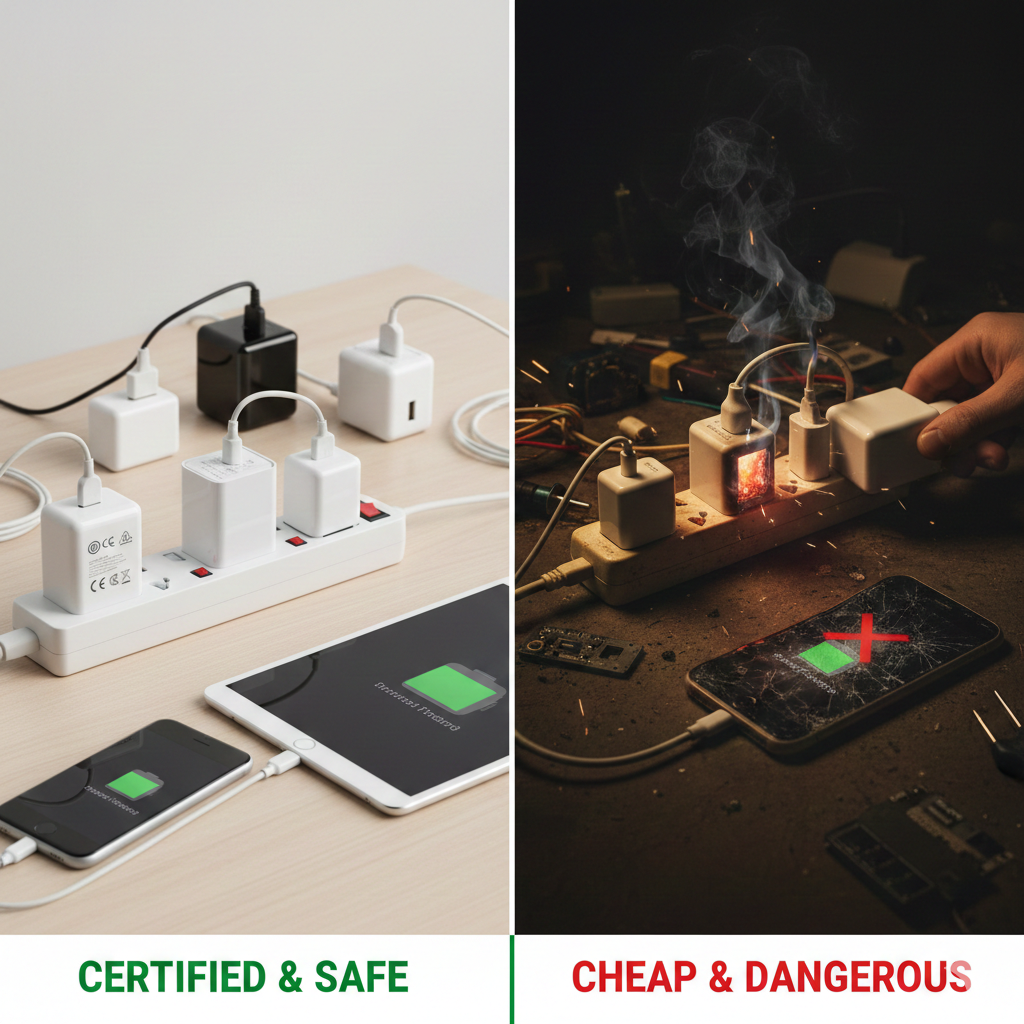
Safety depends on design and certification. Look for recognized safety marks such as UL, CE, FCC, or local regulatory approvals. These marks mean the charger passed tests for insulation, heat, and electrical isolation. Good chargers include protections: over-voltage protection[^6] stops too-high voltage; over-current protection limits excessive current; thermal shutdown[^7] turns off the charger if it overheats; short-circuit protection prevents sparks or damage. Use original or certified third-party chargers. Avoid cheap adapters that lack labels or have poor construction. Also do not block ventilation, avoid using swollen or damaged chargers, and unplug during storms if you worry about spikes. I once tried a very cheap charger that emitted a burning smell under load. I stopped using it immediately and discarded it. That reinforced that safety and certifications matter more than the lowest price.
After discarding unsafe chargers, I stick to certified brands and recommend checking specs before buying.
What is the difference between a wall charger and a regular charger?
I often see people use the terms interchangeably, so I clarified the language.
A wall charger refers specifically to an AC-to-DC adapter that plugs into a mains socket; a regular charger can mean any device that supplies power to charge a battery, including power banks[^8], car chargers, wireless chargers, or built-in chargers.
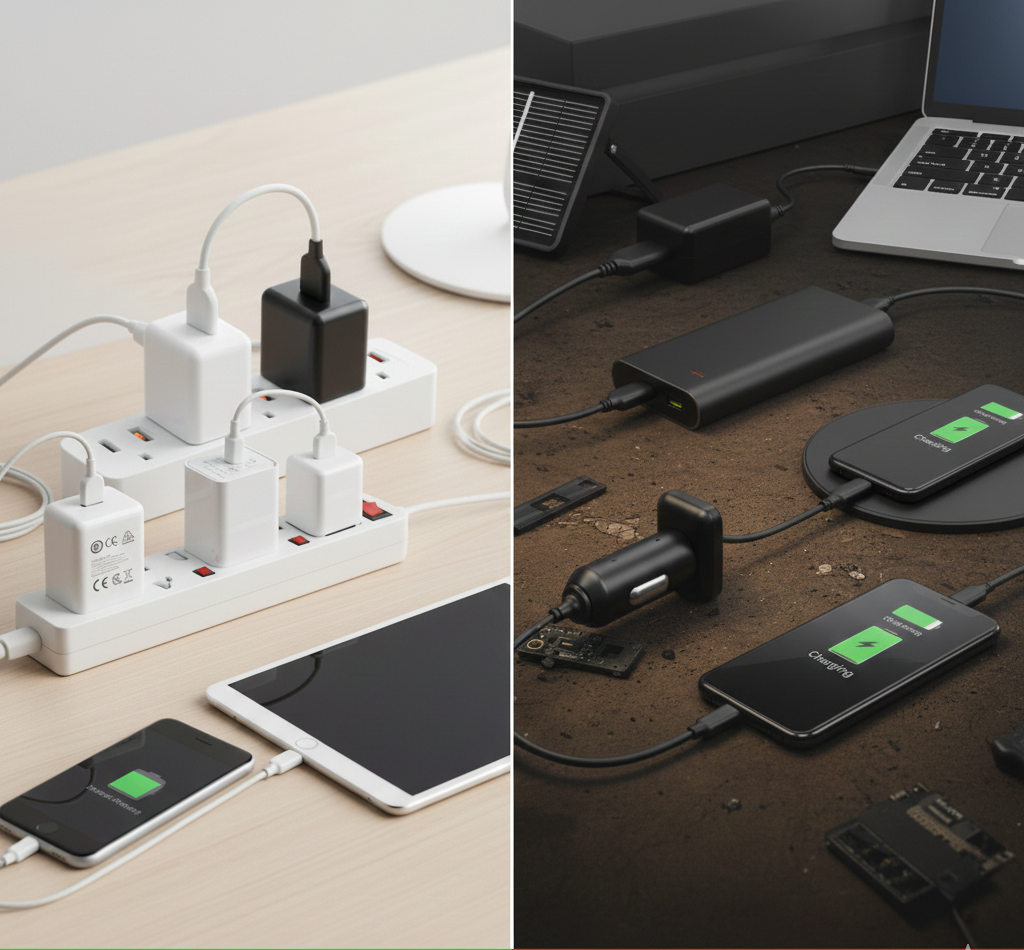
Wall chargers are designed for home or office mains power. They usually plug directly into the wall and provide one or more USB ports or a fixed cable. Regular chargers is a broader term. It includes USB wall charger[^1]s, laptop power bricks, wireless charging pads, car USB adapters, solar chargers, and power banks[^8]. The key differences are power source, portability, and output profile. Wall chargers rely on AC mains and tend to provide stable, higher power output. Power banks are portable and store energy for later use but need recharging themselves. Car chargers convert a vehicle’s 12V system to USB power and vary with engine noise and voltage spikes. Wireless chargers transmit power without a cable and trade efficiency for convenience. I choose a wall charger when I need reliable, fast charging at home. I use a power bank when I need mobile power on the go.
Advantages of wall chargers
I list the practical benefits I found in everyday use.
Wall chargers deliver steady power, support higher wattages, often include fast-charge protocols, are compact, and are widely available with certification.
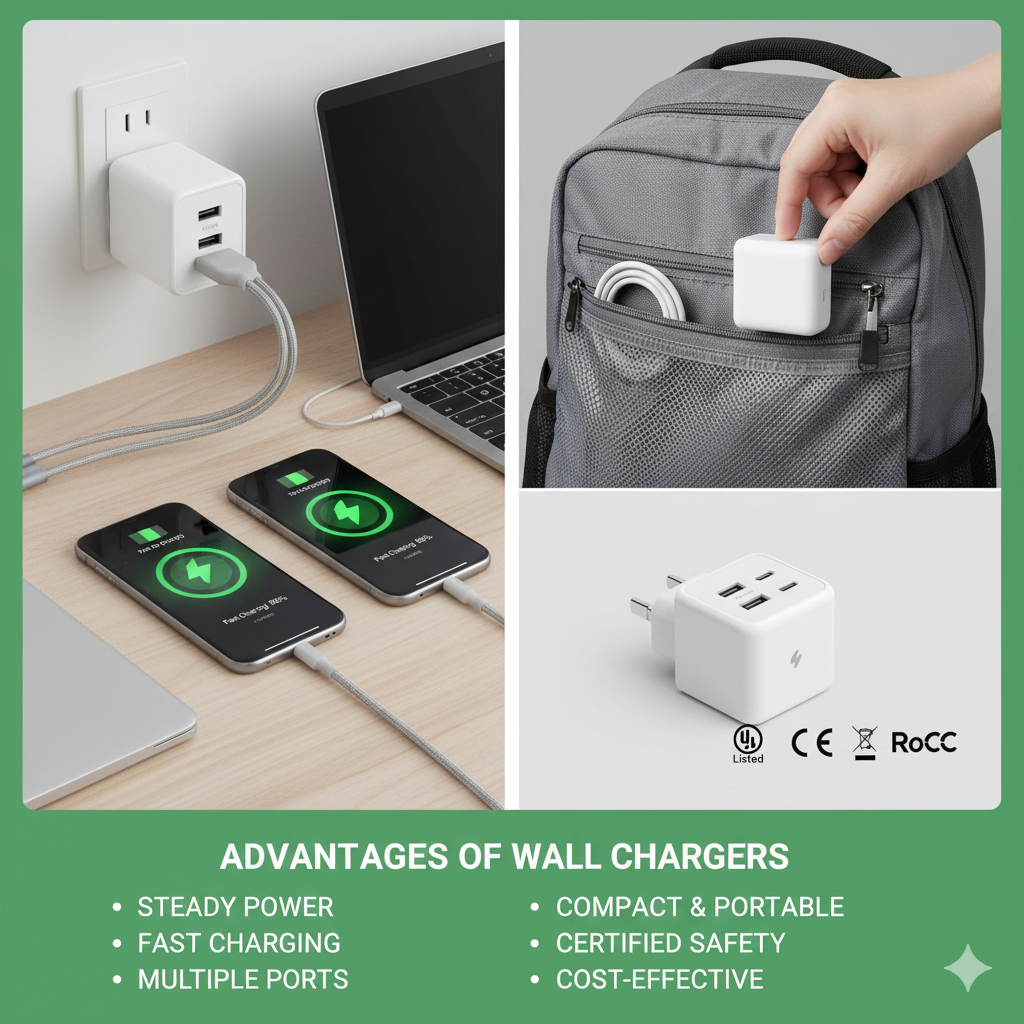
- Steady and higher power: Wall chargers can offer higher continuous current and support PD or QC for fast charging phones, tablets, and laptops.
- Fast charging support: Many models implement USB PD[^3] or Quick Charge. They negotiate higher voltage/current for faster fill times.
- Compact and convenient: Modern wall chargers are small and easy to carry. They fit pockets or travel bags.
- Multiple ports: Many provide multiple USB-A and USB-C ports to charge several devices at once.
- Cost-effective long term: A quality charger lasts years and protects devices better than cheap ones.
- Safety and certification: Reputable models carry safety approvals and built-in protections that reduce failure risk.
- Wide availability: Wall chargers are easy to buy, and brands tend to support standardized cables across devices.
I choose a well-rated USB-C PD wall charger with multiple ports for travel. It charges my phone quickly and runs cool. I also keep a smaller 5W spare for low-power accessories. That combination covers most needs without overpaying.
I recommend checking power ratings, connectors, and certifications before you buy a wall charger.
Conclusion
A USB wall charger[^1] turns mains AC into stable DC for devices, offers fast charging and safety when certified, and differs from other chargers by relying on mains power.
A USB wall charger is a compact, efficient device that provides a convenient way to charge your USB-powered devices by converting AC power into DC power. It is safe to use as long as it is of good quality and comes with the necessary safety features, such as overcharge, overheating, and short-circuit protection. Wall chargers offer a faster, more reliable, and safer charging solution compared to using USB ports on other devices. When choosing a wall charger, ensure it’s compatible with your devices and certified for safety.
By understanding how USB wall chargers work, their advantages, and their safety features, you can make an informed decision when choosing the right charger for your needs.
[^1]: Explore this link to understand the functionality and importance of USB wall chargers in everyday life. [^2]: Discover the various charging cables that work with USB wall chargers for optimal performance. [^3]: Explore USB PD technology to learn how it enhances charging speed and efficiency. [^4]: Learn about the potential dangers of using low-quality chargers and how to avoid them. [^5]: Learn why using certified chargers is crucial for protecting your devices from damage. [^6]: Understand the importance of over-voltage protection in ensuring device safety during charging. [^7]: Learn about thermal shutdown features that protect chargers from overheating. [^8]: Discover the key differences between power banks and wall chargers for better charging choices.