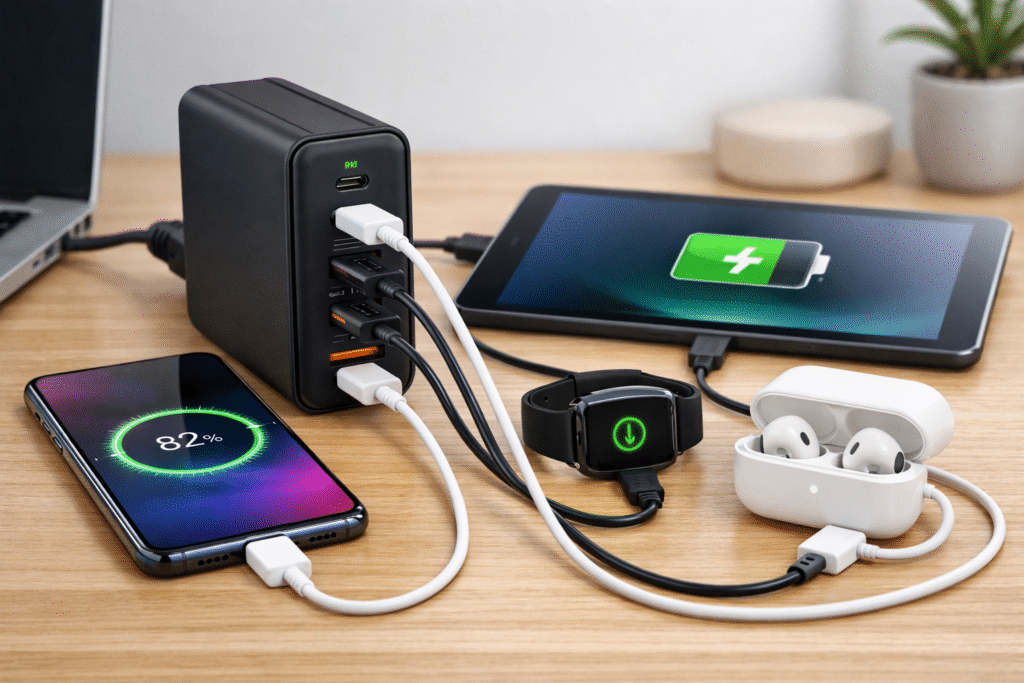
A multi-port charger[^1] is a type of charger that features multiple USB ports[^2] (usually two or more), allowing you to charge several devices at the same time from a single power source. These chargers are available in various sizes and configurations, offering different combinations of USB-A, USB-C, or Lightning ports depending on the devices they’re designed to charge. Multi-port chargers can deliver charging power[^3] to multiple smartphones, tablets, laptops, and other devices all at once, without the need for several individual chargers.
A multi-port charger[^1] is a single power adapter with two or more USB or power ports that charges multiple devices at once while managing power distribution[^4] and safety.
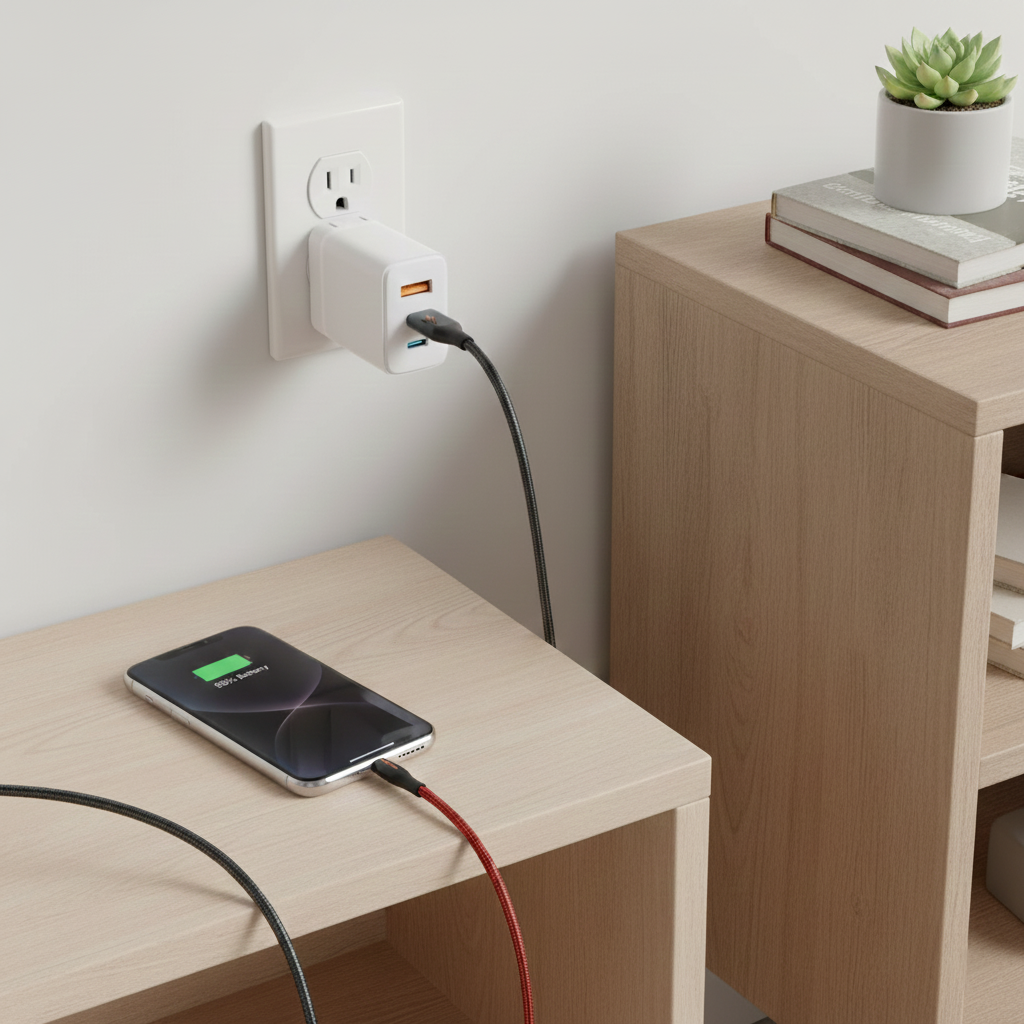
These chargers are particularly useful in environments where multiple devices need to be powered, such as homes, offices, or while traveling. Instead of having to plug in multiple chargers, a multi-port charger[^1] consolidates the charging process into one device, helping to reduce clutter and the number of available power outlets.A multi-port charger[^1] is an excellent solution for anyone who needs to charge multiple devices at once, whether at home, the office, or on the go. By offering convenience, space-saving benefits, and efficient charging, multi-port charger[^1]s streamline the charging process and help reduce cable clutter.
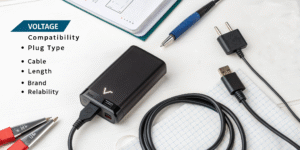
When selecting the right multi-port charger[^1], pay attention to the power output[^5], number of ports, port types, and charging protocols[^6] (like Quick Charge[^7] or USB PD[^8]) to ensure that the charger suits your needs.
Advantages of Multi-Port Chargers
I compared single-port and multi-port setups over months to judge benefits.
Multi-port chargers let you charge many devices at once, save space, reduce total wall sockets used, and often cost less than multiple single chargers while offering centralized safety features[^9].
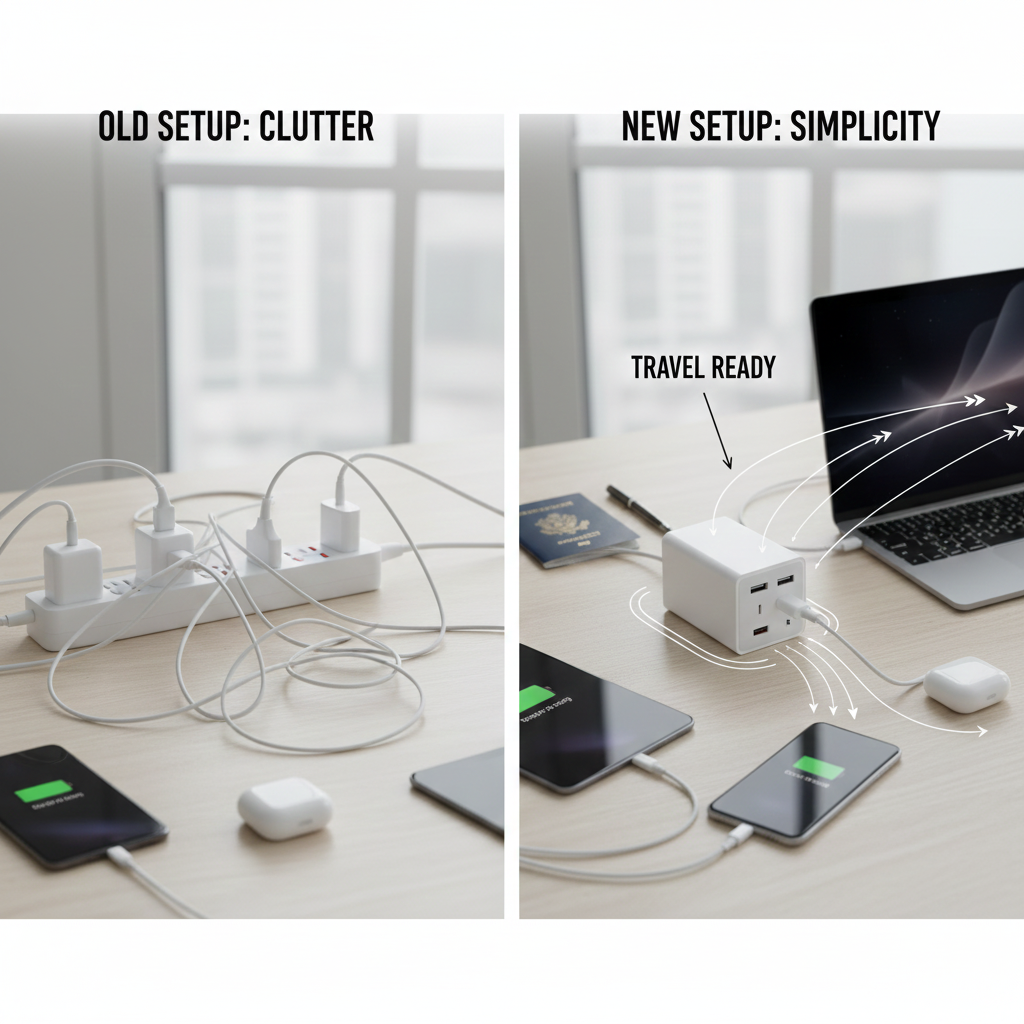
Multi-port chargers cut clutter. One unit can serve phones, tablets, earbuds, and a laptop. They often include high-power PD ports for laptops and several lower-power ports for accessories. Quality models use smart chips to detect device needs and allocate power. This prevents overcurrent and optimizes speed. A single well-made multi-port charger[^1] can be cheaper and more reliable than buying separate adapters. They also simplify travel. Instead of packing multiple chargers, I bring one compact brick. Good models include protections like over-voltage, over-current, short-circuit, and thermal shutdown. That reduces risk across all connected devices. For offices or family cars, these chargers keep everyone charged and reduce arguments over outlets.
Does Using Multiple Ports Affect Charging Speed?
I tested multi-port charger[^1]s under different loads to see real effects on speed.
Yes and no. Using multiple ports can slow charging if the charger’s total wattage is limited and power gets shared; high-quality chargers use dedicated ports or smart distribution to maintain speed for priority devices.
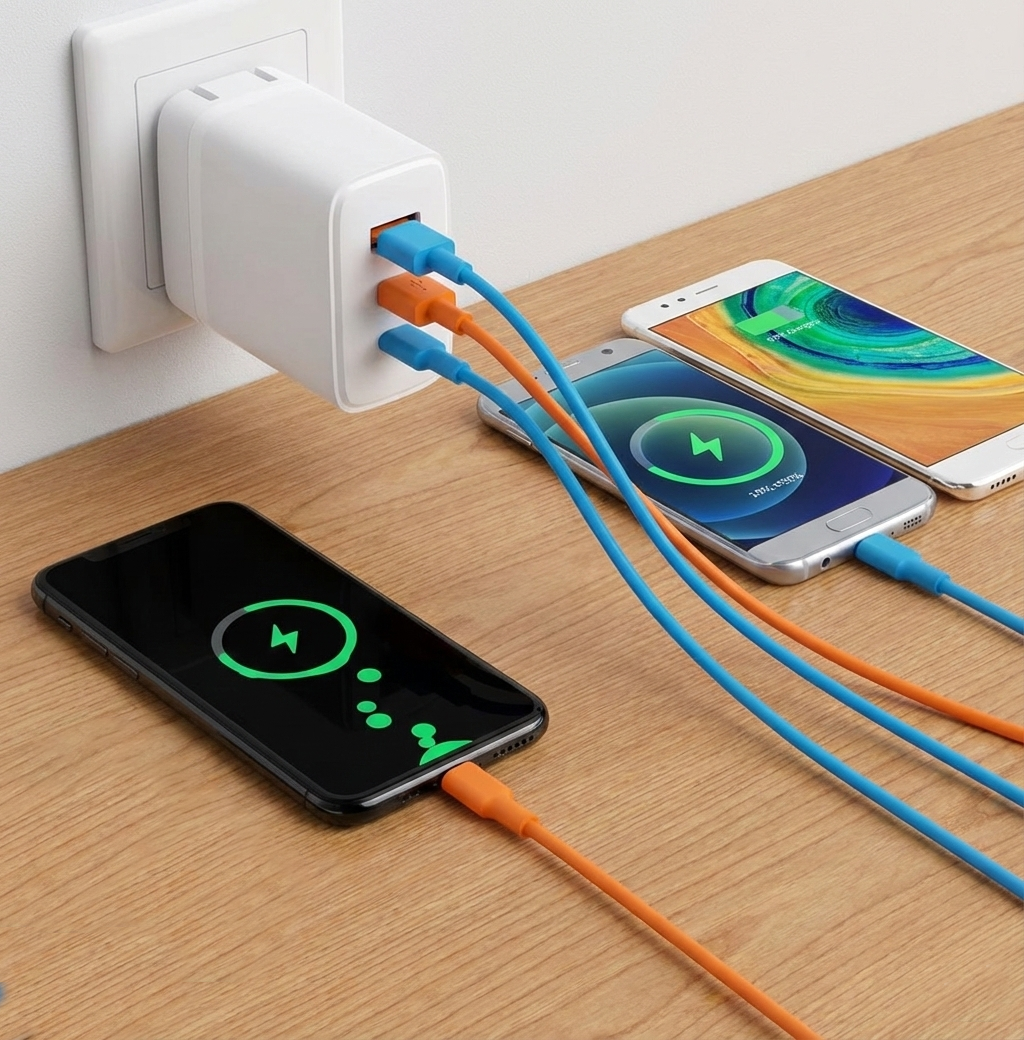
If a charger has 60W total and you connect a 45W laptop plus two phones, the charger must split power. Some models allocate a fixed amount per port. Others use dynamic sharing and prioritize ports with higher demand. The real result depends on total wattage, per-port design, and cable quality[^10]. Cables add resistance and can limit current. Also, device negotiation protocols[^11] matter. USB Power Delivery lets a device request higher voltage for fast charging. If only one PD-capable port exists, other ports may not support laptop-level power. Heat can force throttling when many devices draw current. To avoid slowdowns, choose chargers with enough total wattage, at least one high-wattage USB-C PD port, and quality cables.
Why Do You Need a Multiport Charger?
I switched to multi-port charger[^1]s for convenience, fewer failures, and better power management.
You need a multiport charger if you charge more than one device regularly, travel often, manage a family or small office, or want to replace many single chargers with a compact, safer solution.
A multiport charger solves common problems. At home, it reduces the battle for outlets. In a car or on a flight, it powers multiple devices from one source. For business owners or buyers, it simplifies inventory and reduces returns if you choose quality brands. It also helps manage power budgets. I charge a laptop and phone from one port while the other passengers use USB-A ports. For remote work, a multiport charger with PD gives laptop power and phone top-ups without an aggregator of chargers. For families, it prevents kids from unplugging important devices. For travelers, it frees up luggage space and reduces the chance of losing small single chargers. Overall, it is a practical upgrade.
How to Choose the Right Multiport Charger?
I pick chargers by testing specs and reading reviews, focusing on real outputs and safety.
Choose a multiport charger by matching device needs to total wattage, per-port outputs, supported protocols (PD, QC), cable quality[^10], safety certifications, and real-world thermal performance[^12].
Start with a list of devices and their max charging needs. Add peak wattage for simultaneous use. Look for a charger with total wattage above your combined need. Check per-port ratings. Prefer chargers that specify outputs per port under typical multi-device loads, for example "45W PD + 18W + 12W" rather than vague totals. Prioritize USB-C PD ports for laptops and fast phone charging. Include at least one USB-A or lower-power port for accessories. Read about protocol support: USB Power Delivery for modern devices, Quick Charge[^7] for some Androids, and PPS for fine-grain voltage control. Inspect build quality. Metal housings and ventilation help heat dissipation. Look for safety certifications like UL, ETL, CE, and RoHS. Check user reviews[^13] for real-world heating and sustained output. Use short, thick cables rated for your power needs. Finally, consider form factor and portability. If you travel, pick a compact charger with foldable plug or car-friendly design. I also prefer brands with clear warranty and customer service.
I always test a new charger with my devices at home before relying on it on a trip or at work.
Conclusion
A multi-port charger[^1] is an excellent solution for anyone who needs to charge multiple devices at once, whether at home, the office, or on the go. By offering convenience, space-saving benefits, and efficient charging, multi-port charger[^1]s streamline the charging process and help reduce cable clutter.
When selecting the right multi-port charger[^1], pay attention to the power output[^5], number of ports, port types, and charging protocols[^6] (like Quick Charge[^7] or USB PD[^8]) to ensure that the charger suits your needs.
[^1]: Explore the advantages of multi-port chargers to understand how they can simplify your charging needs. [^2]: Learn about the different USB port types to choose the best charger for your devices. [^3]: Discover how charging power impacts the efficiency and speed of your devices. [^4]: Understand how power distribution works to optimize charging for multiple devices. [^5]: Get insights on selecting the appropriate power output to meet your charging needs. [^6]: Find out which charging protocols are essential for compatibility with your devices. [^7]: Explore Quick Charge technology to see how it enhances charging speed for compatible devices. [^8]: Learn about USB Power Delivery and how it can improve charging efficiency for your devices. [^9]: Find out which safety features are essential for protecting your devices during charging. [^10]: Understand the importance of cable quality in ensuring optimal charging performance. [^11]: Learn about device negotiation protocols and their role in optimizing charging speeds. [^12]: Discover why thermal performance matters for the longevity and safety of your charger. [^13]: Learn how to assess user reviews to make informed decisions when purchasing a charger.