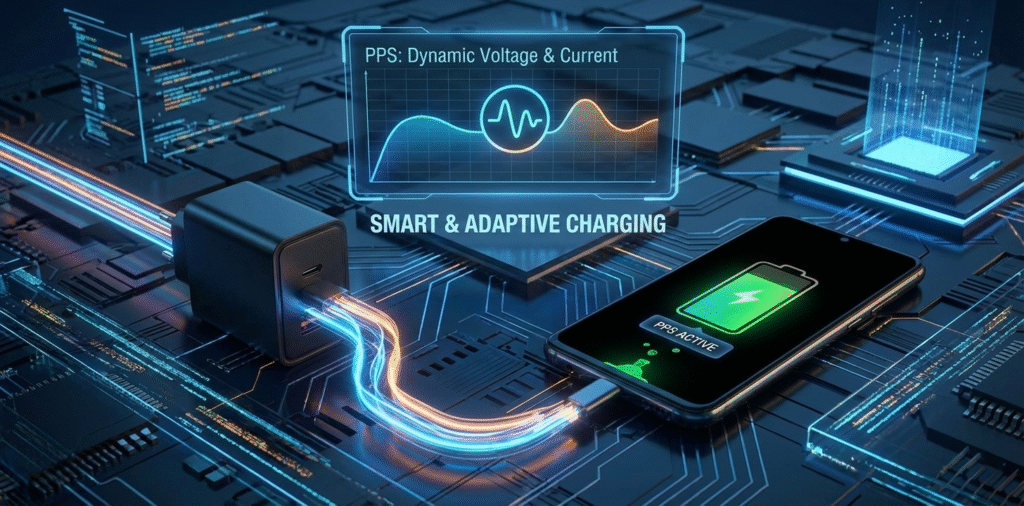
PPS fast charging stands for Programmable Power Supply[^1], a charging technology defined under the USB Power Delivery[^2] (USB-PD) standard. Unlike fixed-voltage charging[^3], PPS allows the charger to dynamically adjust voltage and current in real time based on what the device requests.
PPS (Programmable Power Supply[^1]) lets charger and device negotiate exact voltage and current in small steps, cutting heat and improving charging efficiency[^4].
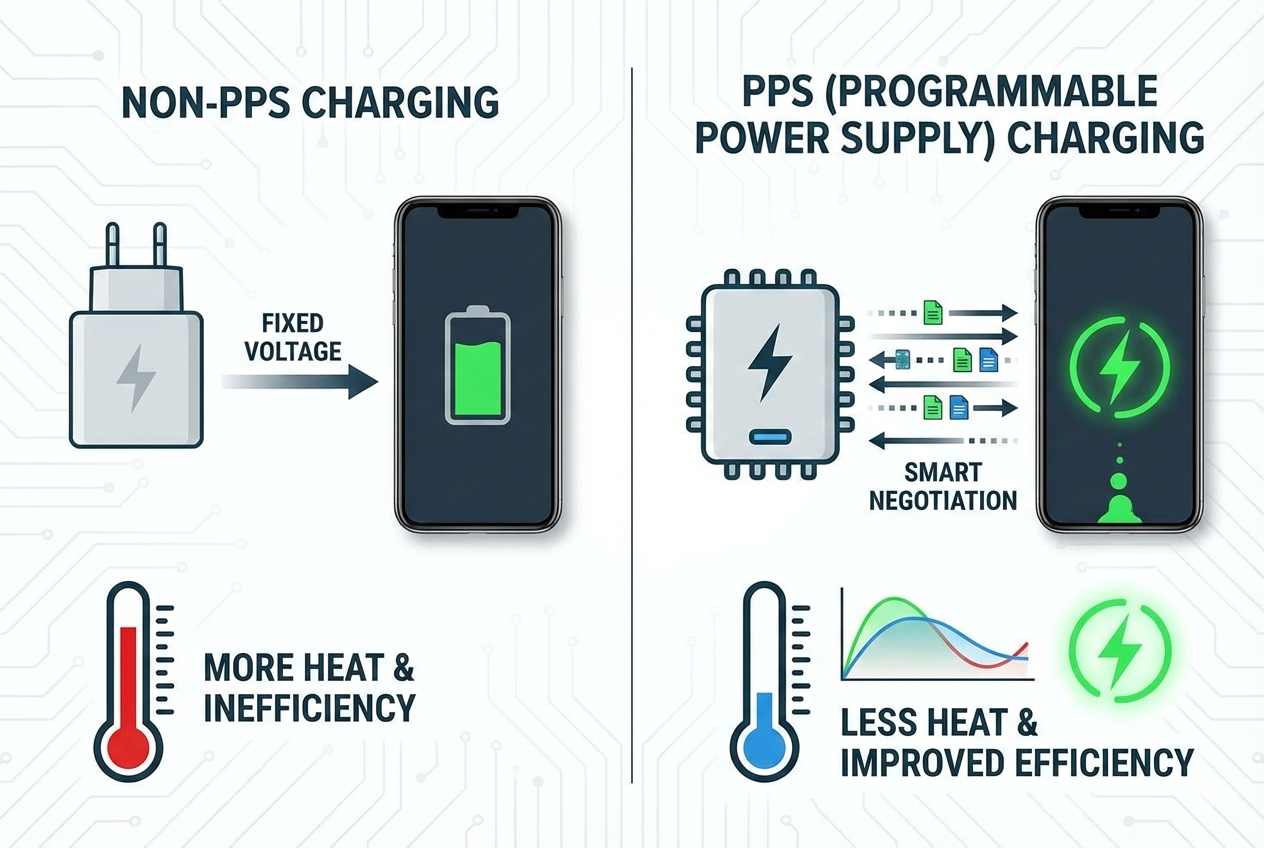
This intelligent adjustment results in faster charging, higher efficiency, and less heat, making PPS one of the most advanced charging technologies available today.
What does pps mean on a charger?
I explain the technical idea in simple terms and why it matters for real charging.
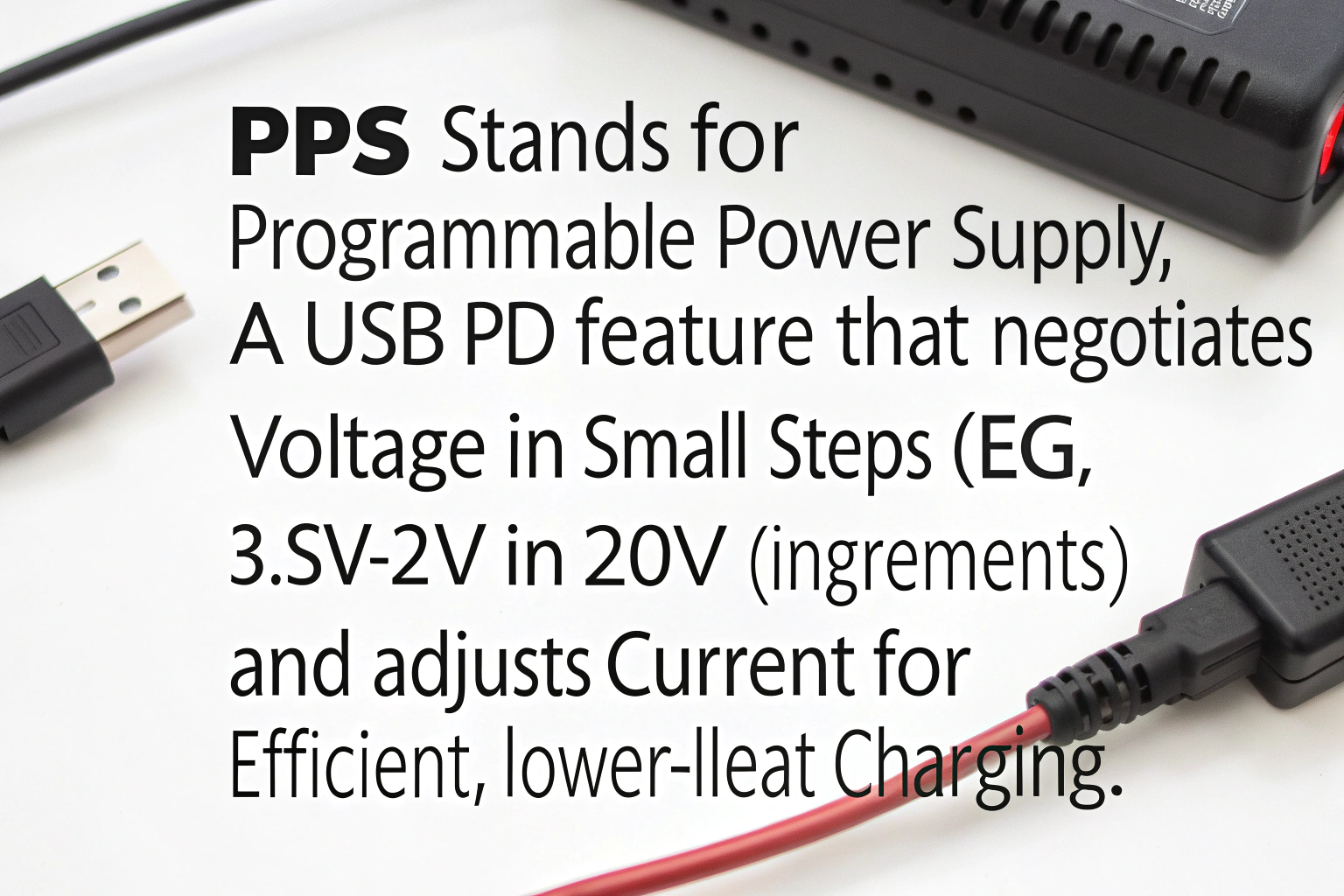
PPS stands for Programmable Power Supply[^1]. It is a USB PD feature that negotiates voltage in small steps (e.g., 3.3V–21V in 20mV increments) and adjusts current for efficient, lower-heat charging.
PPS differs from fixed-voltage fast charging. Traditional chargers offer a few fixed voltages (5V, 9V, 12V, etc.). PPS lets the charger and device talk constantly during charging. The device requests the best voltage and current at each moment. The charger responds with those exact values. The result is smoother power delivery. That reduces heat and improves efficiency. PPS works within USB Power Delivery[^2] (PD) 3.0 standards. It uses bidirectional communication over the USB-C cable[^5]. The device can ask for small voltage changes as the battery state changes. This is helpful in the top and middle charge ranges, where voltage needs vary. PPS is especially useful for high-wattage charging[^6] and for protecting battery health[^7] by limiting stress.
What is the difference between PPS charger and normal charger?
I compare real behavior, safety, heat, and performance so you can choose the right charger.
A normal fast charger offers fixed voltage steps. A PPS charger offers adjustable, fine-grained voltage and current. PPS reduces heat, improves efficiency, and can charge faster under safe conditions.
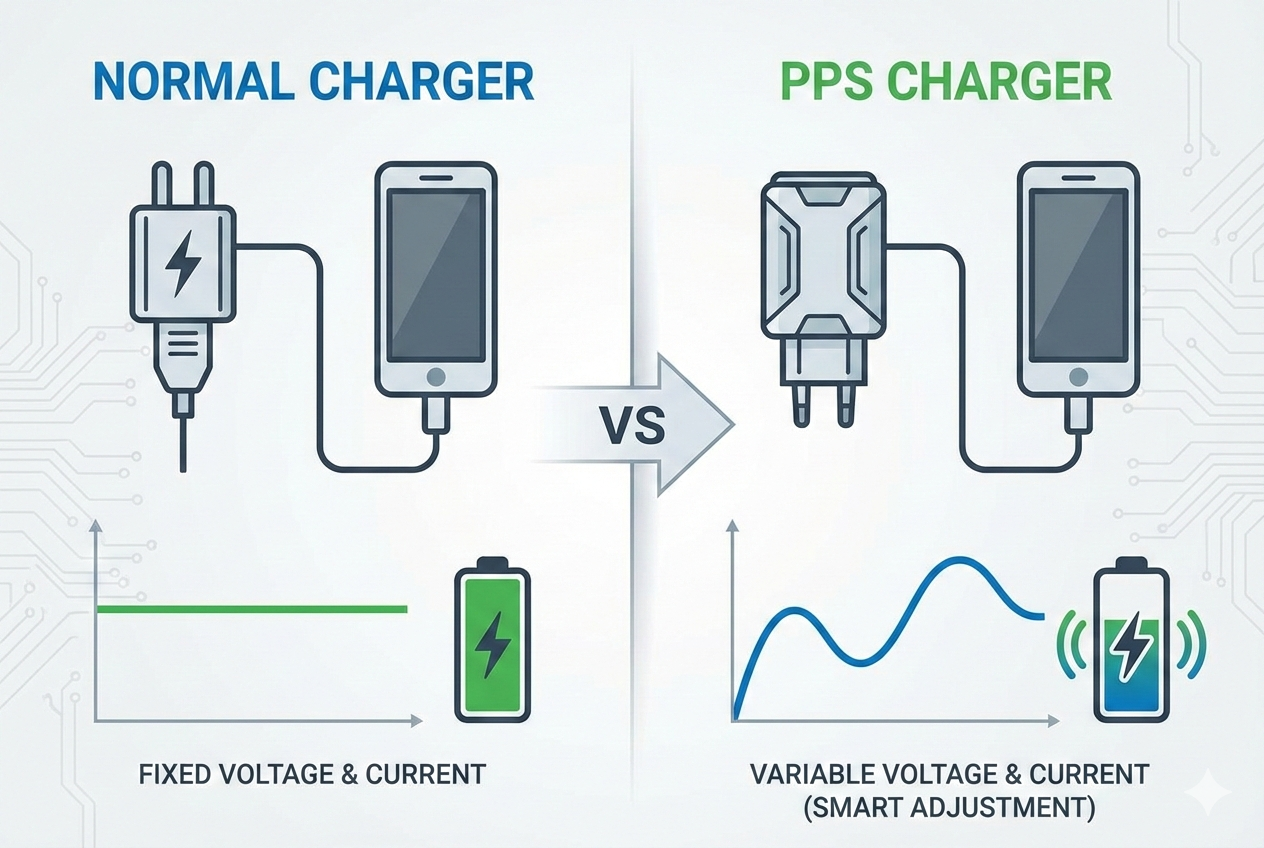
Normal fast chargers use fixed profiles. For example, they might offer 5V/3A, 9V/2A, or 12V/1.5A. The phone picks the closest profile and draws current. When the match is imperfect, the phone or charger wastes energy as heat. PPS, by contrast, lets the phone and charger meet in the middle. They use many small voltage steps. This reduces voltage mismatch. Less mismatch means less heat. Less heat means the device can sustain higher charging power longer. PPS also allows more precise thermal control[^8]. The phone can lower requested voltage when temperature rises. That keeps charging fast but safe. In practice, a PPS charger can charge some phones faster than a non-PPS charger even if their peak wattage is similar. Another key difference is compatibility. PPS requires both charger and phone to support the feature and to communicate over USB PD 3.0. If either side lacks PPS, charging falls back to standard PD or other fast-charge protocols.
Benefits of PPS Charging
I list practical benefits and how they matter for everyday use and battery health[^7].
PPS reduces heat, improves efficiency, allows sustained high-power charging[^9], and can extend battery longevity by matching the battery’s needs more precisely.
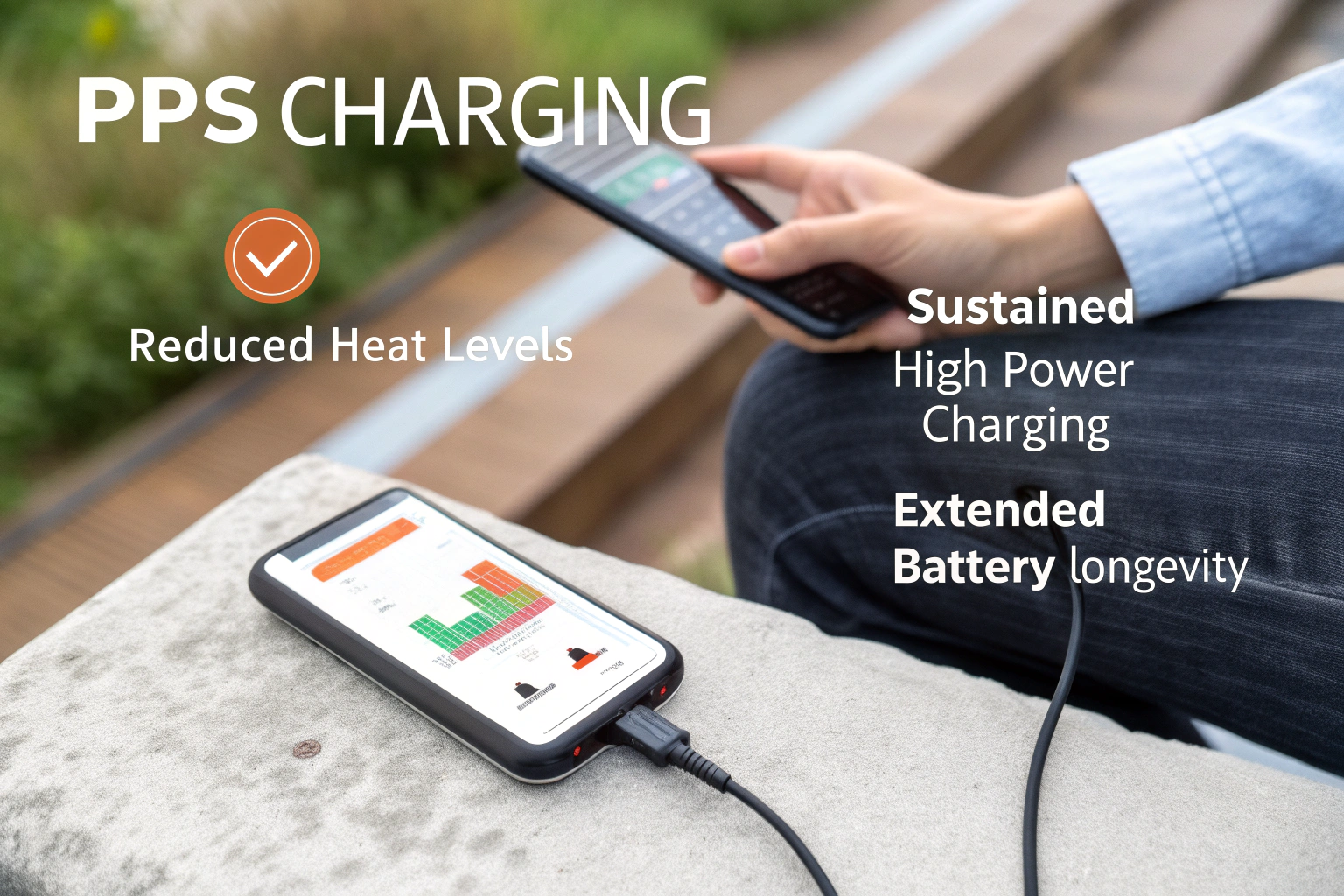
Reduced heat. PPS lowers wasted energy during charging. Less energy is lost as heat. This helps the phone stay cooler. Cooler charging reduces thermal stress on the battery and internal components. Higher efficiency. By matching voltage and current closely, PPS improves energy transfer. Less electricity is wasted for the same charge. Sustained high-power charging. Without PPS, chargers may throttle quickly when device temperature rises. PPS can maintain higher power longer by lowering voltage slightly when needed. This delivers faster real-world charging times. Better battery care. Batteries degrade faster under heat and high voltage. PPS keeps voltage and current more optimal, which can slow degradation. Flexibility. PPS supports more nuanced charging strategies. Manufacturers can tune charge curves to balance speed and longevity. Safety. Since PPS is part of USB PD 3.0, it benefits from the protocol’s safety checks and negotiation steps. Practical outcome. For users, this means shorter top-up times and cooler phones during charging. That is useful during heavy use, travel, or quick top-ups before leaving.
Which Devices Support PPS?
I outline common phone brands, chargers, and how to check for PPS compatibility[^10].
Many modern Android phones and quality USB-C PD 3.0 chargers support PPS. Samsung flagship phones, some Google Pixel models, OnePlus, and other brands often support PPS; iPhones do not use PPS.
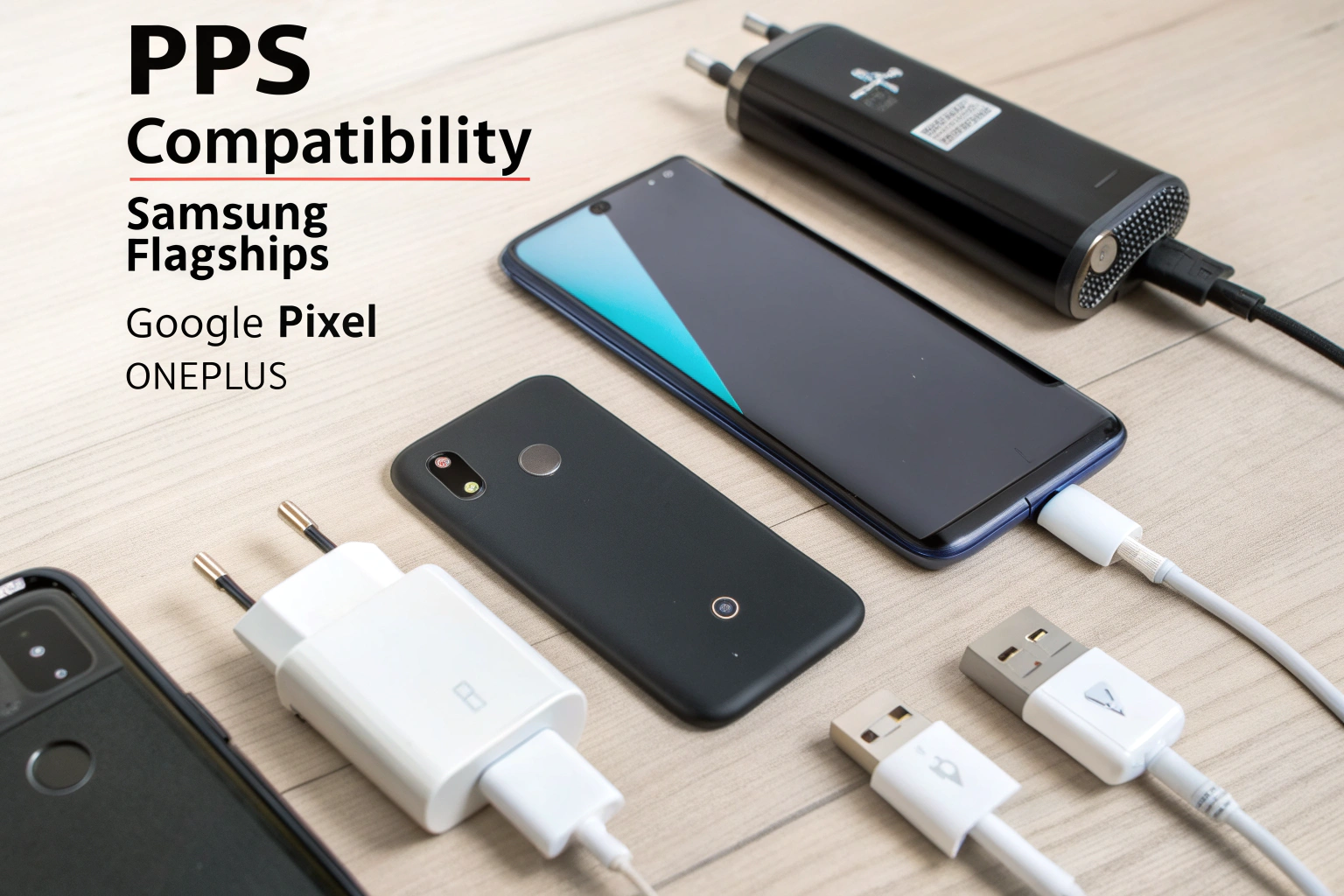
Support depends on both device and charger. Manufacturers list PPS support in specs or charging sections. Samsung calls it "Programmable Power Supply[^1]" in its tech docs and often lists super-fast-charging specs with PPS. Some Google Pixel models support PPS. OnePlus and other Chinese brands may support PPS in their high-watt chargers and phones. Many reputable third-party GaN chargers[^11] that advertise USB PD 3.0 also list PPS. To check compatibility:
- Read the phone’s charging specifications[^12] on the official site.
- Look for “PPS” or “PD 3.0 PPS” in charger specs.
- Use the original or certified USB-C cable[^5] that supports PD.
- If in doubt, the charger will fall back to standard PD, but PPS benefits will not apply. Note that Apple iPhones do not use PPS. iPhones follow Apple’s negotiated PD profiles and do not leverage PPS steps. Using a PPS charger with an iPhone still works as a PD charger but without PPS-specific gains.
I choose PPS-capable GaN chargers[^11] when my phone supports it for cooler, faster real-world charging.
Conclusion
PPS fast charging represents a major advancement in charging technology. By dynamically adjusting voltage and current, PPS delivers faster charging, better efficiency, and improved battery protection compared to traditional chargers.
If your device supports PPS, using a PPS-enabled charger is the best way to unlock its full charging potential while keeping your battery health[^7]ier for longer.
[^1]: Explore this link to understand how Programmable Power Supply enhances charging efficiency and reduces heat. [^2]: Learn about USB Power Delivery to see how it enables advanced charging features like PPS. [^3]: Understand the drawbacks of fixed-voltage charging compared to more advanced methods like PPS. [^4]: Discover the importance of charging efficiency for prolonging battery life and performance. [^5]: Understand the significance of USB-C cables in enabling fast and efficient charging. [^6]: Learn about high-wattage charging and how it can enhance your device's performance. [^7]: Discover how different charging technologies impact the overall health and lifespan of batteries. [^8]: Explore how thermal control mechanisms enhance safety and efficiency in charging. [^9]: Learn about the benefits of sustained high-power charging for faster device charging. [^10]: Find out how to verify if your device supports PPS for optimal charging performance. [^11]: Discover the advantages of GaN chargers for efficient and fast charging solutions. [^12]: Get tips on interpreting charging specifications to ensure optimal device performance.