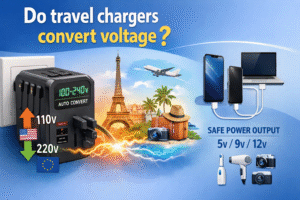
You see “PD” on a charger and wonder if it really makes charging faster and safer. You do not want to buy the wrong brick again.
PD on a charger means USB Power Delivery[^1]. It is a fast-charging protocol[^2] that negotiates voltage and current with your device to deliver safe, efficient, and universal power.
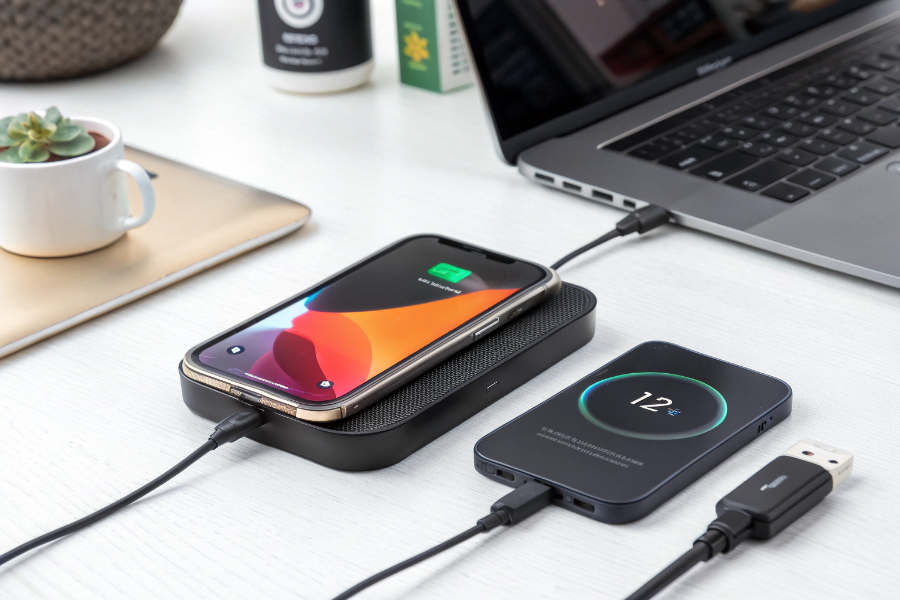
You want one charger that works across phones, tablets, and laptops. You want speed without heat. PD gives that with broad compatibility[^3] and smart control.
Is USB-C the same as PD?
You see the USB-C port and think it guarantees fast charging. You plug in and it crawls. The problem is not your phone. It is the protocol.
USB-C is only the connector shape. PD is the fast-charging protocol[^2]. A charger can have USB-C without PD, but a true PD charger uses USB-C and speaks the PD language for safe fast charging.
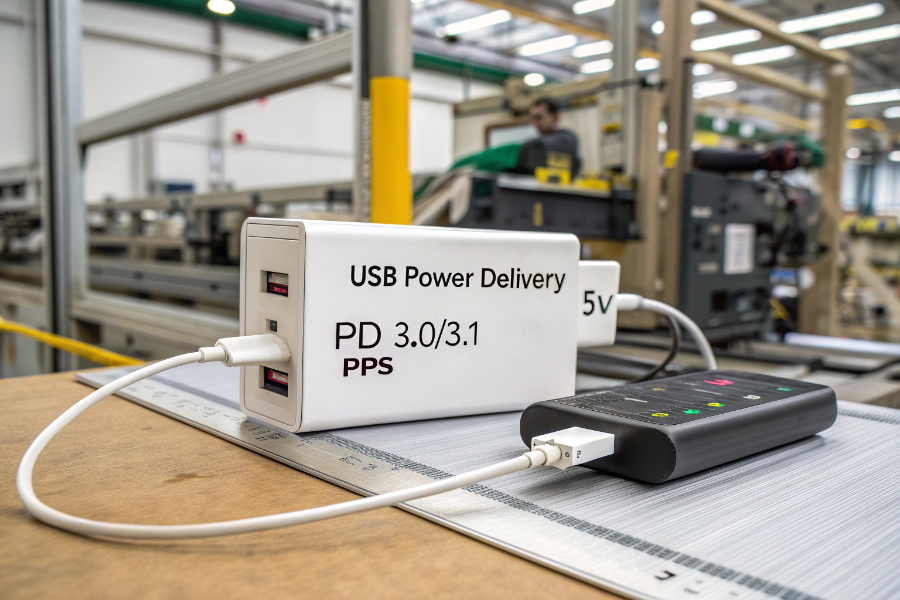
How I separate connector from protocol, and why it matters
I learned this on the factory floor. Many “USB-C” chargers output only 5V. They look modern, but they do not fast-charge. A PD charger performs a handshake with your device. It sets the right profile like 5V, 9V, 15V, 20V, or higher under PD 3.1 EPR. It adjusts in real time to manage heat and speed. That is why a PD charger can power phones at 20–30W, tablets at 45W, and laptops at 65–140W or more, while a plain USB-C 5V charger cannot.
Here is a quick checklist:
- Label: Look for “USB Power Delivery[^1],” “PD 3.0/3.1,” or “PPS.”
- Wattage: Match your device. 20–30W for phones, 45–65W for tablets, 65–140W+ for laptops.
- Cable: Use an e-marked USB-C cable[^4] for power over 60W.
Is a PD charger better than a normal charger?
You do not want a drawer full of bricks. You want one charger that covers all trips and all devices without drama.
A PD charger is better for most people. It is faster, more compatible across brands, and flexible for many devices. A normal 5V charger is slower and often device-specific.
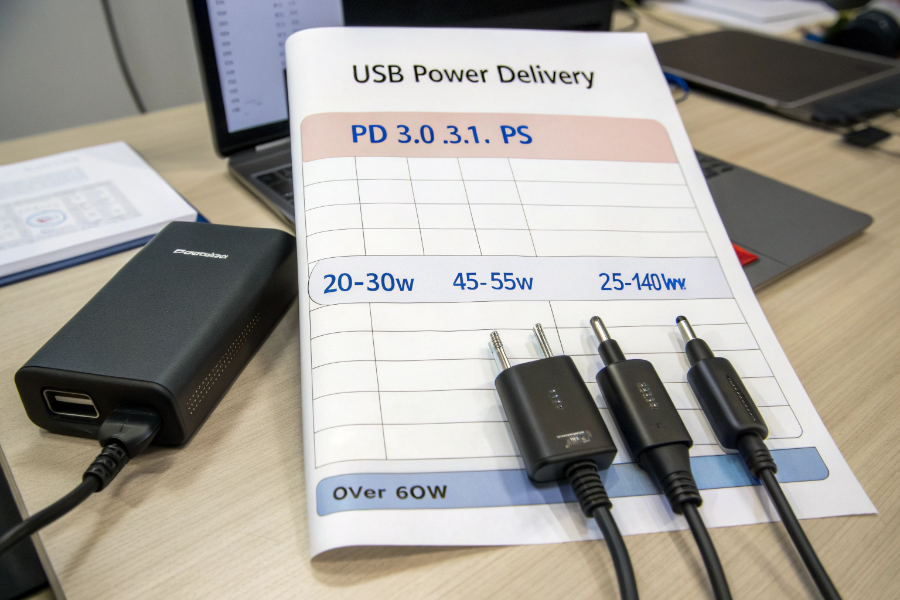
Real-life gains from PD vs. normal charging
I ship chargers to buyers who hate missed sales seasons. They need fewer returns and fewer heat complaints. PD helps both. It scales power with clean negotiation. It supports modern features like PPS for finer control[^5] on phones from Apple, Google, and Samsung. It powers laptops that a normal 5V charger cannot. It also reduces the risk of mismatched voltage because the device and charger agree first, then deliver power.
Simple comparison:
- Speed: PD can go up to 240W under PD 3.1 EPR. Normal 5V is often 5–12W.
- Compatibility: PD works across many brands and devices. Normal varies by vendor.
- Travel: One PD charger can replace three or four old bricks.
Is PD charging safe?
Fast charging sounds risky. You worry about heat and battery wear. You want safety first, speed second.
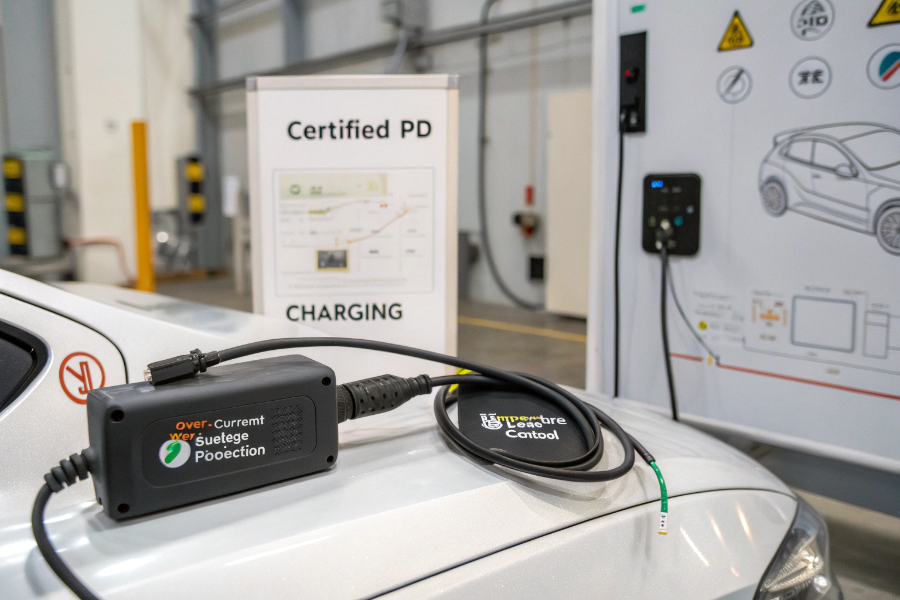
PD charging is safe when the charger and cable are certified. PD sets rules for negotiation, over-current[^6], over-voltage, and temperature control[^7]. Many PD chargers also support PPS for smoother thermal behavior.
How PD keeps devices safe in daily use
I have seen ports burn on bad bricks. The root cause is poor control. PD reduces that risk with strict handshakes. The device requests power. The charger confirms limits. Both watch for faults. If something goes wrong, the charger cuts or reduces power. With PPS, the charger can trim voltage in small steps, which lowers heat at high charge levels. This improves battery health over time. Pick certified gear[^8], check the wattage, and use quality e-marked cables for high power. Do that, and PD is safer than most legacy fast-charging systems[^9].
Below is a simple safety checklist:
- Certification: Look for UL/ETL/CE/FCC and “USB-IF certified” when possible.
- Cable rating: 100W or 240W e-marked for laptops and high-power use.
- Environment: Keep chargers ventilated. Avoid covered charging on soft surfaces.
- Firmware: Reputable brands update chips for better compatibility and fault handling.
Conclusion
PD means USB Power Delivery[^1]. It is not the same as USB-C. It brings faster, safer, and more compatible charging than normal 5V bricks for phones, tablets, and laptops.
[^1]: Understanding USB Power Delivery can help you choose the right charger for fast and safe charging. [^2]: Learn about fast-charging protocols to ensure your devices charge efficiently and safely. [^3]: Explore how broad compatibility can simplify your charging needs across multiple devices. [^4]: E-marked cables are essential for high-power charging; learn why they matter. [^5]: Understanding PPS can enhance your knowledge of advanced charging features. [^6]: Learn about over-current protection to ensure your devices are safe during charging. [^7]: Temperature control is crucial for safe charging; find out how it works. [^8]: Using certified gear can significantly reduce risks associated with charging devices. [^9]: Comparing legacy systems with PD can help you understand the evolution of charging technology.