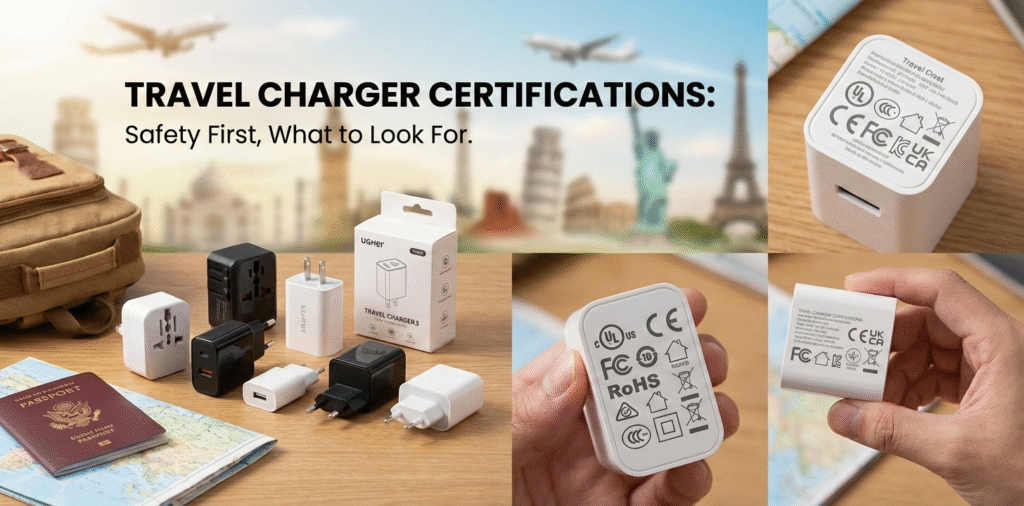
Travel chargers are essential accessories for modern life — keeping our phones, laptops, tablets, and wearables powered wherever we go. But not all chargers are created equal. To ensure safety, compatibility, and legal compliance[^1] in different markets, travel chargers[^2] must hold recognized certifications[^3]. These certifications help protect users from electrical risks and ensure the product meets regulated standards across regions.
A travel charger should carry recognized safety and regulatory certifications like UL/CSA[^4], CE[^5], FCC[^6], and, for USB-PD[^7] devices, USB-IF or Power Delivery compliance. These reduce risk and ensure legal use across markets.
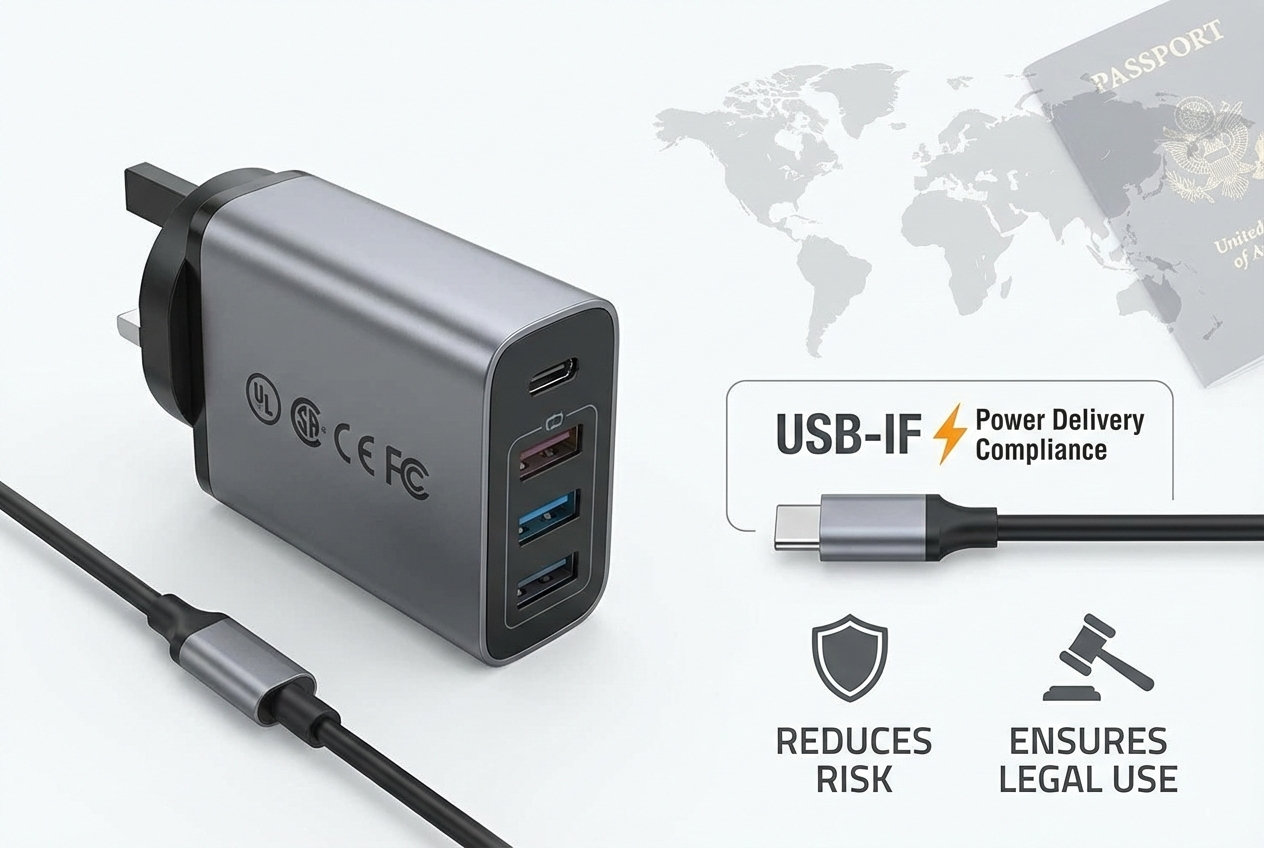
I learned to check labels before buying. Certifications show that independent labs tested the charger for electrical safety[^8], electromagnetic compatibility[^9], and performance. They also show the manufacturer follows rules for the region where you use the charger. A certified charger is not flawless, but it is far less likely to overheat, short-circuit, or damage devices. Look for a mix of safety marks[^10], EMC marks, and protocol or efficiency endorsements. Keep the documentation and test reports[^11] if you buy in bulk for resale.
If you travel or buy chargers for resale, choose units with proper, recognized certifications[^3] to avoid safety issues and customs problems[^12].
What are the certifications for chargers?
I used to guess which marks mattered and which were optional.
Key charger certifications include UL/CSA[^4] (North America), CE[^5] (Europe), FCC[^6] (USA EMC), UKCA (UK), PSE (Japan), CCC (China), BIS (India), RCM (Australia/NZ), and USB-IF for USB Power Delivery compliance. Energy-efficiency and safety standards like ENERGY STAR or DOE levels may also apply.
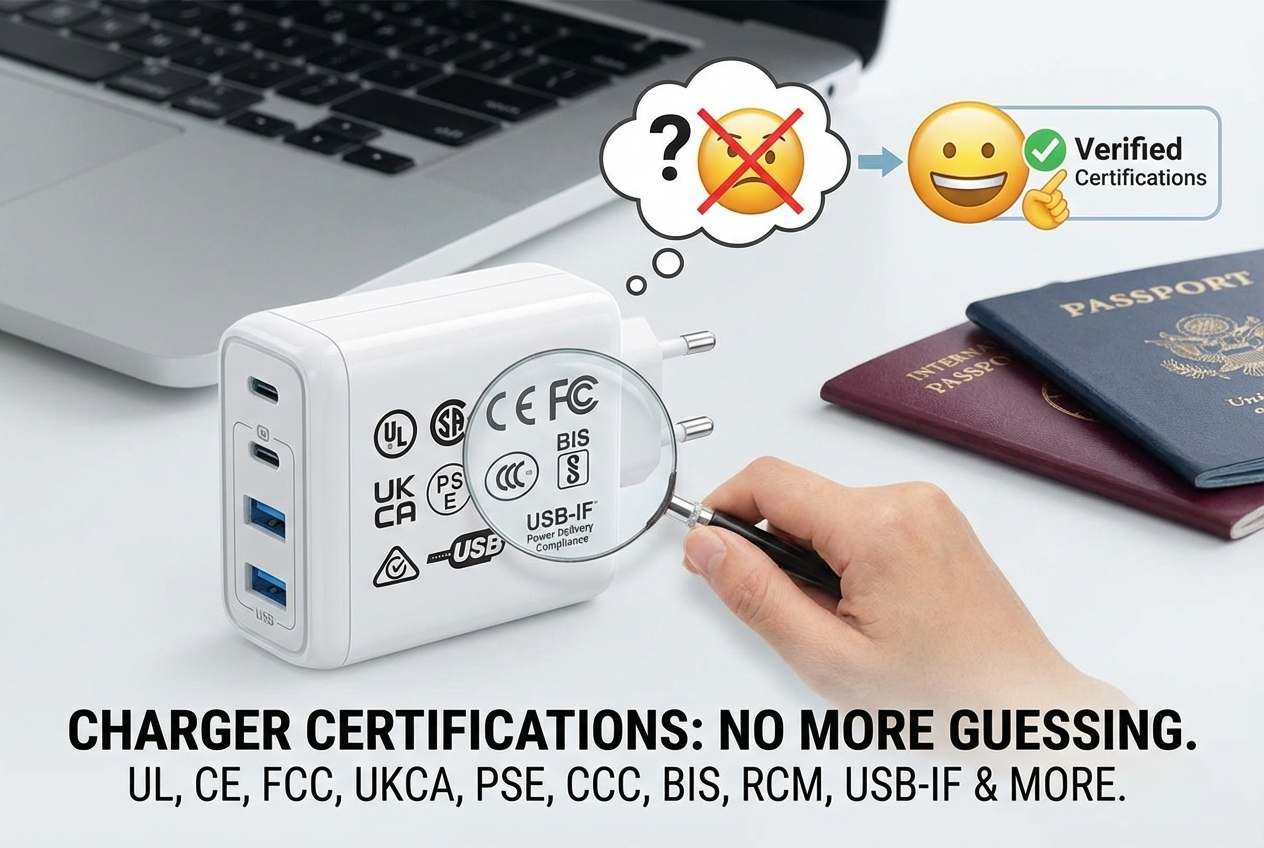
I always cross-check the certification marks with the region I will visit or sell in. Safety marks like UL or CSA verify that the charger passed electrical safety[^8] tests. EMC marks like FCC[^6] or CE[^5] show compliance with emissions and immunity rules. Protocol marks such as USB-IF show the charger follows charging standards, which protects devices. Efficiency regulations, like U.S. DOE or European EcoDesign, limit no-load power draw and require minimum efficiency. For travel chargers[^2], look for both safety and charging standard certifications. This combination reduces risk and improves device compatibility.
why each certification matters and what it covers (150+ words) I separate the main certifications by what they test. UL (Underwriters Laboratories) and CSA (Canadian Standards Association) focus on electrical safety[^8]. They test insulation, creepage distances, overheating, and flammability. CE[^5] (Conformité Européenne) is a self-declaration backed by technical files and, where needed, notified body testing. CE[^5] mainly covers low-voltage safety, EMC, and sometimes eco-design rules. FCC[^6] (Federal Communications Commission) Part 15 covers electromagnetic emissions in the United States. UKCA is the UK equivalent of CE[^5] after Brexit. PSE is Japan’s electrical appliance safety mark. CCC is China Compulsory Certification and covers safety and some EMC aspects for certain product categories. BIS is India’s safety mark for specified electronics. RCM covers both safety and EMC in Australia/New Zealand. USB-IF certification indicates proper implementation of USB Power Delivery, PD PPS, and compliance testing; it reduces the risk of improper voltage negotiation that can harm devices. Energy efficiency standards like DOE Level VI or EU Ecodesign limit wasted power and improve thermal performance. When I buy or import chargers, I map required marks to the destination market. That saves customs trouble and reduces liability.
Why Charger Certifications Matter for Safety and Compliance
I once saw a cheap charger with no marks and a melted plug.
Certifications show independent testing and enforce minimum safety, EMC, and performance standards. They protect users from fire, electric shock, interference, and device damage, and they keep products legally sellable in each market.
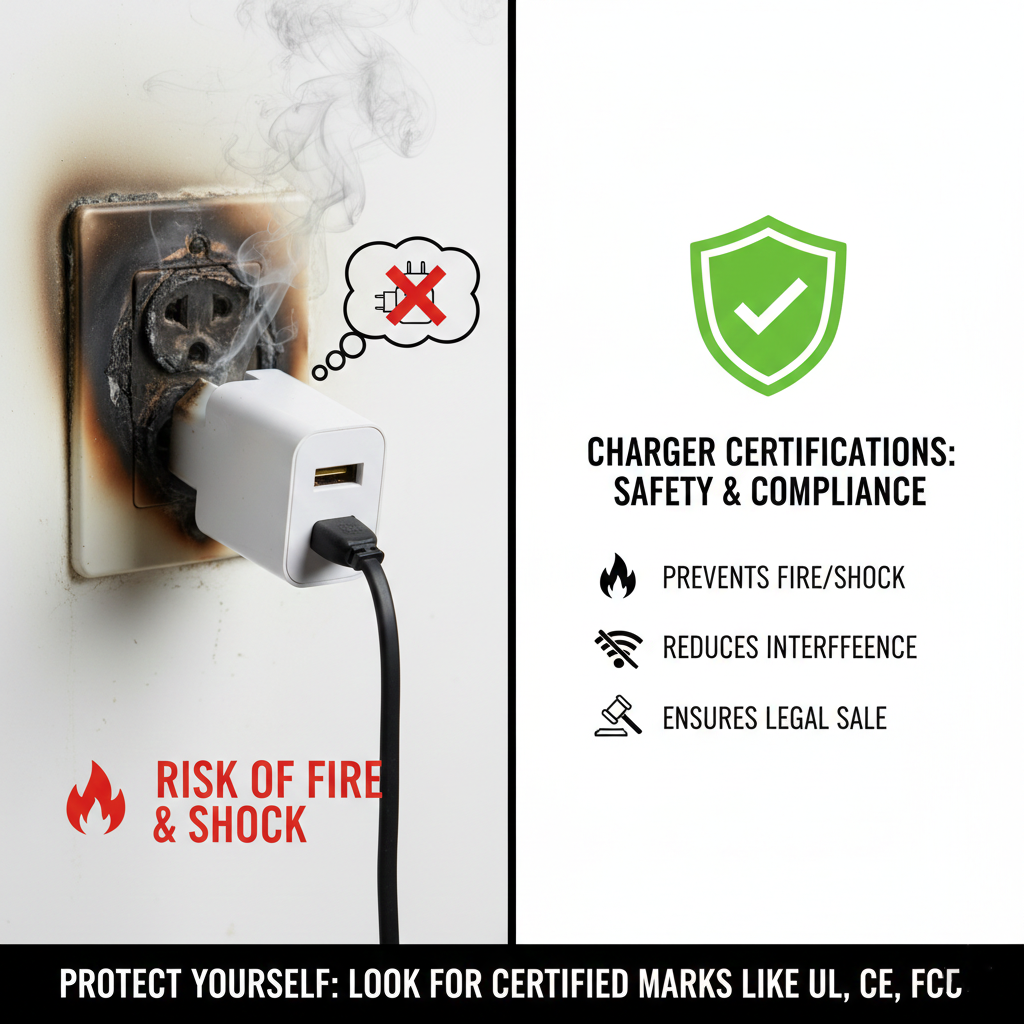
I avoid uncertified units because the risk is real. A certified charger has been designed, inspected, and tested to resist faults. That means better insulation, safer components, and thermal protection. Certification also covers EMC to prevent the charger from interfering with radios or being affected by other devices. For sellers, certifications reduce legal risk. Without proper marks, a product can be stopped at customs or recalled. Retailers often require certificates before listing items. For business buyers, certificates are evidence of due diligence. For end users, the marks help choose safer products and avoid hazards.
legal, insurance, and business reasons to insist on certifications (150+ words) I insist on certified chargers for three main practical reasons. First, legal compliance[^1]. Many countries require specific safety marks[^10] for imported electronics. Non-compliant goods face seizure, fines, or forced rework. That adds unpredictable costs and delays. Second, insurance and liability. If an uncertified charger causes a fire or damages property, manufacturers and importers face higher liability. Insurance claims may be denied if the product lacked required certifications. Third, retail and distribution requirements. Large retailers, e-commerce marketplaces, and corporate procurement teams often demand test reports[^11] and certificates from recognized labs before accepting a product. This protects their brand and customers. For these reasons, I require suppliers to provide test reports[^11] (CB reports, test certificates, or supplier declarations) and product samples for verification. I also verify the scope and validity of certificates. Buying certified chargers protects users and protects my business from costly legal and reputational risks.
Mandatory certification for chargers in different markets
I once had a shipment held because I missed a local mark requirement.
Different regions require different marks. For North America use UL/CSA[^4]; Europe needs CE[^5] (and local energy rules like Ecodesign); the UK requires UKCA; China needs CCC; Japan needs PSE; India needs BIS; Australia/NZ needs RCM. Check local thresholds and product categories.
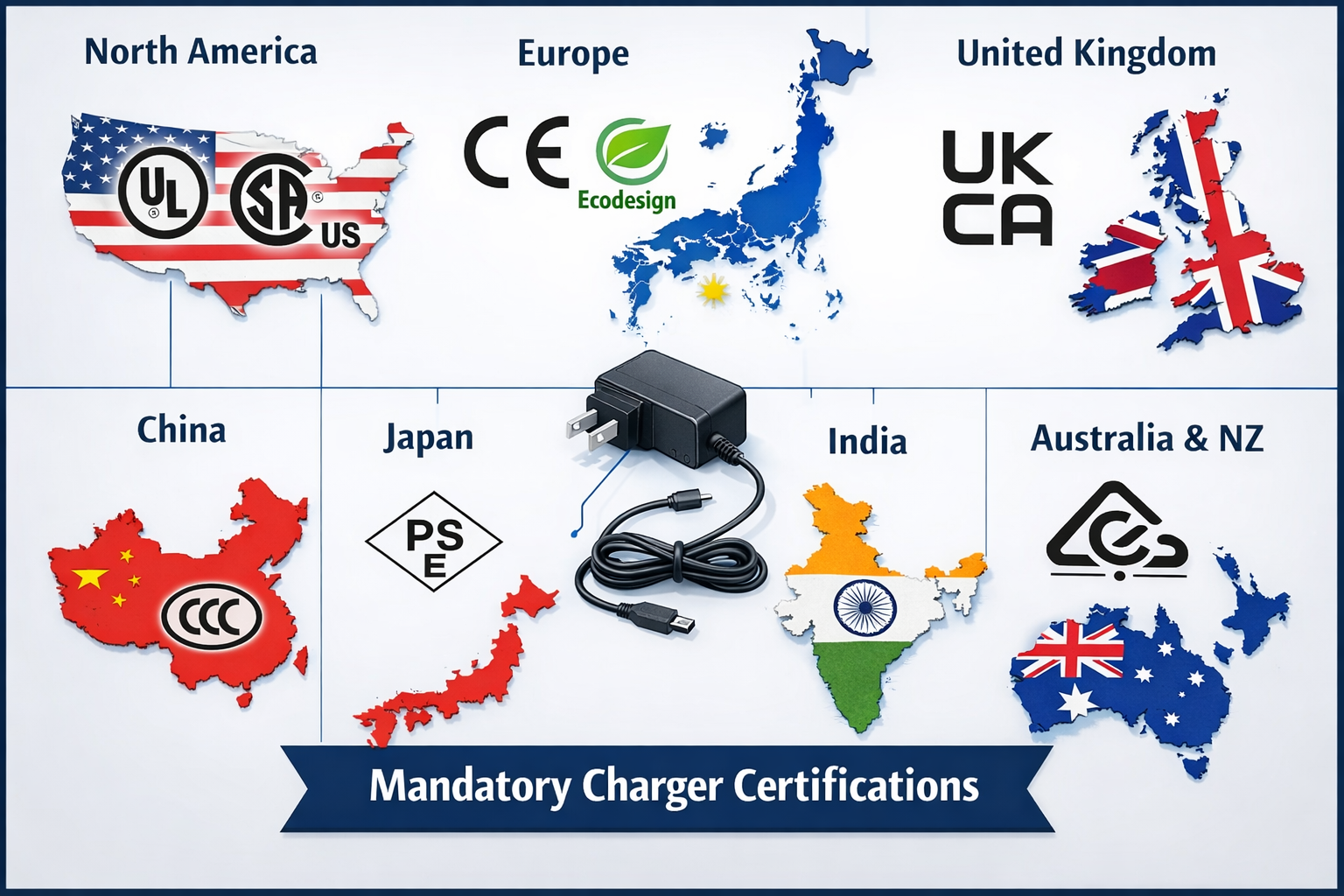
I map markets before importing. For example, a small 5W accessory may be exempt from CCC in some cases, but a 65W laptop charger usually requires CCC in China. Energy-efficiency or eco-design rules may apply to external power supplies in the EU and US, imposing minimum efficiency and standby power limits. Some countries require local labelling or a local representative. For travel chargers[^2], which often deliver tens of watts and include switching power supplies, most major markets require formal compliance. Always check the current national or regional rules before shipping.
checklist per market[^13] and common pitfalls (150+ words) I use a simple checklist when I prepare chargers for each market. For the US and Canada, obtain UL or CSA certification for safety and ensure FCC[^6] Part 15 compliance for EMC. For the EU, prepare CE[^5] technical files, test reports[^11] for Low Voltage Directive (LVD) and EMC Directive, and meet Ecodesign/ERP efficiency rules if the charger falls under external power supplies. For the UK, apply UKCA marking or accept CE[^5] during transition windows if allowed. For China, arrange CCC where mandatory and keep product testing documentation. For Japan, secure PSE for designated items. For India, confirm BIS registration for applicable products. For Australia/New Zealand, ensure RCM marking. Common pitfalls include relying on vendor self-declarations without test reports[^11], using generic certificates that do not specifically cover the product model, or missing energy efficiency[^14] rules. I also watch for counterfeit marks. I verify certificate numbers with issuing bodies and request lab reports that match the model and test conditions.
How do I know if a charger is certified?
I once received a file labeled “certificate” that was actually unrelated.
Check the physical mark on the product and packaging, request official test reports[^11] and certificates from accredited labs, verify certificate numbers with issuing bodies, and confirm the certificate scope matches the exact model.
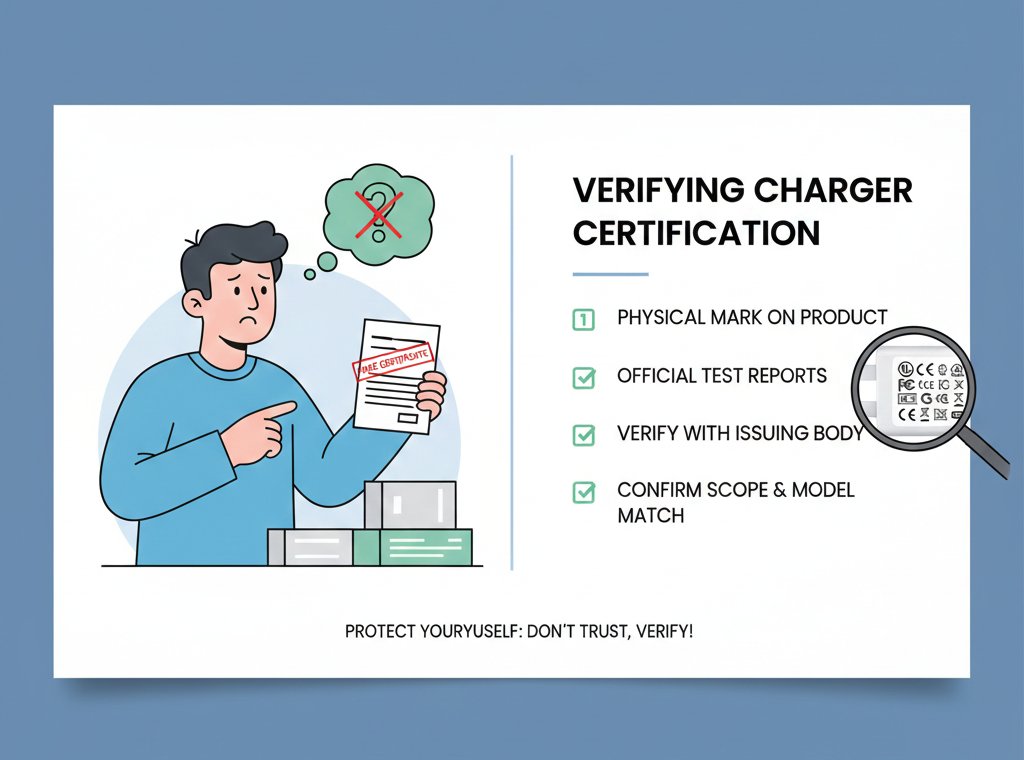
I never accept a product with only a photo of a logo. I ask the supplier for a full test report and certificate. I check that the model number, ratings, and hardware revision on the report match the product. I verify the issuing lab is accredited and that the certificate number is valid in the lab database. For CE[^5], I ask for the Declaration of Conformity and the technical file. For UL or CSA, I verify the file number. For USB-IF, I look up the product in the USB-IF certified products list. I also inspect the product for proper marking, safety labels, and a manufacturer address[^15] or authorized representative in the target market.
step-by-step verification and red flags[^16] (150+ words) I follow a step-by-step process to confirm certification. Step 1: inspect the product and packaging for clear marking — not just a logo but a proper mark with license number where applicable. Step 2: request the certificate and full test report, not just a scanned mark. The test report should show test dates, lab name, test standards, and the exact model identifier. Step 3: validate the issuing laboratory’s accreditation through national accreditation bodies (such as ILAC or local accreditation agencies). Step 4: cross-check certificate numbers on the certifier’s public database when possible. Step 5: examine the scope to ensure the tests covered the correct input voltages, power levels, and firmware version. Red flags include generic certificates that cover a family of products without model-specific data, expired certificates, mismatched model numbers, or certificates from unknown labs. I also perform a sample inspection and functional test before shipment. This process prevents surprises at customs and reduces safety risks for end users.
Insist on model-specific, verifiable certificates and lab reports to ensure chargers are legal, safe, and fit for sale in your target market.
Conclusion
Certifications are not mere formalities — they’re essential for safety, legal compliance[^1], and consumer confidence. Whether you’re purchasing or manufacturing travel chargers[^2], understanding and securing the right certifications protects users and ensures your product can be sold in global markets.
[^1]: Learn about the legal implications of using certified chargers in different markets. [^2]: Explore the advantages of travel chargers for keeping your devices powered on the go. [^3]: Learn about the importance of recognized certifications for ensuring product safety and compliance. [^4]: Understand how UL/CSA certifications enhance the safety of chargers and protect users. [^5]: Discover the significance of CE certification in ensuring compliance with European safety standards. [^6]: Find out how FCC certification ensures electromagnetic compatibility and safety for chargers. [^7]: Learn about USB-PD compliance and its role in safe and efficient charging. [^8]: Explore the critical aspects of electrical safety in chargers to prevent hazards. [^9]: Understand the importance of electromagnetic compatibility in electronic devices. [^10]: Explore how safety marks ensure consumer protection and product reliability. [^11]: Understand the significance of test reports in verifying charger safety and compliance. [^12]: Learn about the customs challenges associated with importing uncertified chargers. [^13]: Get a comprehensive checklist to ensure compliance with charger certifications in different regions. [^14]: Discover energy efficiency standards that help reduce power waste and improve performance. [^15]: Discover the importance of having a manufacturer address for compliance and accountability. [^16]: Identify potential issues in charger certifications to avoid unsafe products.