In today’s fast-paced world, we rely heavily on our smartphones, laptops, and other electronic devices, making chargers an essential part of our daily lives. However, not all chargers are created equal, and using low-quality or cheap chargers can lead to serious risks. In this article, we’ll discuss the dangers of using low-quality chargers[^1] and why charger quality truly matters.
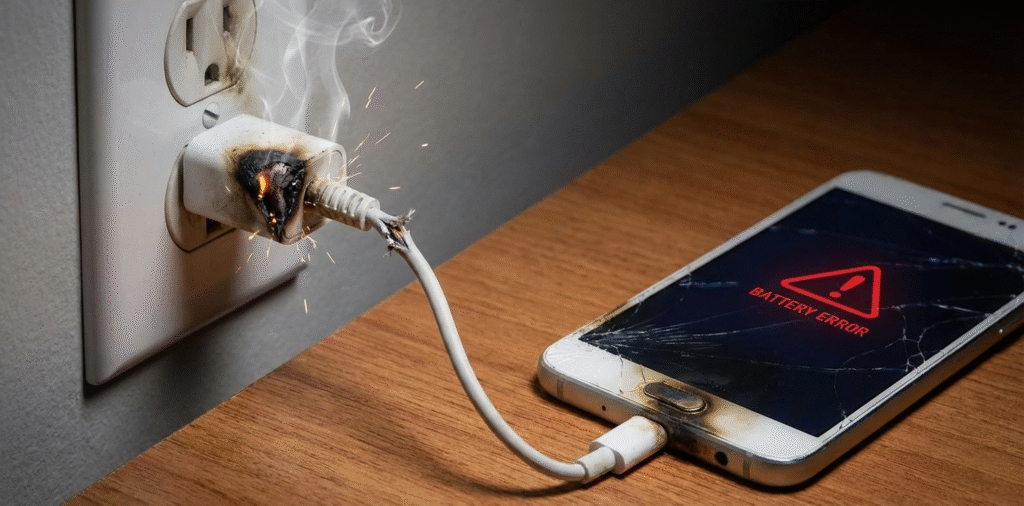
Low-quality chargers can overheat[^2], deliver unstable voltage[^3], lack protections, and damage devices or cause fires. Use certified, tested chargers to reduce risk.
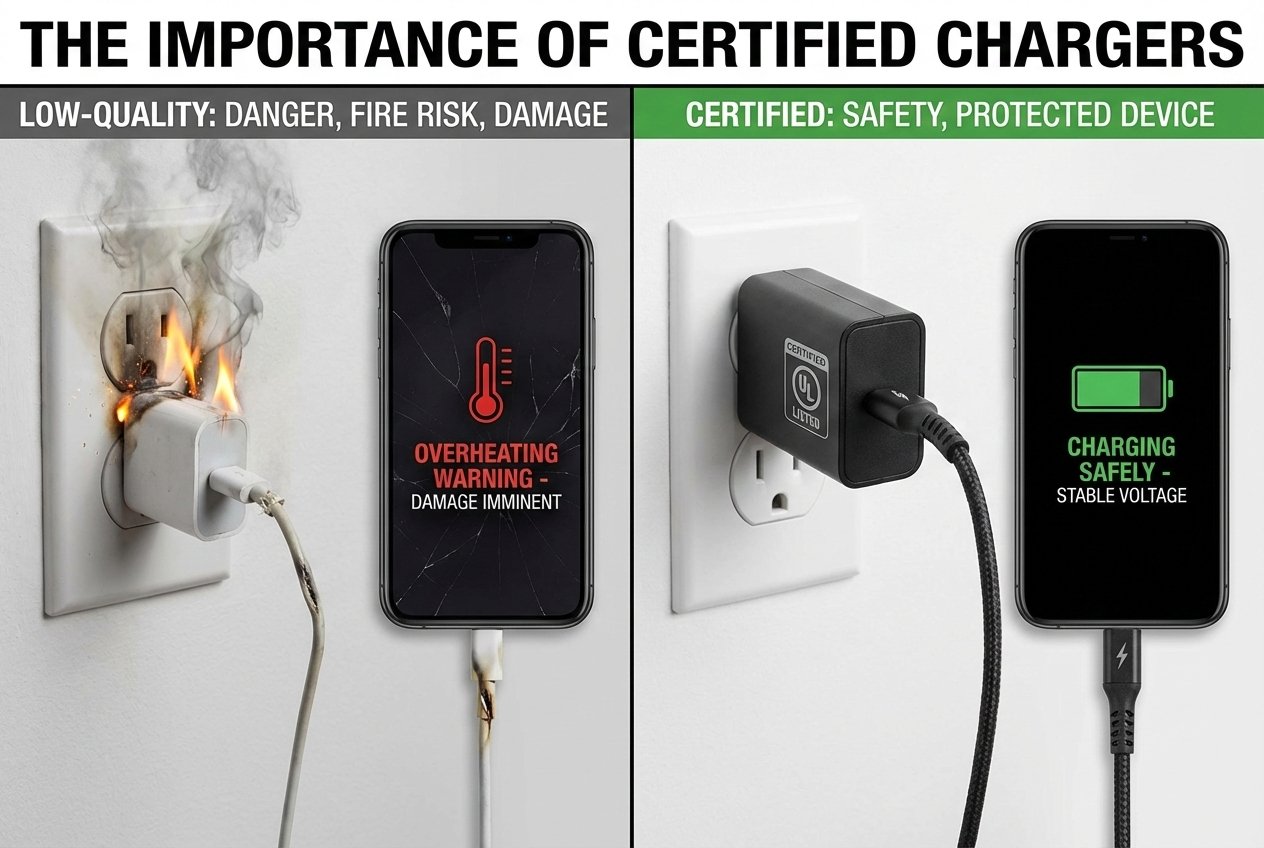
I learned the hard way that price alone does not prove safety. Cheap chargers can save money at first. Later they can cost far more in repairs, lost data, and danger.
Stop and check charger specs, protections, and certifications before you buy or plug in a low-cost adapter.
Is it safe to use cheap chargers?
Not always. Some cheap chargers work fine, but many lack safety features and quality control. That makes them risky for long-term use.
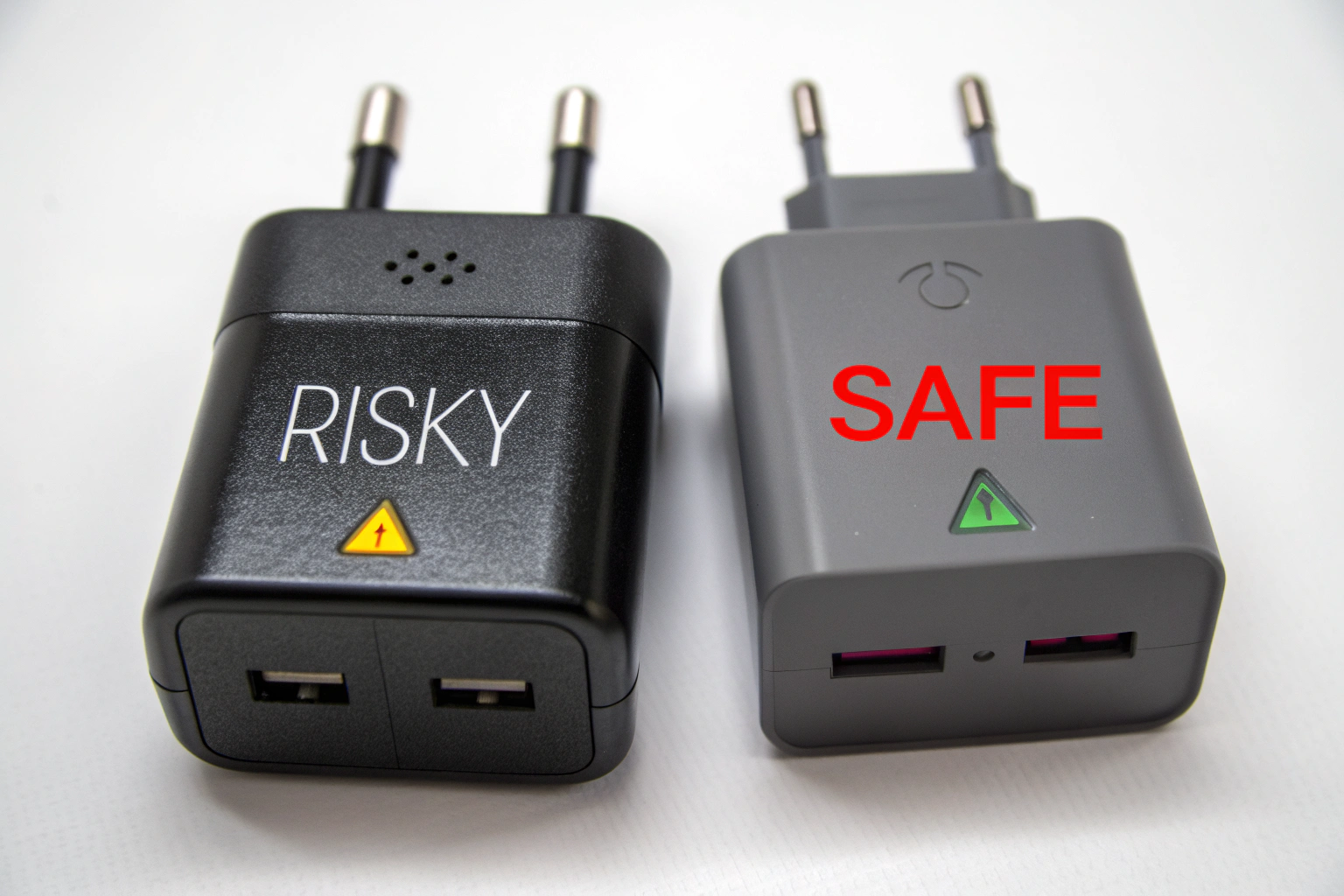
I tell people: a low price may hide missing protections. Cheap units often skip fireproof materials[^4], thermal fuses[^5], and proper insulation. They might use poor soldering and cheap capacitors. These defects raise the chance of short circuits[^6] and overheat[^2]ing. I have seen cheap adapters that output unstable voltage[^3]. That can stress phone charging circuits[^7] and batteries. Some units cheat on ratings and run hot under normal load. In many regions, counterfeit chargers[^8] fake safety logos. That gives a false sense of security. If you must use a low-cost charger, test it in a safe place. Watch for heat, smell, or odd noises. Avoid leaving it charging unattended or overnight.
real risks, failure modes, and user examples (150+ words) Cheap chargers fail in predictable ways. Electrical components may be undersized. That raises internal temperature under load. Heat then speeds component aging and can cause sudden failure. Poor regulation leads to voltage spikes[^9] or drops. Spikes can stress the phone’s power management IC and battery cells. Drops can force phones to draw more current and run hotter. Many low-cost chargers lack over-current, over-voltage, short-circuit, and thermal protection. Without these, a fault can escalate into a fire. Some designs omit isolation between mains and low-voltage circuits. That creates shock risk if the case is damaged. Counterfeit units sometimes use recycled or counterfeit capacitors that fail early. I once tested a bulk cheap charger and found its output drifted under temperature. Another time I saw a cheap adapter cause a phone to fail charging after weeks of intermittent high heat. For peace of mind, choose chargers with recognized safety marks (UL, CE, FCC where applicable) and ask suppliers for test reports. Insist on good build photos and sample testing in your own lab or with trusted testers.
Does charger quality matter?
I compare chargers by build, specs, and test logs before I buy in quantity.
Yes. Charger quality affects charging speed[^10], device health, safety, and long-term battery life[^11]. Higher-quality chargers give stable output and built-in protections.
I always weigh cost versus risk. A well-made charger costs more but reduces returns and warranty claims. Quality matters for three main reasons: safety, performance, and longevity. Safe chargers prevent fire and electric shock. High-quality units use better components and thermal design, so they run cooler. Performance-wise, quality chargers provide accurate voltage and stable current. That means predictable charging curves and less stress on the battery. Longevity comes from good components and protections. A quality charger also supports standardized protocols (PD, PPS, or vendor fast-charge) correctly. That yields faster, cooler charging on compatible phones. For buyers and resellers, quality lowers the chance of customer complaints and regulatory trouble.
what "quality" means, what to check, and procurement tips (150+ words) Quality has clear markers. Start with certifications: look for USB-IF for PD, and regional safety marks like UL, ETL, CE, PSE depending on market. Ask suppliers for test reports: Hi-POT (insulation), surge, thermal, and EMC. Inspect the bill of materials: branded capacitors, MOSFETs, and controller ICs show better sourcing. Check mechanical design: solid strain relief, good soldering, and fire-retardant plastic reduce long-term failure. Test charging behavior: measure voltage under load, check temperature rise over repeated cycles, and verify protocol negotiation (PD, PPS, AVS, etc.). For procurement, request samples and run a 100-cycle thermal test with a real device. Require traceability and warranty terms. Multi-protocol chargers that fall back safely to basic 5V charging help when device compatibility is mixed. Finally, train sales or purchasing staff to reject suspiciously cheap offers that lack documentation.
Is a bad charger bad for your phone?
I once replaced a phone that stopped charging correctly after months on a cheap adapter.
Yes. A bad charger can shorten battery life[^11], damage charging circuits[^7], corrupt data during charging, or cause sudden failures or fire.
I track warranty cases and many device failures trace back to poor charging gear. Batteries endure stress from high temperature and irregular voltage. Repeated high-heat charging reduces cycle life. Voltage spikes can damage the phone’s charging IC or battery protection circuits. In extreme cases, internal cells swell, leak, or catch fire. Even when the phone survives, faulty chargers can cause slow or unstable charging and unexpected shutdowns. If you see battery swelling, unusual heat, or charging errors[^12], stop using the suspect charger immediately. Use an approved charger and check the phone for damage. For business, require customers to use certified chargers[^13] and provide clear charger specs with devices to reduce post-sale issues.
battery chemistry, thermal effects, and device electronics (150+ words) Li-ion batteries[^14] react badly to heat and overvoltage. Excess heat speeds chemical breakdown, reduces capacity, and increases internal resistance. That causes faster capacity loss and more heat at each cycle. Voltage spikes may break down protective circuits inside the battery pack or damage the phone’s power management IC. That can lead to incorrect charging behavior or inability to charge at all. The phone’s internal charging path includes MOSFETs, sense resistors, and filter components. Poor charger quality can cause ringing, EMI, or poor filtering that stresses these parts. In some cases, charging while the phone is cold or very hot can cause plating or dendrite formation inside cells. That increases the risk of short-circuit inside the cell. For users, the safest path is to use chargers that follow standards and include protections. For suppliers, insist on thermal and cycle testing. For technical teams, monitor charging curves and battery impedance over time to spot early degradation caused by poor chargers.
Protect phones and users by choosing certified, tested chargers and by training customers to avoid suspicious, ultra-cheap adapters.
Conclusion
When it comes to chargers, quality should never be compromised. While using a cheap charger might seem like a quick and inexpensive option, the risks far outweigh the savings. Over time, a bad charger can damage both your device and your wallet. Always opt for a charger that’s from a reputable brand, has the necessary certifications, and meets safety standards[^15]. Protect your devices, your data, and most importantly, your safety by choosing high-quality chargers designed for your specific device.
[^1]: Understanding the risks associated with low-quality chargers can help you make informed decisions and protect your devices. [^2]: Exploring the reasons behind charger overheating can help you choose safer options and avoid potential hazards. [^3]: Learning about unstable voltage can help you understand the importance of charger quality and its impact on device performance. [^4]: Discovering the role of fireproof materials in chargers can enhance your understanding of safety features. [^5]: Understanding thermal fuses can help you appreciate the safety mechanisms that protect your devices. [^6]: Learning about short circuits can help you recognize the risks of using low-quality chargers. [^7]: Exploring charging circuits can enhance your understanding of how chargers interact with devices. [^8]: Exploring the dangers of counterfeit chargers can help you avoid scams and protect your devices. [^9]: Understanding voltage spikes can help you recognize the importance of using quality chargers. [^10]: Understanding the relationship between charger quality and charging speed can help you choose the best options for your devices. [^11]: Learning how chargers affect battery life can help you make better choices for long-term device health. [^12]: Understanding the causes of charging errors can help you troubleshoot issues and choose better chargers. [^13]: Certified chargers ensure safety and reliability, making them essential for protecting your devices. [^14]: Learning about Li-ion battery chemistry can help you understand the risks of using low-quality chargers. [^15]: Exploring safety standards can help you ensure that the chargers you use are reliable and safe.