When you're on the road, having a reliable car charger[^1] is essential for keeping your devices powered up. However, not all car chargers are created equal. Low-quality or cheap chargers can present a variety of risks and dangers to your devices, vehicle, and safety. In this article, we will explore the potential dangers of using low-quality car chargers[^2], including issues with voltage regulation[^3], overheating, build quality[^4], and safety. We will also provide tips on how to avoid these risks by choosing a high-quality car charger.
Low-quality car chargers can damage devices, start fires, ruin batteries, and disrupt car electronics. Avoid uncertified, undersized, or fake chargers to stay safe.
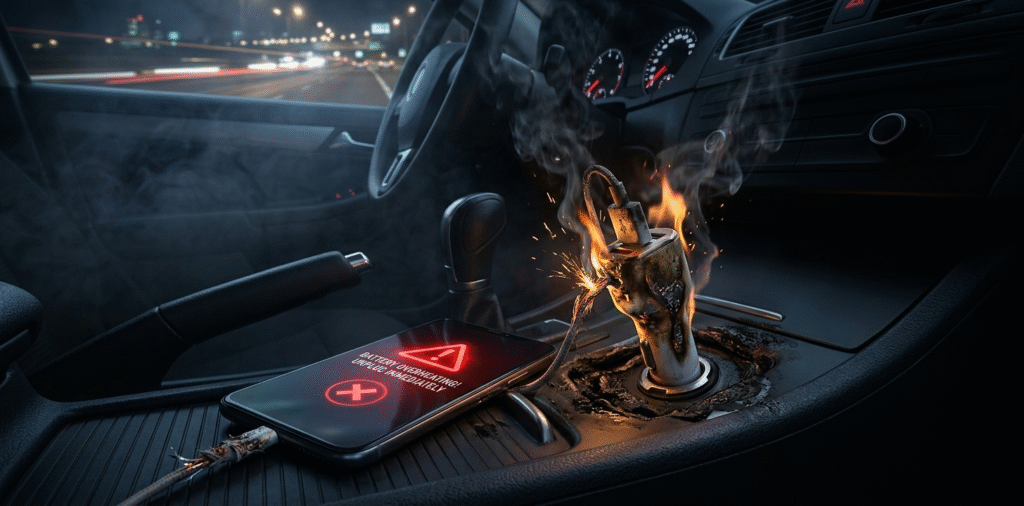
I learned this after a charger melted a cable and made my cigarette lighter socket smell burned. The charger looked fine at first. Later I found charred plastic and a blown fuse. That experience made me inspect chargers more carefully.
Stop and think before you plug in a bargain charger. The wrong charger can cost more than the few dollars you saved.
Poor voltage regulation[^3] and device damage?
I plugged a cheap charger into my phone and noticed strange battery behavior.
Bad chargers can deliver unstable voltage. Spikes or drops can harm phone circuits, corrupt data, or cause sudden shutdowns.
I once used a no-name charger that caused my phone to reboot randomly. The charger lacked proper voltage regulation[^3] and produced voltage spikes when the car engine revved. Those spikes stressed the phone’s power IC and caused software crashes. Over time, repeated electrical stress can degrade internal components. That may shorten device life or cause permanent damage. Good chargers follow USB Power Delivery[^5] or Quick Charge negotiation[^6]. They keep voltage inside safe margins. Cheap units may not follow these protocols. They may also skip surge suppression[^7] or poor filtering. For sellers and buyers, insist on certifications and test samples under real driving conditions[^8] before buying in bulk.
electrical risks, how regulation works, signs of trouble Voltage regulation means the charger provides a steady output voltage despite changes in input or load. Quality car chargers include switching regulators, feedback loops, and protective components like transient voltage suppressors (TVS) and capacitors. These parts smooth out spikes from the car’s electrical system. A poor charger may use cheap components or no regulation at all. That leads to voltage spikes when the alternator load changes, or to voltage sag under high load. Both extremes stress phone components. Signs of poor regulation include rapid battery percentage swings, random reboots, slow charging, or the phone not recognizing the charger. Over time, capacitor stress and silicon junction heating can cause permanent failures. Manufacturers should test chargers for load transients, surge protection, and EMC compliance. Buyers should look for certifications such as CE, FCC, UL, or RoHS, though counterfeit markings exist. Use a USB power meter to check voltage and current under load. If the charger shows unstable voltage or excessive ripple, stop using it.
Overheating, thermal throttling, and fire risk?
My cheap charger got hot and the phone slowed its charging.
Low-quality chargers often run hot. Heat can reduce charging speed, age batteries, melt plastic, and in worst cases start fires.
I felt the charger warm after a short drive. The phone also reported a temperature warning and slowed charging. Heat comes from inefficient design and poor component choice. Cheap boards use undersized coils, resistors, and mosfets that dissipate excess power as heat. Heat increases internal resistance in lithium batteries and accelerates chemical aging. It can also warp plastic enclosures and damage insulation. In extreme cases, a failing charger can short and ignite nearby materials. For safety, choose chargers with thermal protection[^9], proper ventilation, and testing for high-temperature operation[^10].
causes of overheating, battery chemistry effects, safety features to seek Overheating has multiple causes. Inefficient switching leads to higher losses. Cheap transformers or coils with poor winding create localized hotspots. Inadequate PCB layout and poor heat paths trap heat. When the ambient car temperature is high, such as in summer, these problems get worse. Lithium-ion batteries degrade faster when repeatedly exposed to high temperatures. Elevated temperature speeds up unwanted chemical reactions in the battery, reduces capacity, and shortens cycle life. Thermal runaways are rare but possible when protective systems fail. Good chargers include thermal cutoffs, temperature sensors, and automatic current reduction when they sense heat. Some also include fire-retardant housings. Look for datasheets and temperature ratings. Avoid chargers that feel excessively hot during light use. If a charger becomes too hot to touch, unplug it immediately and inspect for damage.
Poor build quality[^4] and connector failures[^11]?
My cable port started to wiggle after a month of cheap charger use.
Cheap chargers and cables wear out faster. Loose connectors cause intermittent charging, arcing, and contact damage.
I noticed sparks when I wiggled the connector. That indicated poor mechanical tolerances and bad solder joints inside the charger. Weak strain relief lets cables fray at the entry points. Metal contacts with poor plating corrode faster. Intermittent contact can cause arcing and pitting. Arcing damages pins and increases resistance, which creates more heat. Over time, the port can fail completely. Choose chargers with robust housings, reinforced strain relief, and strong connector springs. Avoid flimsy plastic that cracks under stress.
mechanical failure modes, testing, and procurement tips Mechanical failures are common in low-cost electronics. Components like USB connectors, solder joints, and cable terminations face repeated stress. Poor soldering can create cold joints that crack over time. Cheap plastics become brittle with heat and UV exposure, leading to broken housings. Arcing from intermittent contacts erodes contact surfaces and can deposit conductive residues. To guard against this, inspect connectors for firm seating and minimal play. Use cables with braided or reinforced jackets and tested strain relief. When buying in quantity, request X-ray or cross-section images of internal assembly, or insist on third-party reliability testing such as MIL-STD-810 style vibration tests. For retail buyers, read long-term user reviews[^12] that mention durability. Warranty and return policy also matter. A short warranty often signals low confidence from the manufacturer.
Safety and interference with car electronics?
A cheap charger tripped my car’s fuse and caused Bluetooth glitches.
Poorly designed chargers can create EMI, blow fuses, and interfere with car electronics like sensors and infotainment systems.
I once had a charger that caused my car radio to hiss and my OBD-II scanner to report errors. Cheap switching regulators can emit electromagnetic interference[^13] (EMI). They may not filter noise on the input side. That noise travels into the car’s electrical system and can confuse sensitive modules. In one case, the charger drew excessive current and the car’s accessory fuse blew. Fuse failure can leave you stranded. Certified chargers undergo EMC testing to limit emissions. If your car behaves oddly after installing a charger, remove it and test again.
how chargers affect car systems, standards, and signs of trouble Modern cars rely on many electronic control units (ECUs) and sensitive sensors. Unfiltered switching noise can couple into audio lines, CAN bus, or sensor traces. Poorly suppressed switching spikes may register as false signals or disrupt communication between modules. In addition, chargers that draw more current than rated can overload accessory circuits. Automotive power systems also experience transients from load dumps when the alternator or battery connections change. Automotive-grade devices include transient suppression and meet ISO 7637 or similar standards. Consumer phone chargers often do not. If you notice radio interference, erratic sensor readings, or dashboard warnings when a charger is connected, disconnect it immediately. Use automotive-grade adapters with proper input filtering, and consider installing chargers fused to appropriate circuits rather than using high-current taps without protection.
How to avoid low-quality car chargers[^2]?
I switched to certified chargers and tested them before daily use.
Buy from reputable brands, check certifications, read reviews, and test chargers and cables under real driving conditions[^8] before committing.
I now buy chargers with known safety marks, good reviews, and clear specs. I test each unit with a USB power meter and feel the housing during use. I avoid sellers who fake certifications or use meaningless logos.
checklist for buying and testing Use this checklist when choosing car chargers. 1) Look for safety certifications[^14]: UL, ETL, CE, FCC, or automotive standards. 2) Verify PD or QC negotiation support if you need fast charging. 3) Inspect build quality[^4]: solid metal or reinforced plastic housings, tight connectors, and good strain relief. 4) Test with a USB power meter: check voltage stability, ripple, and real current under load. 5) Check thermal behavior: run the charger under normal load for 15–30 minutes and feel for excessive heat. 6) Read long-term user reviews[^12] for durability and interference reports. 7) Buy from reputable suppliers and keep samples for QC if you buy in bulk. 8) Ensure proper warranty and return policy[^15]. Following these steps reduces risk and protects devices, cars, and passengers.
Conclusion
Low-quality car chargers pose significant risks, including poor voltage regulation[^3], overheating, connector failures[^11], and interference with your car’s electronics. These issues can not only damage your devices but also jeopardize your safety. By choosing a high-quality, certified car charger, you can protect your devices and avoid unnecessary risks.
When shopping for a car charger, always prioritize reliability, safety features, and brand reputation to ensure a smooth, safe, and efficient charging experience on the road.
[^1]: Explore this link to find top-rated reliable car chargers that ensure your devices stay powered safely. [^2]: Learn about the risks associated with low-quality car chargers to protect your devices and safety. [^3]: Understanding voltage regulation can help you choose chargers that protect your devices from damage. [^4]: Learn how to evaluate the build quality of car chargers to ensure durability and safety. [^5]: Discover the importance of USB Power Delivery for fast and safe charging. [^6]: Learn how Quick Charge negotiation enhances charging efficiency and device safety. [^7]: Find out how surge suppression protects your devices from voltage spikes. [^8]: Explore how to effectively test chargers in real driving conditions for safety. [^9]: Find out which thermal protection features are essential for safe car chargers. [^10]: Discover methods to test car chargers for high-temperature performance and safety. [^11]: Explore common connector failures to understand how they can affect charging performance. [^12]: Explore the significance of long-term user reviews in assessing charger reliability. [^13]: Understand electromagnetic interference and its impact on car electronics when using chargers. [^14]: Check this resource to learn about essential safety certifications for car chargers. [^15]: Understand the importance of warranty and return policies when purchasing chargers.