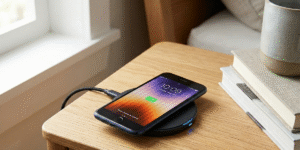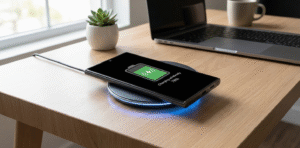
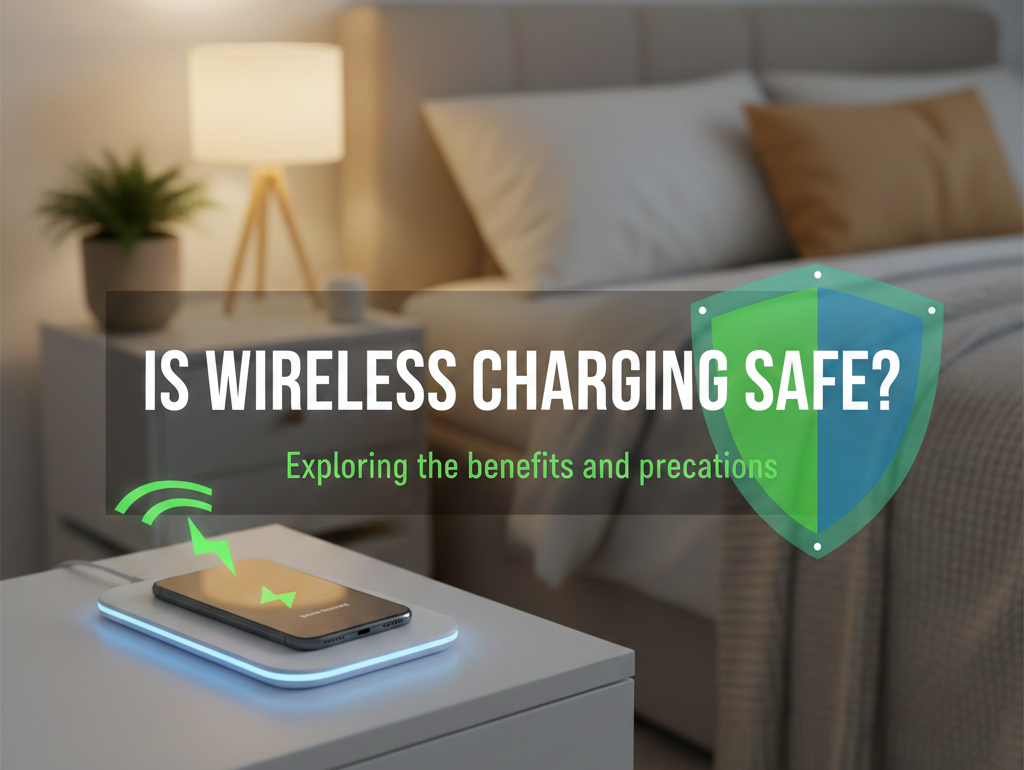
Wireless charging[^1] has gained widespread popularity due to its convenience and the modern design of smartphones. But with its growing use, many people have concerns about whether it's truly safe for devices and battery health[^2]. In this article, we’ll explore the safety of wireless charging, address common questions, and discuss its potential drawbacks.I once left a phone on a cheap wireless pad and woke to a hot phone.
Wireless charging[^1] is generally safe when you use certified pads[^3] and quality cables; risks drop with proper matching, ventilation, and smart chargers[^4] that manage heat.
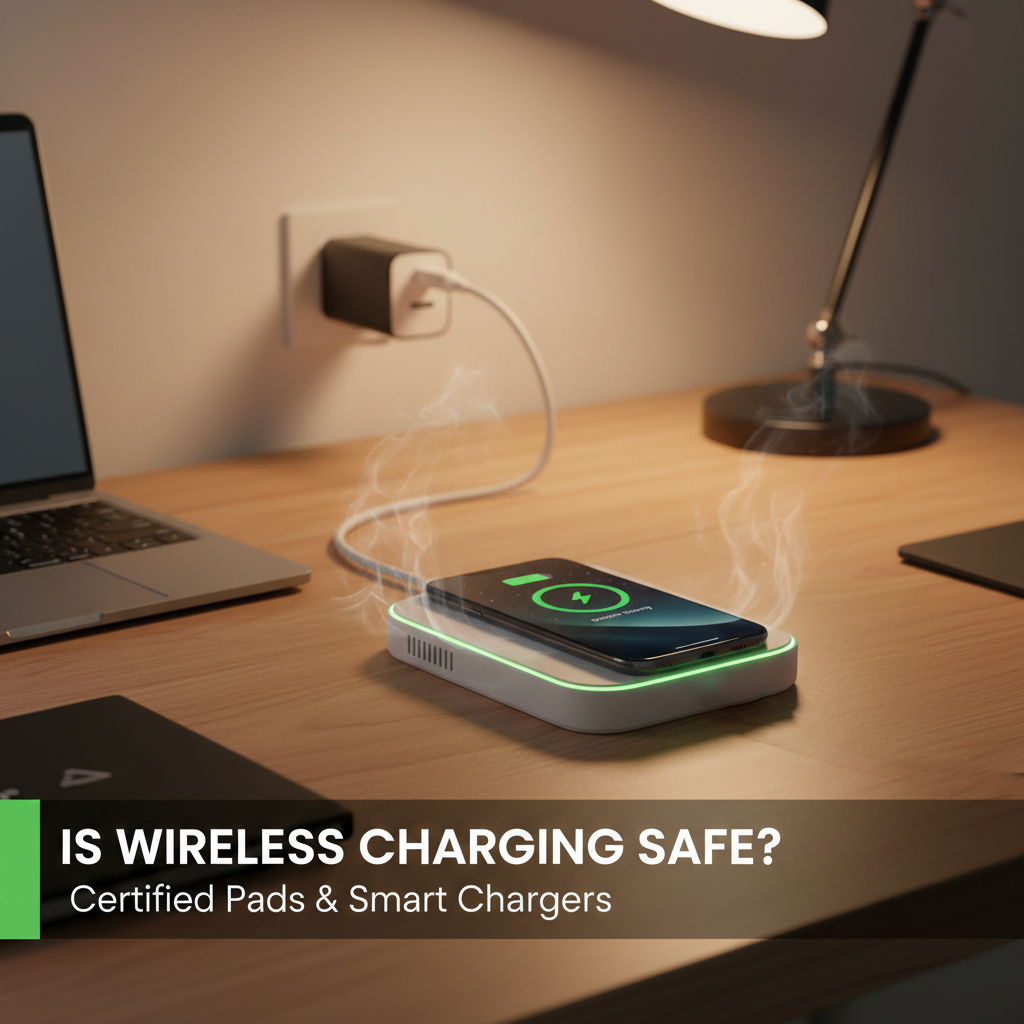
Use trusted chargers, check specs, and avoid cheap unknown pads to stay safe with wireless charging.
Can I leave my phone on a wireless charger overnight?
I explain practical risks and why smart chargers[^4] mostly prevent overnight harm.
Yes, usually. Modern phones and Qi chargers stop drawing full current after 100% and use trickle or intermittent top-ups. Still, heat and some cycling can affect battery over long time.
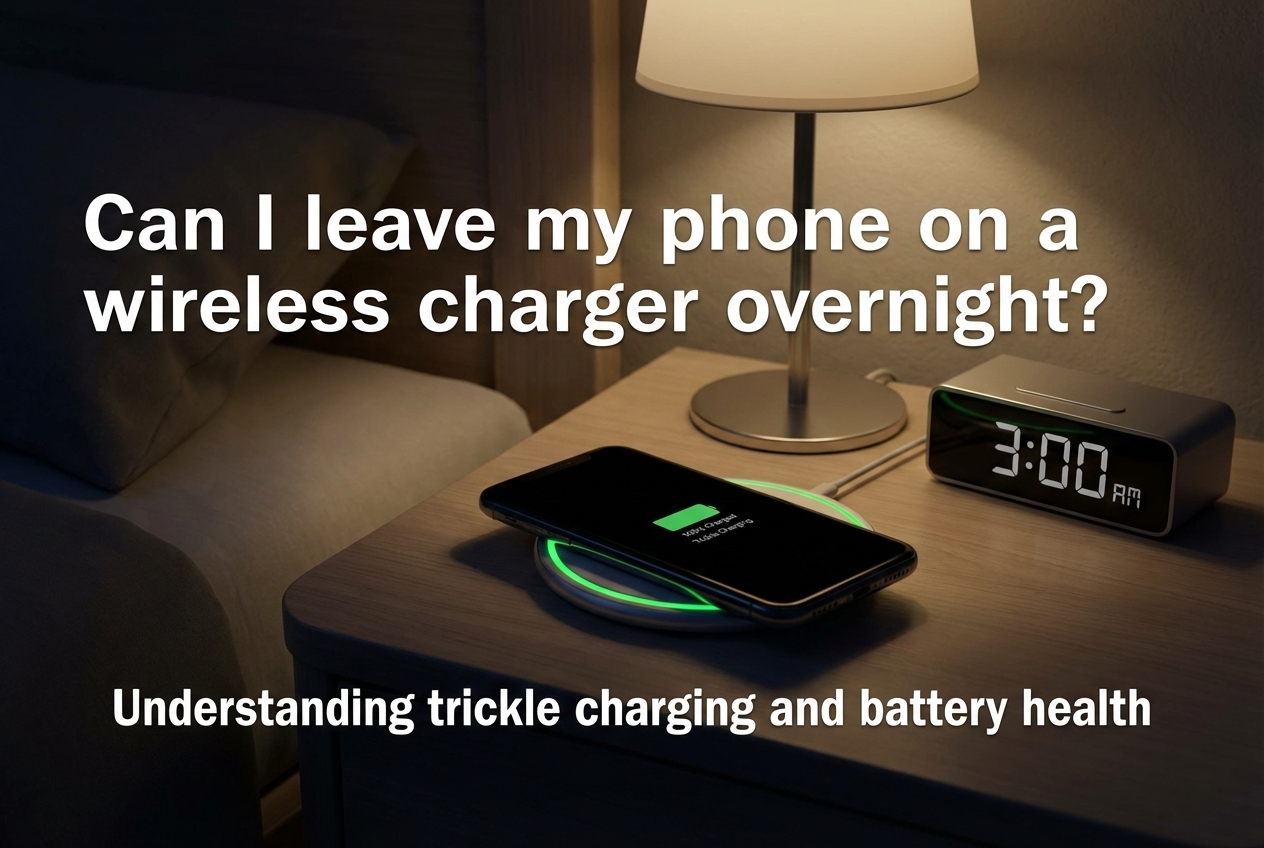
I leave my phone on a wireless charger sometimes. Phones with good battery management detect full charge and reduce current. Qi chargers and reputable brands include overheat and overcharge protections. Some phones and chargers use "optimized charging[^5]" to delay reaching 100% until you wake. This reduces time at 100% and lowers stress on the battery. However, wireless charging is less efficient than wired charging. It generates more heat because energy transfers through induction. Heat is the main concern for overnight charging. Prolonged elevated temperature can speed battery aging. To reduce risk, use a certified charger placed on a hard, cool surface. Remove phone cases that trap heat if they block ventilation. Avoid low-quality pads that lack temperature control. If you are worried about battery longevity, enable any built-in optimized charging[^5] features or use a wired charger with better efficiency for nightly top-ups.
Dive deeper: managing overnight wireless charging and practical tips (150+ words) I follow simple steps to protect battery health[^2] when charging overnight. First, I pick a certified Qi charger from a reputable brand. Certified chargers must meet basic safety standards and often include temperature sensors. Second, I check my phone settings for optimized or scheduled charging. Many phones learn your sleep habits and hold charge at 80% until just before your alarm. That reduces time at 100% and lowers stress on lithium-ion cells. Third, I avoid thick or metal cases that trap heat or interfere with alignment. Some cases cause pads to work harder, producing more heat. Removing the case or using thin cases cuts that heat. Fourth, I place the charger on a flat, hard surface away from blankets. Soft surfaces trap heat and worsen temperature rise. Fifth, I monitor for unusual heating in the first few nights with a new pad. If the phone or pad gets very hot, stop using it. Sixth, I favor wireless chargers with built-in thermal cutoffs[^6] and foreign object detection[^7] (FOD). FOD prevents stray metal objects from heating and triggering faults. Finally, if maximum battery lifespan matters more than convenience, I use wired charging overnight. Wired PD chargers are more efficient and run cooler. These small habits keep overnight wireless charging convenient while limiting long-term battery stress.
Is Wireless Charging Bad for Battery Health?
I address the core question: does wireless charging harm batteries and what factors influence that?
Wireless charging[^1] itself does not destroy batteries. Heat and charging patterns[^8] matter. Higher temperature and long periods at 100% can speed capacity loss. Good chargers and smart charging reduce these risks.
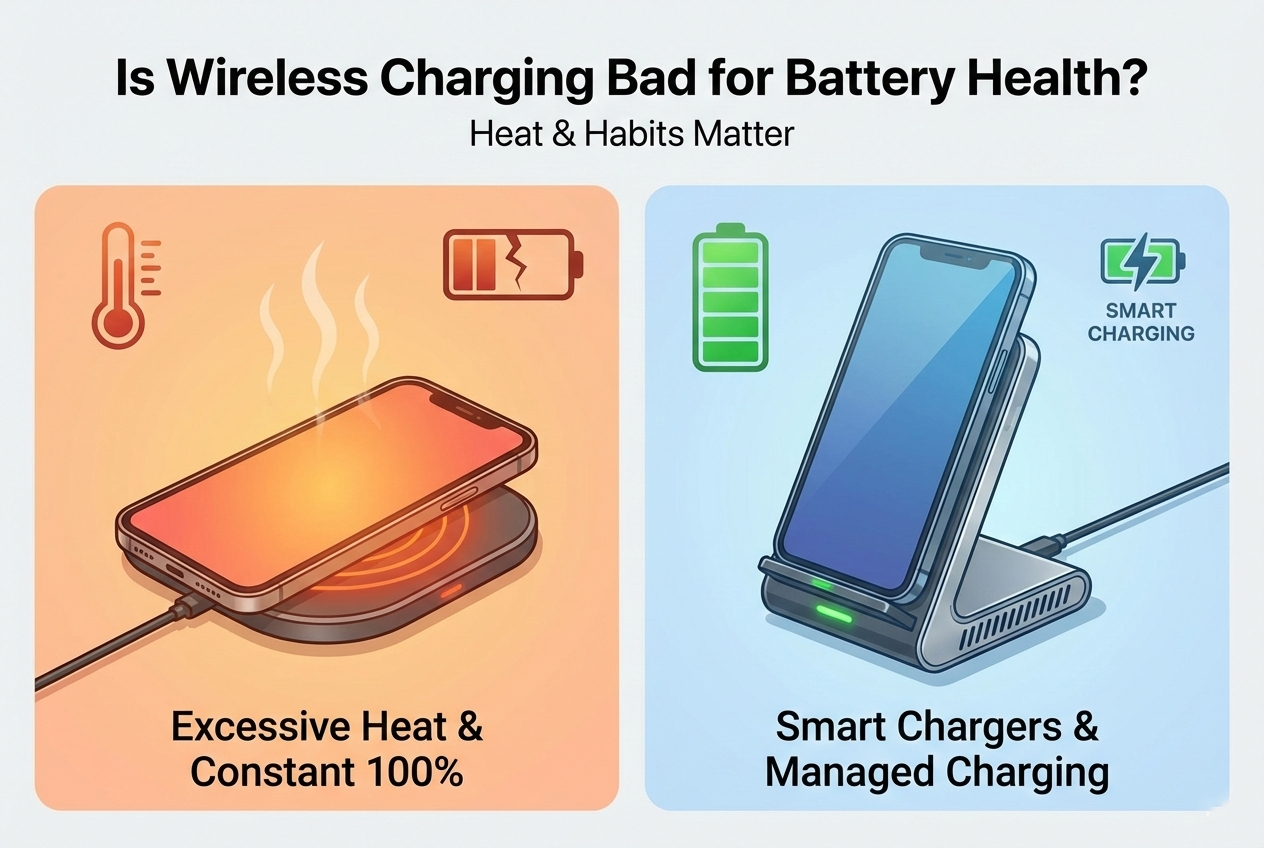
I studied battery guidance and testing. Wireless charging[^1] creates more heat than wired charging because of conversion losses. Heat speeds chemical reactions inside lithium-ion cells and accelerates capacity fade. Also, fast top-ups or repeated shallow cycles can change wear patterns. Still, modern phones include battery management systems that limit charging current and stop overcharging. They balance the risks. Using a high-quality wireless charger with temperature control lowers stress. Charging habits matter more than the method alone. Keeping battery charge between roughly 20% and 80% is ideal for longevity. Avoiding constant trickle charging at 100% and excessive heat helps. If you want maximum lifespan, use wired charging with proper settings or enable optimized charging[^5] features. For typical users, wireless charging convenience outweighs the modest additional wear when done correctly.
Dive deeper: evidence, myths, and practical battery advice (150+ words) I separate facts from myths when it comes to wireless charging and battery life. Fact: heat accelerates battery aging. Fact: wireless charging is generally less efficient than wired charging and often produces more heat. Fact: modern batteries and charging systems include protections like thermal management, charging cutoffs, and optimized charging[^5] algorithms. Myth: wireless charging will immediately ruin your battery. That is not true. Many long-term tests show gradual capacity loss over years for normal use, regardless of charging style. The main variables are temperature, depth of discharge, and time spent at high state-of-charge. For real-world users, the convenience of wireless charging is acceptable. If you want to minimize wear, follow simple rules: avoid heat, enable optimized charging[^5], unplug when fully charged if possible, and avoid using high-power wireless pads that push excessive current to drive faster charging unless your device supports that safely. Also, buy chargers with FOD and temperature sensors. Cheap pads without these protections increase risk. In my experience, small changes like removing a heat-trapping case and picking a quality pad give most of the benefits without sacrificing convenience.
What are the disadvantages of wireless charging?
I list the practical downsides so readers can weigh convenience against tradeoffs.
Disadvantages include lower efficiency, more heat, slower charging speed[^9]s for many devices, strict alignment needs, and usually higher cost. Some pads can interfere with magnetic accessories[^10].
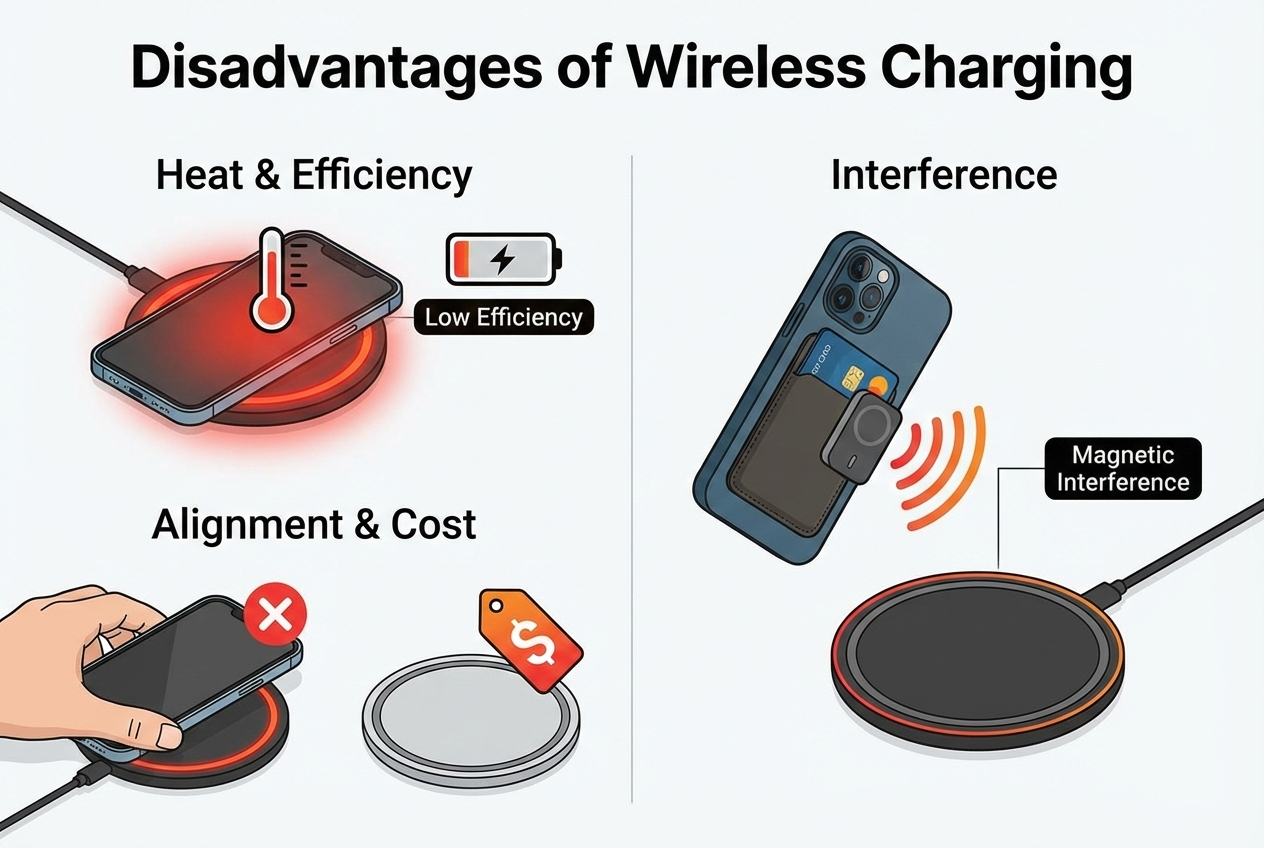
Wireless charging[^1] downsides are clear in daily use. First, efficiency: Wireless pads waste energy as heat. That raises electricity use slightly and creates heat near the phone. Second, speed: Many wireless chargers are slower than wired PD chargers, especially older pads limited to 5–10W. Newer high-power wireless pads can be faster, but only when the phone supports those speeds. Third, alignment: The phone must sit in the right spot. Misalignment causes slow charge or stops charging. Fourth, heat: As noted, heat speeds battery aging. Fifth, device compatibility[^11]: Not all phones or cases work with every pad. Metal cases, magnetic mounts, and some battery cases block charging. Sixth, cost and portability: Quality wireless chargers are more expensive than basic wired chargers and can be bulkier. Finally, security: A pad left in public could be tampered with; avoid unknown public pads. Balancing these cons against the ease of dropping the phone on a pad matters for each person.
Decide based on convenience, device support, and whether you accept modest extra heat and slower charging.
Conclusion
Wireless charging[^1] is safe for most users and has come a long way in terms of technology and safety. While leaving your phone on a wireless charger overnight is generally not harmful due to the phone's built-in safety features, it’s best to avoid constant heat exposure to prolong battery life. The disadvantages of wireless charging, like slower speeds and heat generation, are manageable with the right equipment.
Ultimately, whether wireless charging is the best option depends on your individual needs. If you value convenience and don't mind the slower charging speed[^9]s, wireless charging is a great choice. Just be sure to use quality chargers and follow best practices to protect your device and battery health[^2].
[^1]: Explore the advantages of wireless charging, including convenience and modern design, to see if it's right for you. [^2]: Learn how wireless charging impacts battery longevity and what practices can help maintain battery health. [^3]: Discover the importance of using certified pads for safety and efficiency in wireless charging. [^4]: Find out how smart chargers manage heat and improve safety during wireless charging. [^5]: Understand how optimized charging features can enhance battery life and efficiency. [^6]: Learn about thermal cutoffs and their role in preventing overheating during wireless charging. [^7]: Discover how foreign object detection enhances safety by preventing hazards during charging. [^8]: Explore effective charging patterns that can help extend the lifespan of your device's battery. [^9]: Understand the factors that influence wireless charging speed and how to optimize it. [^10]: Learn about potential issues with magnetic accessories when using wireless charging. [^11]: Check which devices support wireless charging to ensure compatibility with your setup.