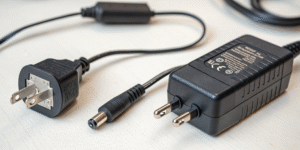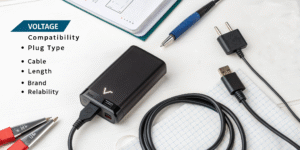
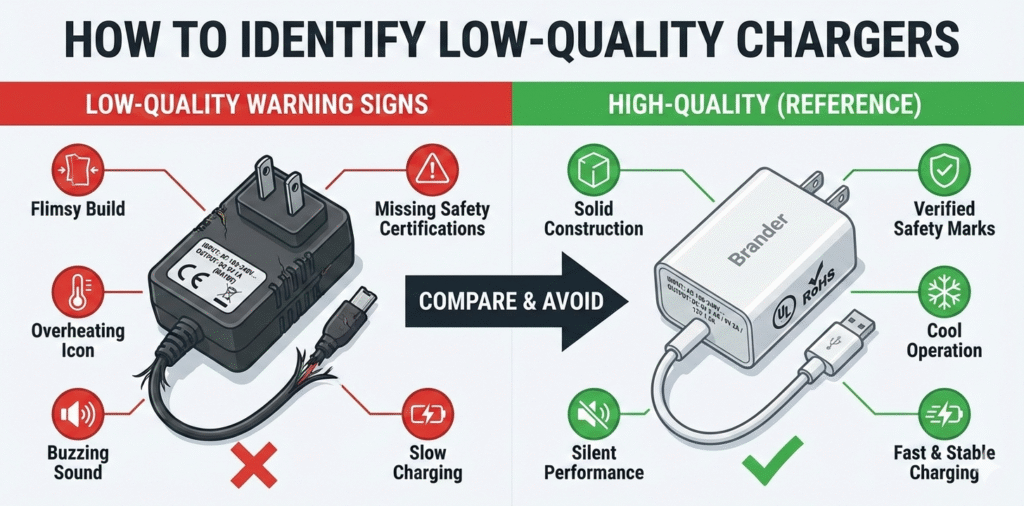
When it comes to charging your devices, choosing a reliable and high-quality charger[^1] is crucial for both safety and performance. A low-quality charger can cause battery damage[^2], overheating[^3], or even a fire risk[^4]. This guide will walk you through how to spot low-quality chargers, what red flags[^5] to look for, and how to test chargers before making bulk purchases.
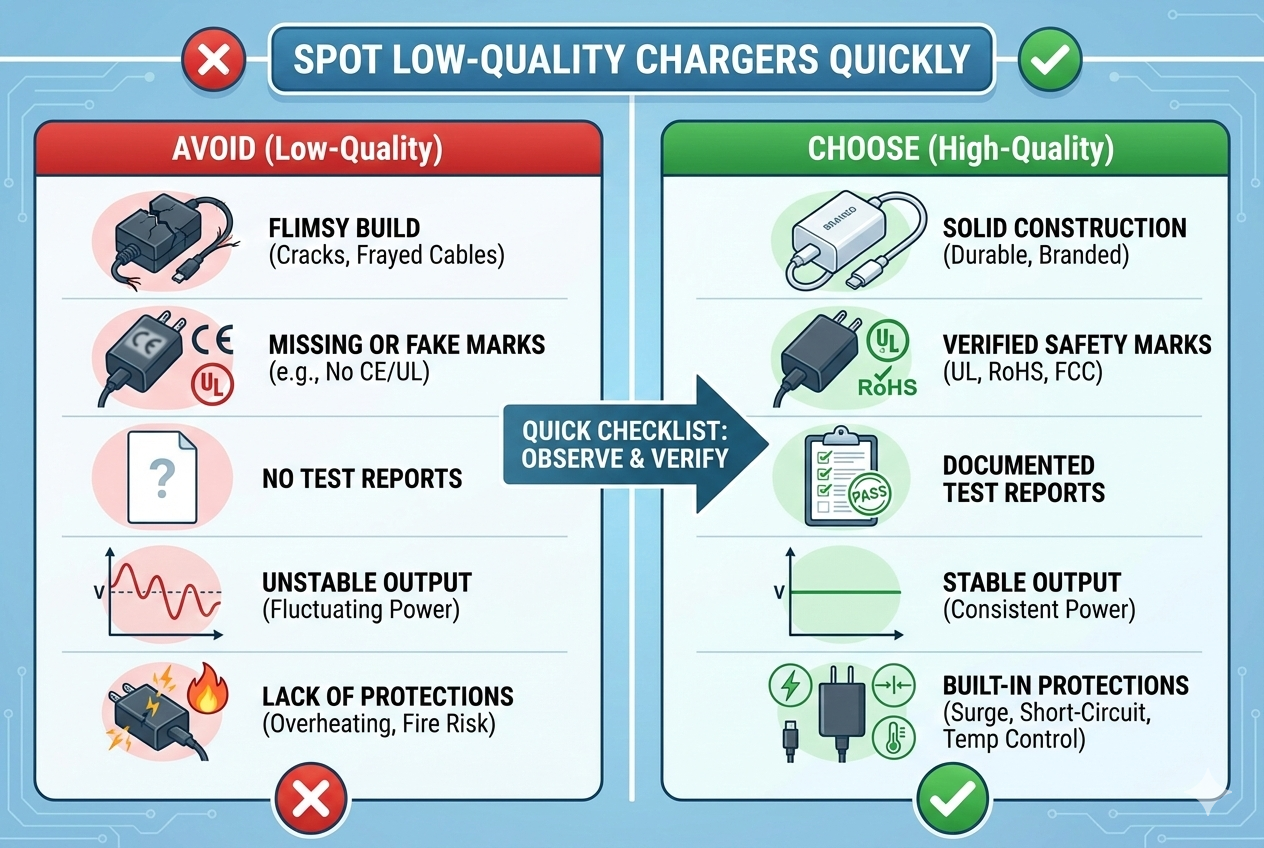
Check build quality, safety marks, test reports[^6], stable output[^7], and protections to spot low-quality chargers quickly.
How do I know if a charger is good quality?
I compare chargers with a simple checklist every time.
A good charger has clear safety certifications[^8], stable output[^7] under load, built-in protections[^9], quality components, and clean firmware implementation for negotiated protocols.
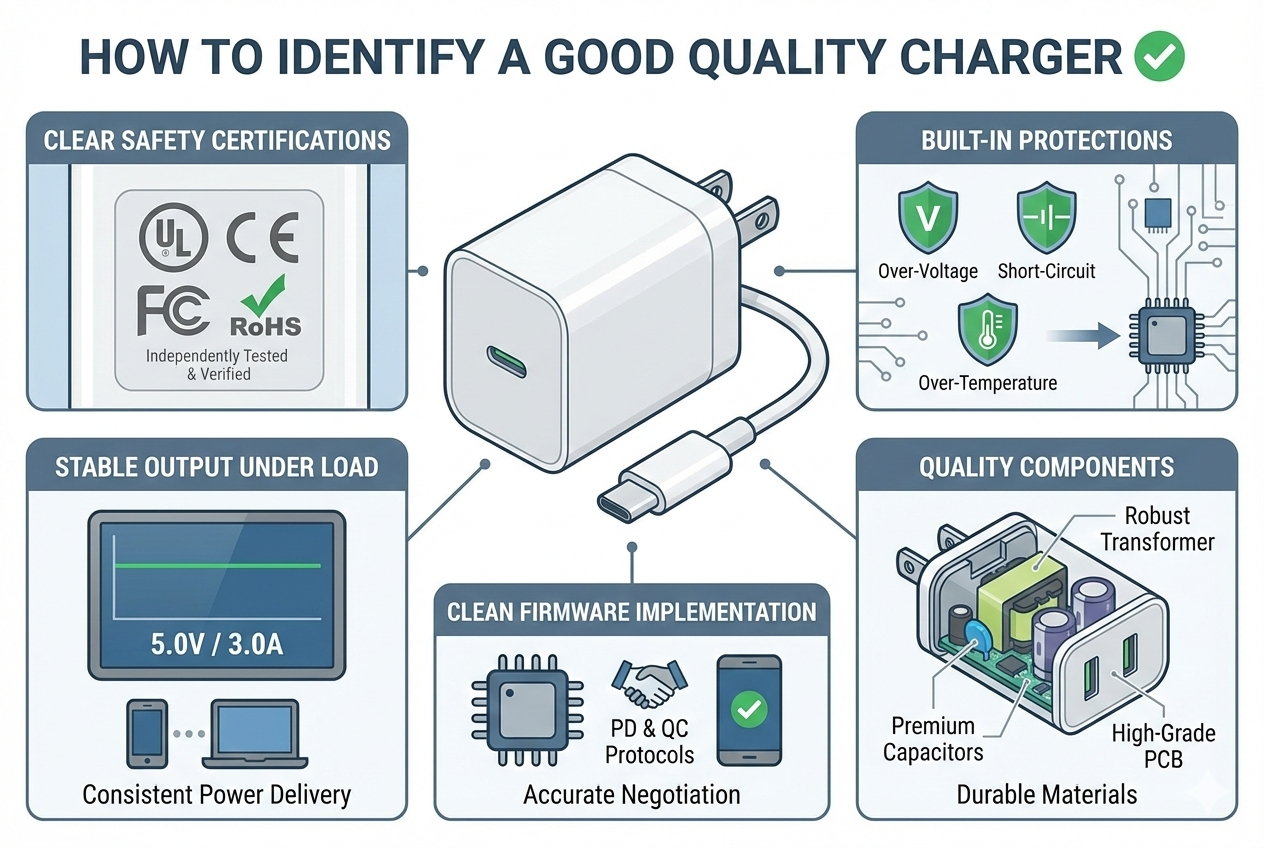
I use this checklist with suppliers and QA teams. First, ask for certificates: UL, ETL, CE, PSE, or local marks. Ask for USB-IF for PD products. Then check test reports[^6]: Hi-POT, surge, thermal, EMC, and insulation tests. Inspect the unit: solid strain relief, good molding, clear printing, and no loose parts. Open a sample if you can. Look for branded capacitors, clean solder joints, a safety transformer or proper isolation, and a thermal fuse. Test the output with a programmable load. Verify voltage stays within tolerance and the charger returns to normal after short-circuit tests. Confirm protocol negotiation[^10]: PD, PPS, or other vendor fast-charge must behave as claimed. Finally, check firmware: ask about controller IC model and firmware update policy. Good suppliers provide these details willingly.
practical tests, red flags[^5], and procurement steps (150+ words) I run a series of practical tests on each sample. Start with a visual and mechanical check. Look for poor molding, weak strain relief, or loose pins. Smell for odd odors after a short burn-in; bad capacitors often smell of chemicals. Next, measure DC output with a multimeter and an electronic load. Load the charger at 0.5x, 1x, and 1.5x its rated current. Voltage should stay within ±5% and not drift upward. Monitor temperature with an infrared thermometer during a one-hour full-load test. Surface temperature beyond safe limits (for example over 60°C in small adapters) is a red flag. Run a short-circuit test and expect the charger to cut output and recover cleanly. For PD/PPS units, run protocol negotiation[^10] tests with a PD analyzer or using known PD devices. Verify advertised power and that the charger does not over-voltage. Check EMI by listening for audible noise at load; buzzing can indicate poor design. Ask the supplier for BOM screenshots and test logs. If they refuse, treat it as a red flag. For procurement, require sample approval, pre-shipment inspection, and a small QA batch test before full shipment. Keep a traceability file for each batch, including test reports[^6] and pictures.
What are common red flags[^5] of low-quality chargers?
I refuse suppliers who show several of these signs.
Red flags include no certifications, vague specs, cheap components, poor thermal design, missing protections, inconsistent output, and refusal to share test data.
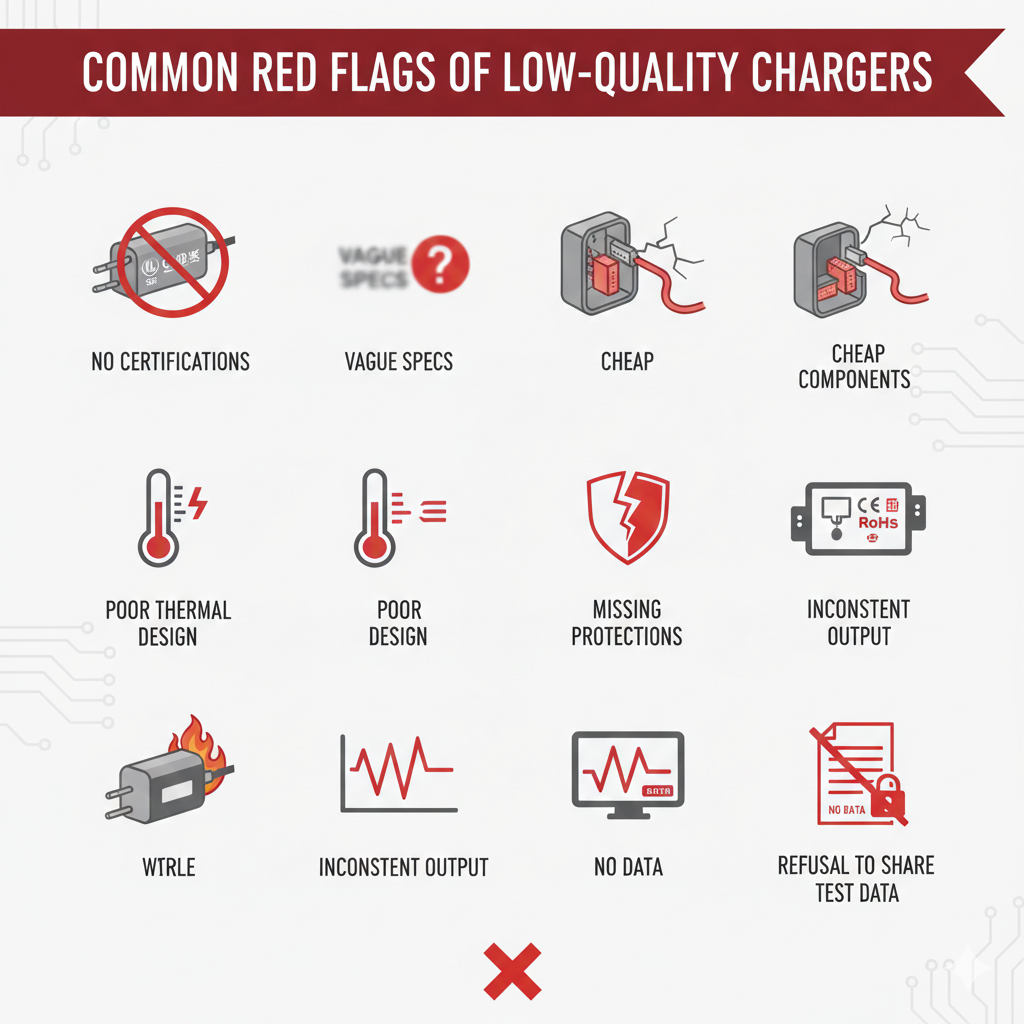
I learned to walk away when suppliers dodge these questions. Common red flags[^5]: fake or missing safety marks, unrealistic wattage claims, blank datasheets, strange labeling, or shipping without documentation. On the unit, watch for thin plastic, brittle strain relief, or misaligned pins. Inside, cheap units often use unbranded capacitors, tiny transformers, and poor soldering. On tests, unstable voltage, overheating[^3], or failure to recover from short circuits are immediate rejections. Also beware of suppliers who pressure for a blind bulk order or promise impossible lead times. For serious buyers, insist on a sample approval process[^11] and third-party lab testing[^12] when required.
supplier vetting[^13], sample requirements, and contractual protections[^14] (150+ words) I treat supplier vetting[^13] as a critical part of procurement. Start with supplier history and references. Ask for past clients and market examples of their chargers in use. Verify business licenses and factory photos. Request a full sample package before placing large orders. The package should include the product, user manual, labels, and all test reports[^6]. If the supplier offers certification documents, cross-check them with issuing bodies. For higher-value orders, send samples to a third-party lab for Hi-POT, surge, thermal, and EMC tests. Include contract terms that require passing tests as a condition for full payment. Add warranty terms and batch traceability in the contract. Require pre-shipment inspections and random batch sampling. Also demand a failure rate clause and agreed remedy for defective units. For long-term relationships, schedule regular audits and insist the supplier keeps records for components like capacitors and controller IC batches. These steps reduce risk and make it easier to reject poor batches early.
How should I test chargers before buying in quantity?
I build a small test plan that fits my budget and risk level.
Test visual quality, electrical output under load, thermal behavior, protocol negotiation[^10], safety cutoffs, and run accelerated cycle tests before large orders.
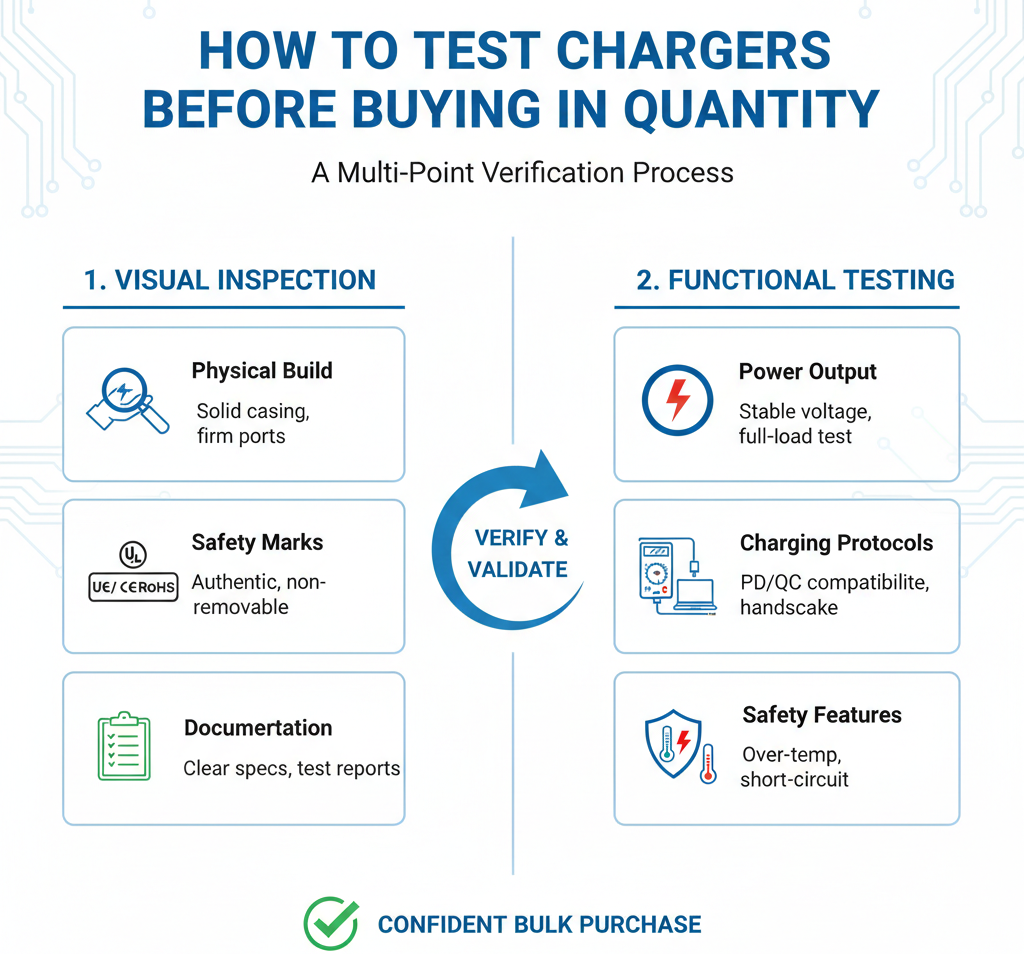
I run a short approval sequence. First, visual and mechanical checks. Second, one-hour full-load test while monitoring temperature. Third, protocol negotiation[^10] with PD/PPS analyzers or known devices. Fourth, short-circuit and recovery tests. Fifth, a 100-cycle charge/discharge test with a real device to monitor battery temperature and charging curve drift. Record all data and compare against supplier claims. If possible, involve a local testing lab for Hi-POT and EMC tests. Use the test results as part of the purchase contract. Reject batches that fail any critical test.
sample sizes, test equipment[^15], and acceptance criteria[^16] (150+ words) Decide sample size based on order quantity and risk. For small orders, test 3–5 samples. For large orders, sample 10–30 units across production lots. Use basic equipment: a good multimeter, programmable DC electronic load, IR thermometer, and USB PD tester if applicable. For advanced checks, rent time on a PD analyzer and EMC or Hi-POT equipment at a lab. Set clear acceptance criteria[^16]: voltage tolerance ±5%, temperature rise under full load below agreed limit (for example less than 45°C for the case in normal ambient), correct protocol negotiation[^10] for PD/PPS with advertised wattage, and clean recovery after short-circuit. For lifecycle testing, run at least 100 full-load hours or charge cycles to detect early failures. Keep logs and photos for each sample. If a batch passes, document serial ranges and link test records to production. This procedure protects your customers and reduces post-sale costs.
Test thoroughly, insist on documentation, and enforce contractual quality checks to protect your brand and customers.
Conclusion
Identifying low-quality chargers involves checking several factors, including build quality, safety certifications[^8], and performance. By staying vigilant for red flags[^5] such as overheating[^3], slow charging, and poor materials, you can avoid substandard products. Before buying in bulk, test chargers for performance and safety to ensure they meet your requirements. A quality charger will not only keep your devices safe but also provide reliable and efficient charging for years to come.
[^1]: Understanding the key features of a quality charger can help you make informed purchasing decisions. [^2]: Learn about the factors that can lead to battery damage to avoid potential risks. [^3]: Explore effective strategies to prevent overheating and ensure safe charging. [^4]: Discover the dangers of low-quality chargers and how to mitigate fire risks. [^5]: Identifying red flags can help you avoid purchasing substandard chargers. [^6]: Understanding test reports can help you assess the quality and safety of chargers. [^7]: Learn why stable output is crucial for device safety and performance. [^8]: Familiarize yourself with essential safety certifications to ensure product reliability. [^9]: Explore the necessary protections that enhance charger safety and reliability. [^10]: Understanding protocol negotiation can help you choose chargers that meet your device's needs. [^11]: Understanding the sample approval process can help you secure quality products. [^12]: Discover the benefits of third-party testing in ensuring charger safety and performance. [^13]: Learn best practices for vetting suppliers to ensure quality and reliability. [^14]: Learn about essential contractual protections to safeguard your investments. [^15]: Familiarize yourself with the necessary equipment to conduct thorough charger evaluations. [^16]: Understanding acceptance criteria can help you set standards for quality assurance.