How does a wireless charger work?
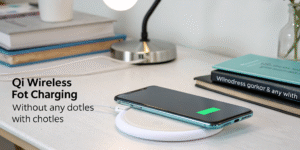
I once set my phone on a pad and watched it charge without plugging in.
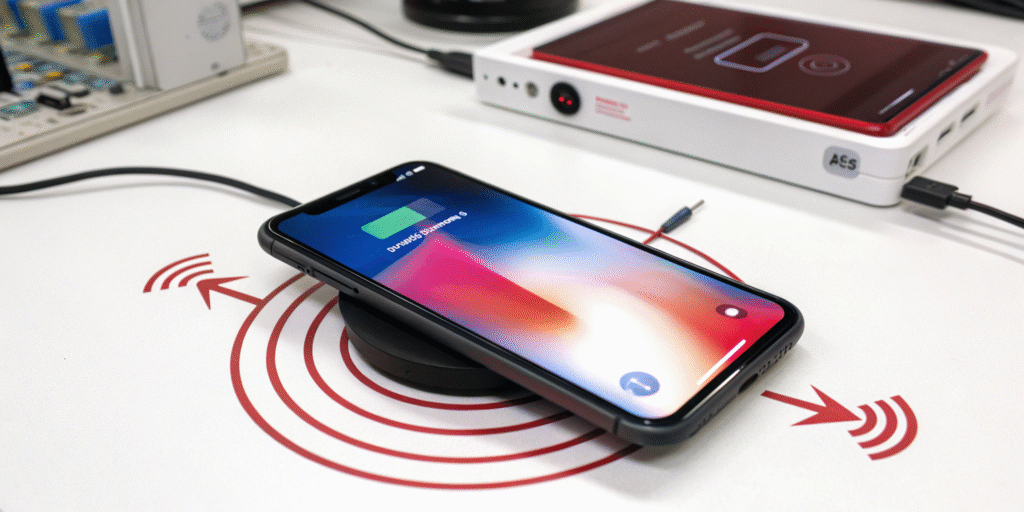
A wireless charger sends power from a transmitter coil in the pad to a receiver coil[^1] in the phone using electromagnetic induction[^2] or resonant coupling, then the phone converts that energy to charge its battery.
I opened a Qi pad years ago and traced the copper coil. The pad creates an alternating magnetic field. The phone’s coil picks up that field and converts it to DC. A regulator inside the phone controls the charge. That simple cycle hides limits on efficiency, alignment, heat, and speed.
Transition Paragraph. I used wireless chargers daily and still ran into questions that made me test different pads and phones.
What are the advantages of wireless charging?
I like the clean desk and the convenience more than the raw speed.
Wireless charging offers convenience, less wear on ports, safer quick top-ups, simpler multi-device placement, and easier public charging without cables.
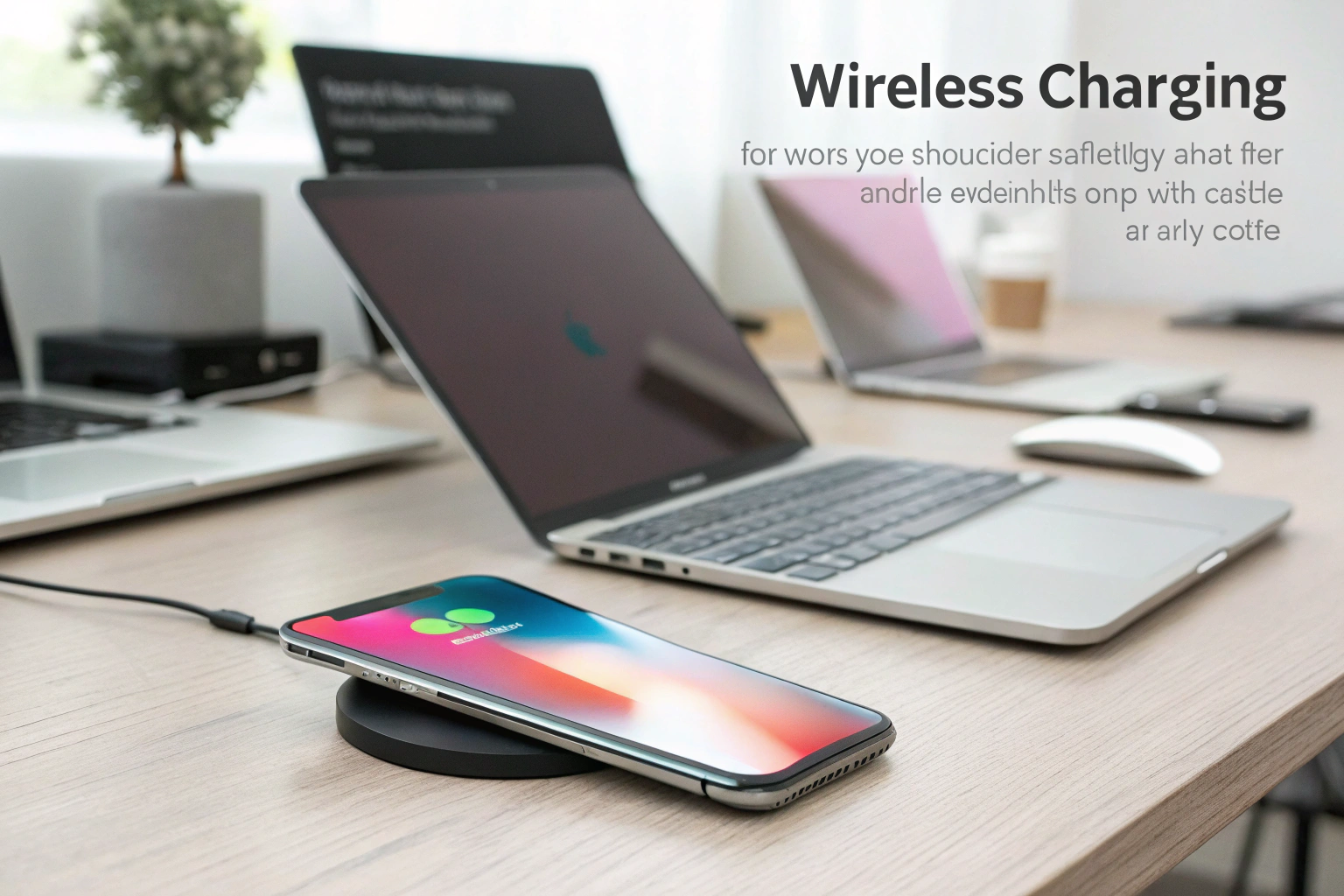
Wireless charging is easy. You only drop the phone on a pad. That removes repeated plugging and unplugging. It reduces wear on charging ports and keeps cables out of the way. It works well for short top-ups at a desk or nightstand. Public places can offer pads so many people charge without sharing cables. Magnetic systems like MagSafe help align devices quickly and allow phone cases to stay on. Multi-coil pads let me position devices more freely. Finally, wireless power in cars or furniture can make charging seamless and integrated. For many people, convenience outweighs slightly slower charging.
Can All Phones Be Charged Wirelessly?
I checked model lists and tested older phones with receiver adapters.
No. Only phones with a built-in receiver coil[^1] and compatible wireless charging standard (like Qi) can charge wirelessly. Older phones need an adapter or special case to add that ability.
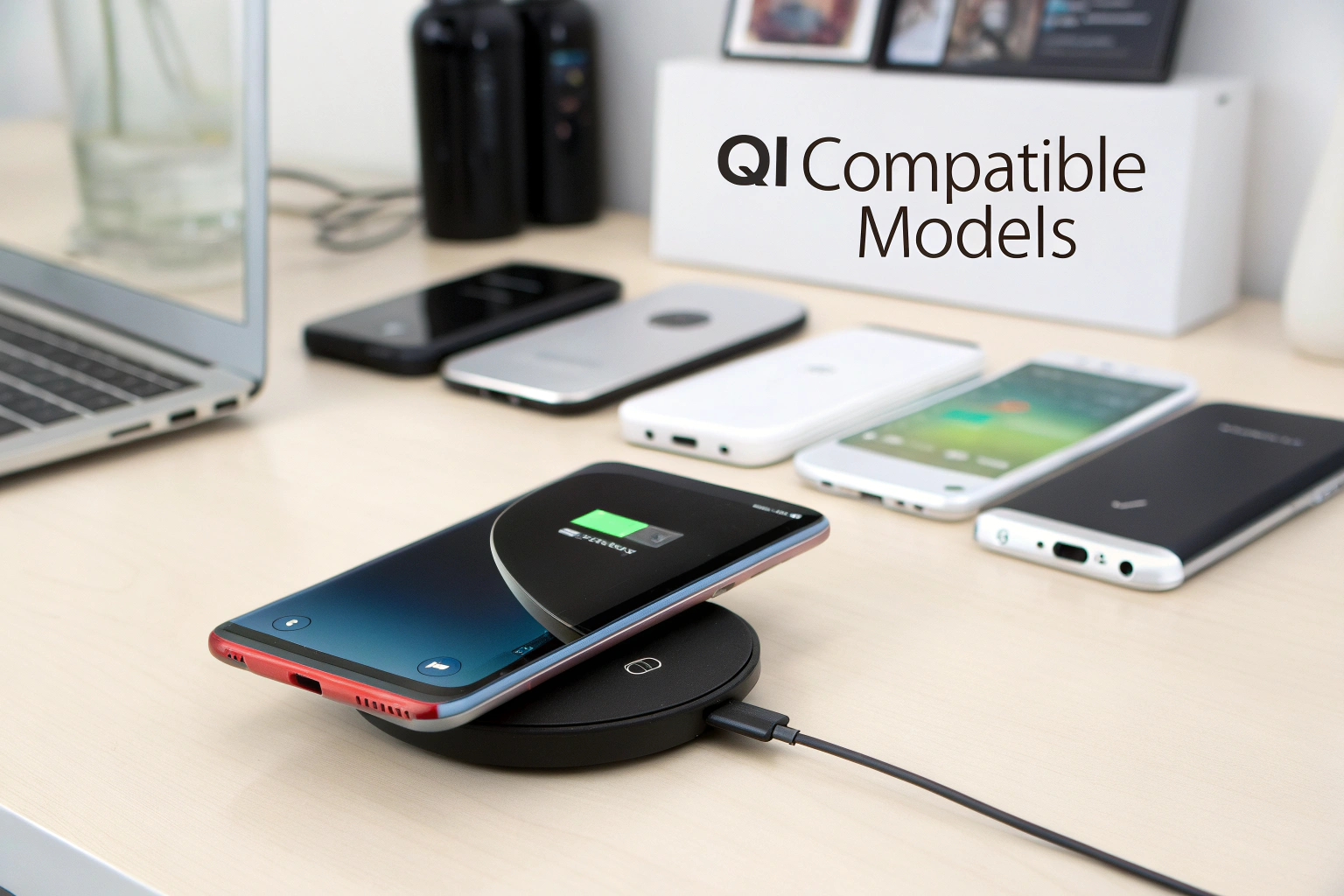
Modern flagships and many mid-range models include a copper receiver coil[^1], a rectifier, and a charging controller[^3]. They accept Qi or vendor-specific wireless power. Older phones without these parts cannot harvest the magnetic field. You can add a thin receiver pad that plugs into the phone port or a receiver case. These solutions work but may add thickness, block ports, or heat more. Also check standards. Qi is the dominant standard. Devices using proprietary systems may not charge on all pads. I once tried a cheap receiver for an older phone. It charged, but it ran hot and charged slowly. That showed me adapters are a compromise, not a perfect replacement for native support.
How many types of wireless charging are there?
I grouped the common methods so I could compare them clearly.
There are three main types: inductive charging[^4], resonant wireless charging[^5], and RF (far-field) charging[^6]. Each type differs by range, efficiency, and intended use.
Inductive charging is the most common. It uses closely matched coils in the pad and phone. The pad produces an alternating magnetic field. The phone coil picks up that field. This works at very short ranges, usually millimeters. It is the basis of Qi and MagSafe.
Resonant charging uses tuned coils that share a resonant frequency. This lets power transfer across larger gaps and tolerate some misalignment. It can charge multiple devices on a surface without exact placement. It is less efficient than inductive at close range, but it is more flexible.
RF or far-field charging converts power to radio waves that small antennas harvest. This can deliver trickle power at longer distances. It is useful for sensors and very low-power devices now. It is not practical for fast smartphone charging yet due to low allowable power and efficiency limits.
I found a short table useful when I compared them:
| Type | Range | Typical Use | Pros | Cons |
|---|---|---|---|---|
| Inductive (Qi) | mm to ~5mm | Phone pads, stands | Widely supported, efficient at close range | Needs alignment, slower than wired |
| Resonant | cm range | Furniture, multi-device surfaces | Tolerant alignment, area charging | Lower efficiency, larger coils |
| RF / Far-field | meters (low power) | IoT, sensors | Long range, untethered | Very low power, slow charging, regulatory limits |
Transition Paragraph. After testing pads and phones, I developed habits that match each charging method’s strengths and limits.
So what are the disadvantages of wireless charging?
I used many pads and learned the real trade-offs.
Wireless charging is slower, less efficient, produces heat, requires alignment, can be blocked by cases or objects, and may cost more than wired charging.
First, speed. Most wireless pads charge slower than wired fast chargers. This means longer waiting times. Second, efficiency. Energy lost as heat makes wireless charging less efficient. Heat affects battery health. Third, heat. Wireless transfer produces additional heat in both pad and phone. That can force the phone to slow charging and stress the battery. Fourth, alignment. Coils must line up. Misalignment reduces power transfer or stops charging. Fifth, interference. Thick cases, metal plates, or credit cards with RFID can block charging or cause overheating. Sixth, convenience trade-offs. You cannot use the phone comfortably while it sits on a pad. Seventh, cost and variety. Good wireless chargers cost more, and multi-device pads still split power and charge slower per device. Eighth, universal support. Not all phones support Qi, so wireless charging is not universal. Finally, safety depends on quality. Cheap pads may lack protections and risk damage. I found wireless charging perfect for desk top-ups and nights, but I keep a fast wired charger for quick fills and long trips.
Conclusion
Wireless charging is an innovative and convenient way to charge your devices, offering benefits like ease of use, reducing cable clutter, and less wear on connectors. However, it has some drawbacks, including slower speeds, energy inefficiency, and compatibility issues.
If you have a device with a built-in receiver coil[^1], you can enjoy wireless charging through Qi, AirFuel, or MagSafe. Still, it’s important to choose the right charger based on your device's specifications to make the most of this charging method.
[^1]: Learn about the role of the receiver coil in wireless charging to understand how energy is harvested. [^2]: Understanding electromagnetic induction is key to grasping how wireless chargers function and their efficiency. [^3]: Discover how a charging controller manages power flow and optimizes charging efficiency. [^4]: Inductive charging is the most common method; understanding it can help you choose the right charger. [^5]: Explore resonant wireless charging to see how it allows for more flexibility in device placement. [^6]: RF charging is an emerging technology; learn about its potential uses beyond smartphones.