I worried when I first used a wireless charger next to my bed.
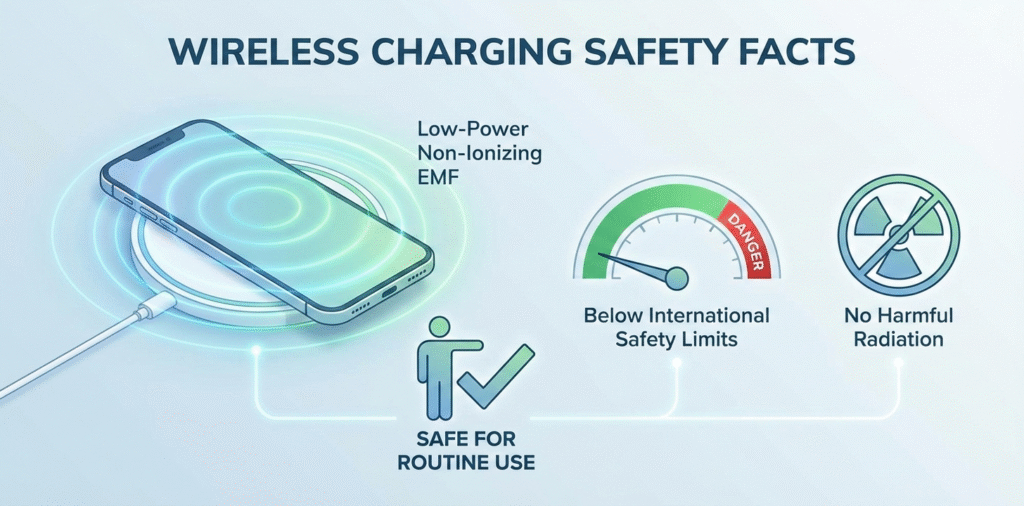
Wireless charging[^1] uses low-power non-ionizing electromagnetic fields[^2] (EMF). These fields are far below international safety limits, so routine wireless charging does not cause harmful radiation.
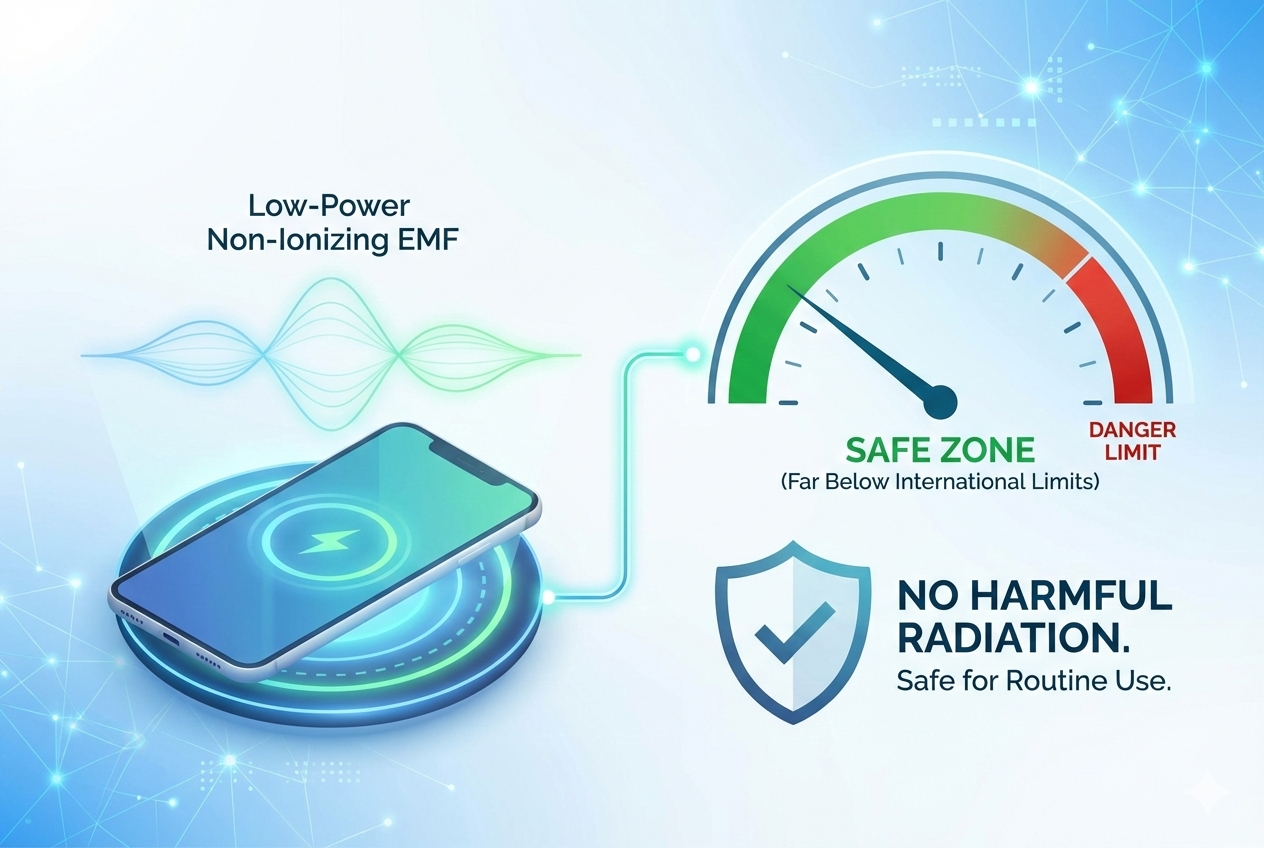
I checked official guidance and product specs before I trusted a pad on my nightstand. Wireless chargers use near-field magnetic coupling. That creates a localized magnetic field between coils. The field drops quickly with distance. Devices and chargers must meet regulatory exposure limits[^3] set by bodies like ICNIRP[^4] and IEEE[^5]. Certified products also pass EMC and safety tests. For daily use, the exposure is small and concentrated. Still, sensible placement and certified chargers reduce any theoretical risk.
If you plan daily wireless charging, pick certified products and follow simple placement rules to keep exposure minimal.
Is it safe to wireless charge every day?
I charged my phone wirelessly every night for months without problems.
Yes. Daily wireless charging is safe for most people when you use certified chargers that meet international EMF and safety standards[^6]. The exposure is non-ionizing and very low compared with common devices.
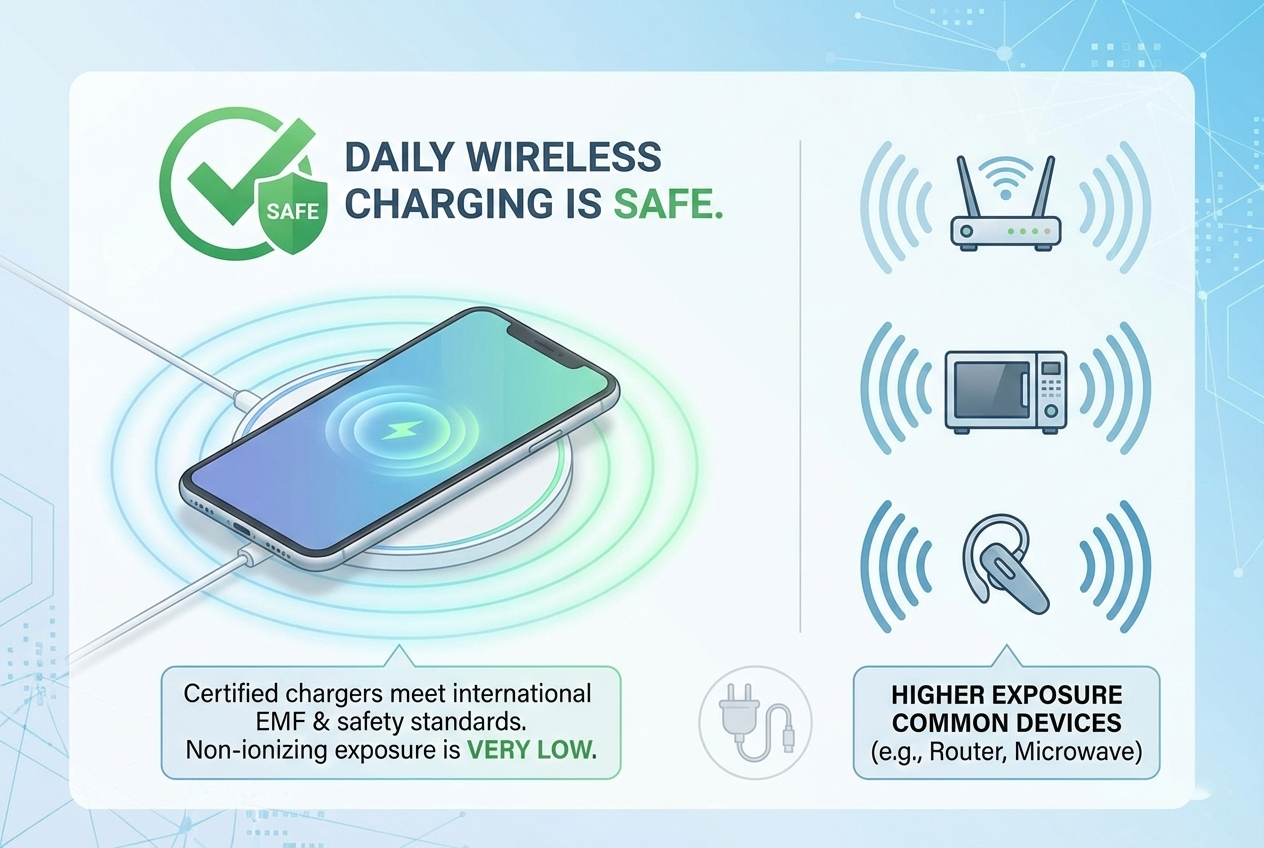
I follow a few habits. I use Qi-certified chargers[^7] and reputable brands. I avoid placing the charger directly against my body. I remove metal objects and credit cards between the phone and pad. I also avoid using damaged cables or uncertified adapters that can increase heat. With these steps, I have not seen health or device problems from daily use.
exposure levels, standards, and practical precautions Wireless chargers use magnetic fields in the kHz to low MHz range for power transfer. These fields are non-ionizing, unlike X-rays or UV. Health risk models focus on thermal effects[^8] and nerve stimulation at very high exposures. Regulatory bodies such as ICNIRP[^4] and IEEE[^5] set exposure limits[^3] to prevent these effects. Consumer wireless chargers operate well below these limits. Certification programs and lab testing check that emissions and leakage stay within allowed ranges. Still, some simple precautions help reduce any theoretical exposure. Keep the charger on a hard surface, not against your body while sleeping. Keep distance—fields fall off rapidly, so a few centimeters reduces exposure substantially. Avoid prolonged skin contact[^9] with the charger itself, especially if it gets hot. If you are pregnant or have an implanted medical device[^10], follow extra caution and consult your physician or device manufacturer. Overall, habitual wireless charging for everyday convenience is supported by current safety standards[^6] when using certified equipment.
Does wireless charging affect health?
I heard conflicting claims about EMF and long-term effects.
Current scientific evidence shows no established adverse health effects from the low-level, non-ionizing EMF used in wireless charging. Long-term health risks have not been demonstrated for consumer wireless chargers[^11] that meet standards.
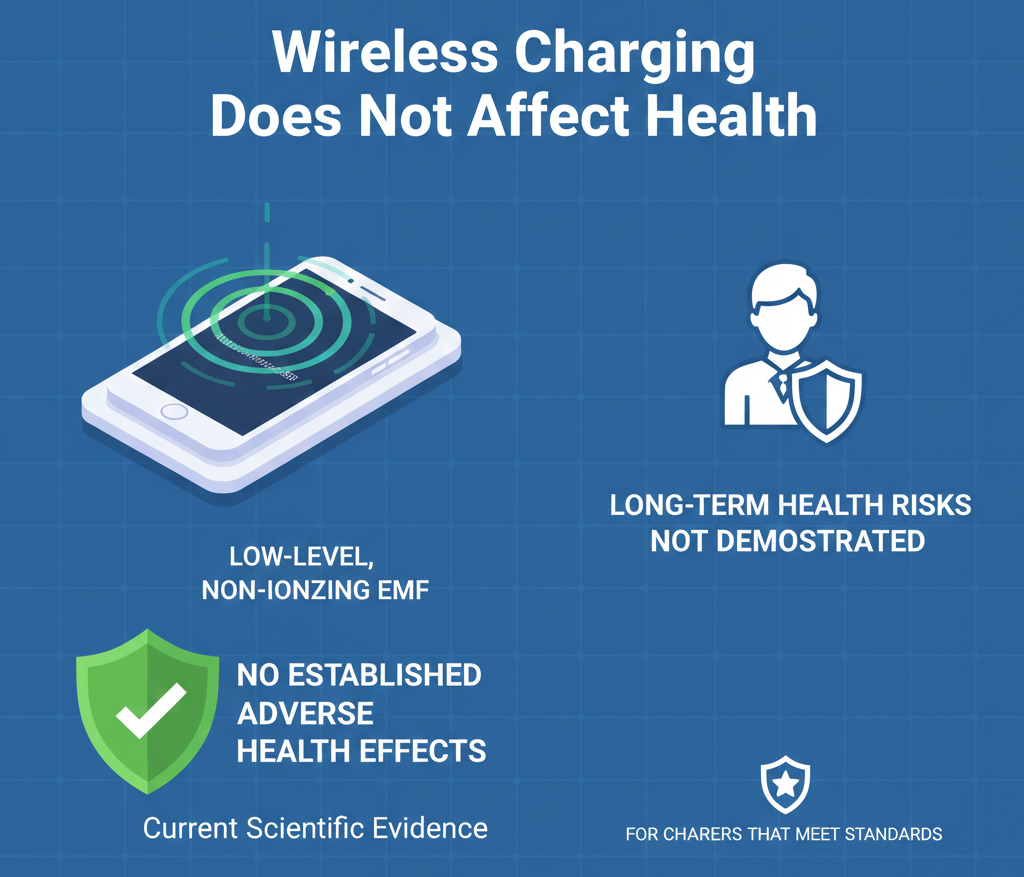 I read reviews of peer-reviewed studies and regulatory statements. Most agencies state that typical exposures from chargers are too low to cause biological harm. Research focuses on much higher exposures or different frequency ranges. For consumer wireless charging, the consensus is that risks are negligible when products comply with regulations.
research summary, limits of studies, and reasonable caution Health research on EMF divides into thermal effects[^8] (heating) and non-thermal biological effects[^12]. Wireless chargers operate at power levels that do not cause measurable heating beyond a few degrees in devices. Studies examining long-term non-thermal effects[^8] are less conclusive for very high exposures, but consumer-level wireless charging exposures are orders of magnitude lower than levels that raised concern in lab tests. Major health agencies, including WHO/ICNIRP[^4] and national regulators, do not list low-power magnetic near-field exposure from chargers as a proven health hazard. That said, science continues to evolve. My approach is pragmatic: use certified chargers, avoid prolonged direct contact with the pad, and keep small distance where possible. For vulnerable groups, such as people with pacemakers, the relevant device manufacturer guidance is important. Pacemakers and certain implants can be sensitive to strong magnetic fields, so I recommend consulting the implant instructions before regular near-field exposure. For the general population, current evidence supports safe everyday use when appliances meet recognized safety standards[^6].
Is it safe to have a wireless charger next to bed?
I wondered if sleeping near a charger might be risky long-term.
Yes, it is generally safe to keep a wireless charger on your bedside table. Still, place it a few centimeters from your body, use certified products, and avoid direct contact with the pad while sleeping.
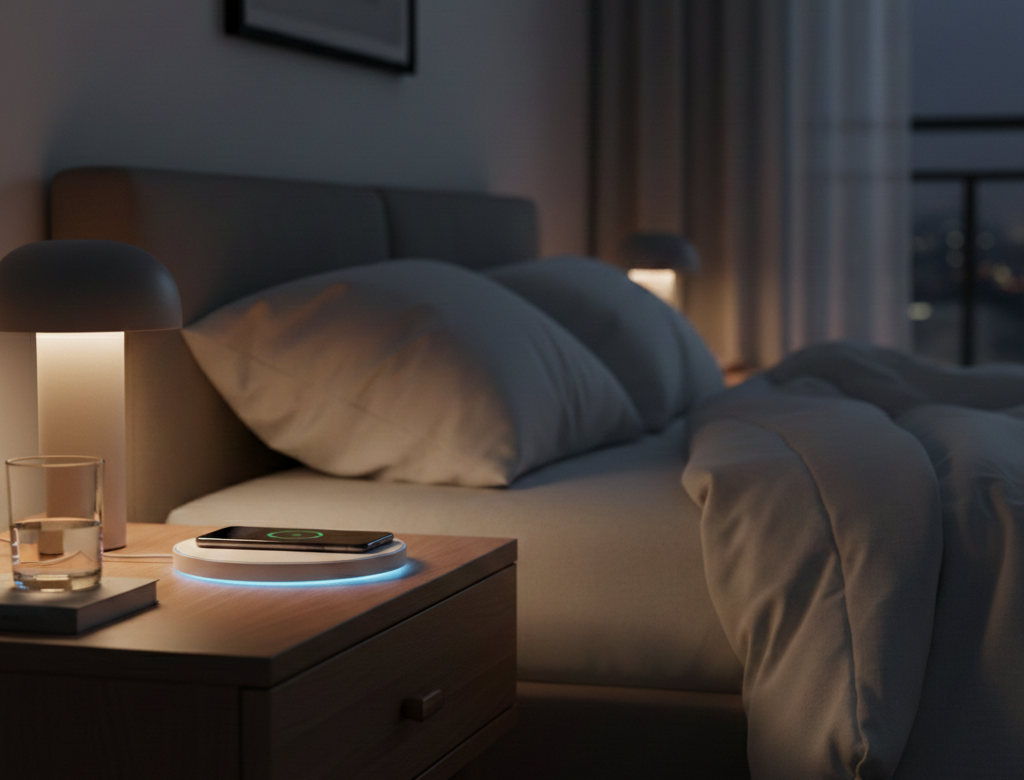
I keep my pad on the nightstand, not under my pillow. A small distance reduces exposure because magnetic fields drop fast with distance. I also avoid using cheap, uncertified pads that may overheat. If the charger or phone becomes hot, I stop using it overnight. For extra caution, I charge earlier in the evening and unplug the pad after the phone reaches full charge.
bedside placement tips[^13], sleep safety, and special cases When placing a charger near your bed, follow basic safety rules. Put the pad on a stable, hard surface to help cooling. Keep it at least a few centimeters from your body—field strength falls quickly with distance, so even small separation helps. Use a proper PD wall adapter and short, quality cable to avoid voltage drops and excess heat. Avoid placing the charger under pillows or bedding, which can trap heat and reduce dissipation. If you wake to a very warm phone or pad, discontinue overnight charging. For those with implanted medical device[^10]s, consult the device manufacturer. Some pacemakers and neurostimulators can be affected by local magnetic fields. The usual recommendation is to keep such implants several centimeters away from strong magnets or transmission coils and to follow specific device guidance. Lastly, choose chargers from reputable brands with Qi certification and regional safety marks. This gives added assurance that electromagnetic emissions and thermal behavior have been tested.
Place chargers on a hard surface, keep small distance from your body, and use certified products to make bedside wireless charging safe and worry-free.
Conclusion
Wireless charging[^1] emits low-level, non-ionizing EMF well below safety limits; everyday use is safe with certified chargers and simple placement precautions.
[^1]: Explore the advantages of wireless charging technology and how it enhances convenience in daily life. [^2]: Learn about non-ionizing electromagnetic fields and their safety implications for everyday devices. [^3]: Explore the established exposure limits for electromagnetic fields to ensure safety. [^4]: Understand the role of ICNIRP in setting safety standards for electromagnetic fields and protecting public health. [^5]: Discover IEEE's guidelines on electromagnetic field safety and their importance in technology. [^6]: Explore the safety standards that govern wireless charging devices to ensure user safety. [^7]: Find out why using Qi-certified chargers is crucial for safe wireless charging. [^8]: Understand the thermal effects of electromagnetic fields and their implications for health. [^9]: Learn about the potential risks associated with prolonged skin contact with wireless chargers. [^10]: Find out how electromagnetic fields can affect implanted medical devices and what precautions to take. [^11]: Investigate the safety of consumer wireless chargers and their compliance with health standards. [^12]: Discover the non-thermal biological effects of electromagnetic fields and their relevance to health. [^13]: Get practical tips for safely placing wireless chargers next to your bed.