Wireless charging has become a key feature in modern smartphones, and many iPhone users want to know whether their device supports this convenient technology. If you're wondering, Does the iPhone SE[^1] support wireless charging[^2]?, then you're in the right place. In this article, we will explain what wireless charging[^2] is, if the iPhone SE[^1] supports it, and whether it is compatible with MagSafe technology[^3].
Yes. Recent iPhone SE[^1] models support Qi wireless charging[^4]g], but only models with glass backs[^5] (2016 vs 2020/2022 differences matter). They do not include MagSafe magnetic hardware.
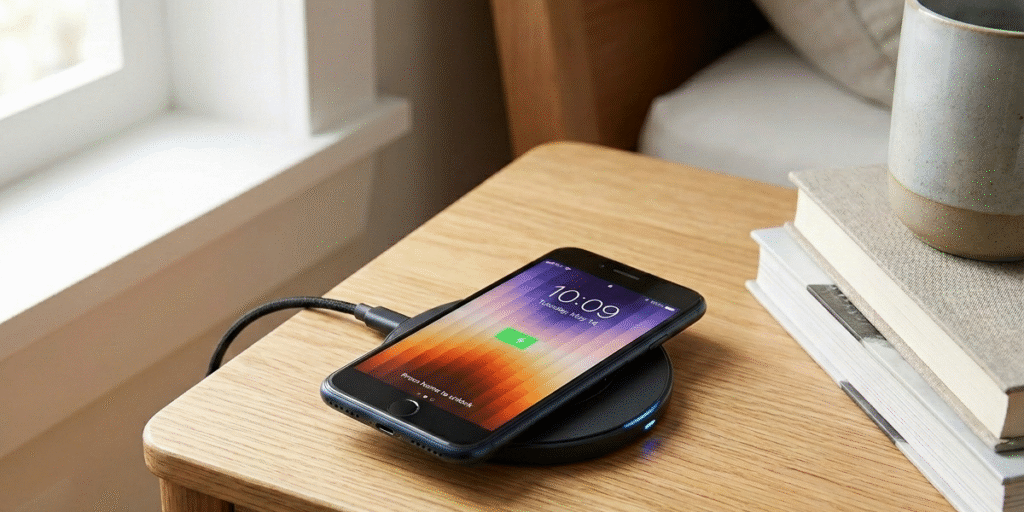
I learned this after testing a Qi pad with my SE. The phone charged without a cable. It worked well for short top-ups. I still use wired PD when I need faster fills.
Check which SE model you own and test with your pad and case before relying on wireless charging[^2].
What is wireless charging[^2]?
I wondered how power moves without a cord.
Wireless charging sends energy through magnetic induction. A coil in the charger creates a field that a coil in the phone converts back to electricity. Qi is the main standard for phones.
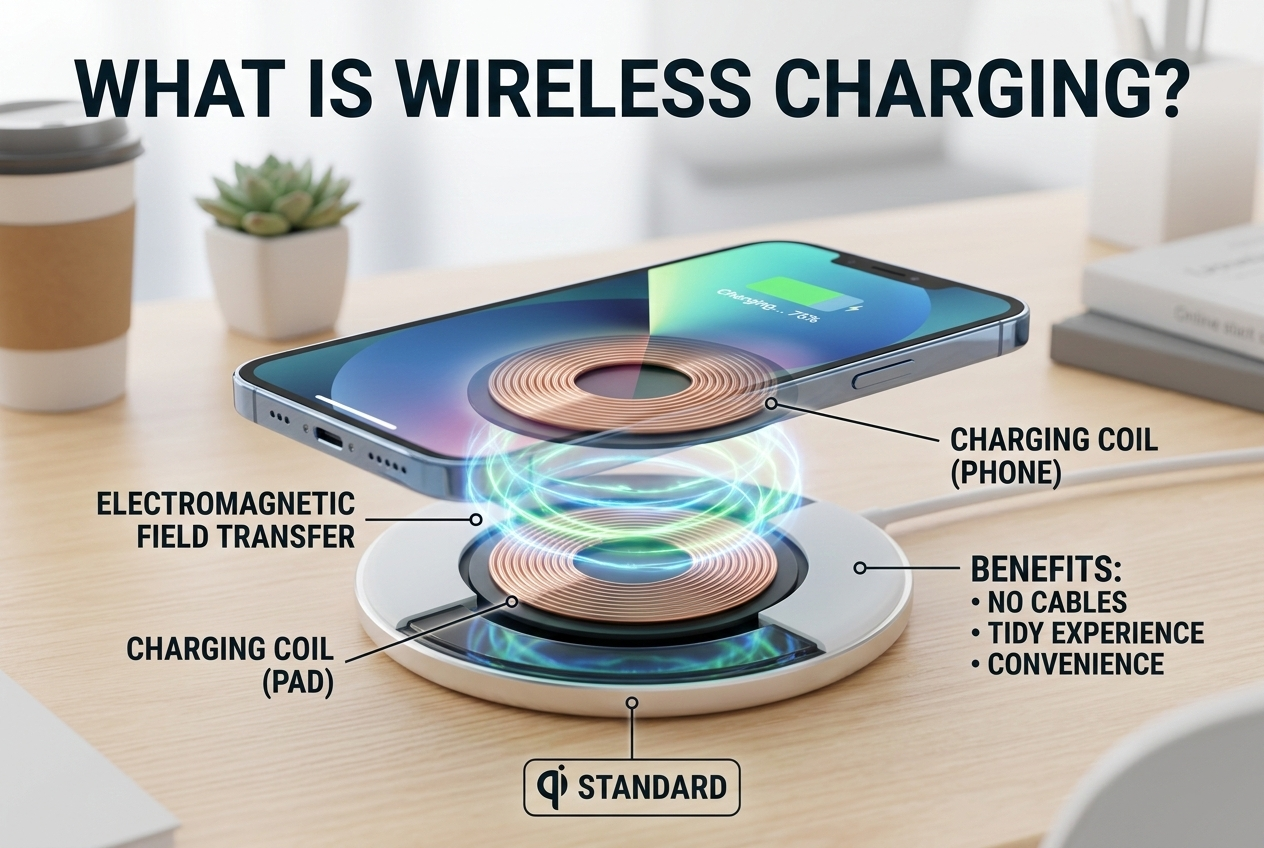
I remember the first time I placed a phone on a pad and it started charging. The pad drives alternating current through a coil. That makes a changing magnetic field. The phone’s coil picks up that field and produces current. A receiver circuit then rectifies and regulates the power for the battery. The process needs close alignment and limited distance. Foreign metal, thick cases, or objects between coils can block charging. Qi defines safety checks like foreign object detection[^6] and thermal protection[^7]. Those features make charging safer and interoperable across devices.
how Qi works, safety, and real-world limits Qi wireless charging[^4]g] uses resonant inductive coupling between two coils. The charger coil produces an oscillating magnetic field. The phone coil captures that field and induces a voltage. The phone’s internal receiver then converts that voltage to DC, regulates it, and hands it to the battery management system[^8]. Qi also defines a handshake protocol. The charger and phone negotiate power levels and enforce safety limits. That prevents over-current and overheating. Real-world limits include conversion efficiency and heat. Wireless charging typically wastes more energy than wired charging. That waste appears as heat on both the pad and the phone. Heat can trigger thermal throttling in the phone and slow or stop charging. Also, alignment matters. A small shift or a thick case reduces coupling and lowers output. For car mounts and public pads, look for foreign object detection[^6] (FOD) and thermal cutoff. I always test a wireless pad with my phone, case, and accessories to check actual performance before I depend on it.
Does iPhone SE[^1] Have Wireless Charging?
I checked Apple specs and tried my charger.
Yes, the iPhone SE[^1] (2nd generation, 2020) and iPhone SE[^1] (3rd generation, 2022) support Qi wireless charging[^4]g]. The original iPhone SE[^1] (2016) with metal back does not. Wireless rates match standard Qi speeds, not MagSafe levels.
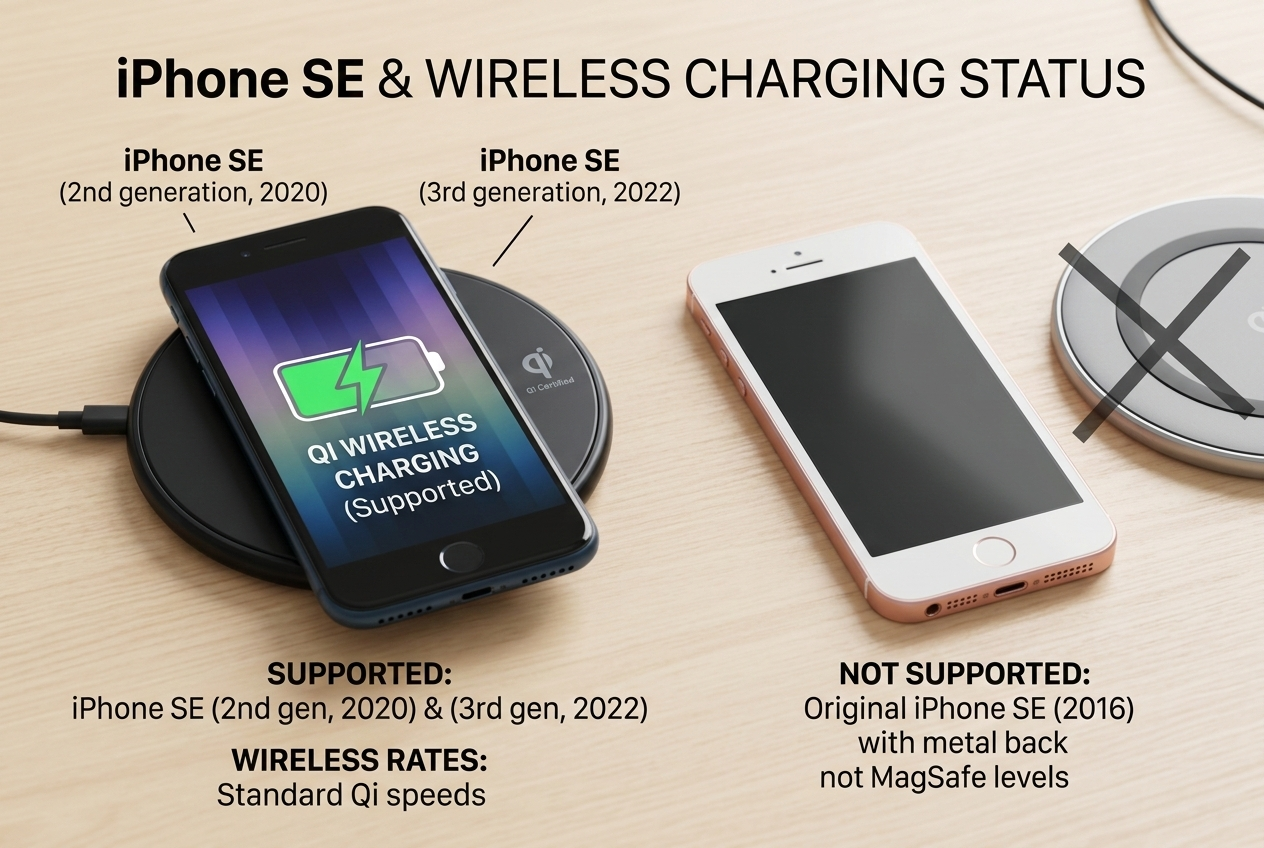
I placed my SE (2020) on several Qi pads. It charged reliably at typical wireless speeds. If you use a case, make sure it is thin and wireless-friendly. For faster charging, wired USB-C to Lightning[^9] with a PD adapter still charges quicker.
real charge rates, model differences, and practical tips Not all SE units are equal. The 2016 SE uses an aluminum body. It cannot charge wirelessly because it lacks a glass back and internal coil. Apple added Qi support with the glass-backed iPhone SE[^1] 2020 and maintained it on the 2022 SE. In real use, wireless power for these SE models commonly ranges from 5W to 7.5W on many chargers. Apple has historically limited iPhones to around 7.5W on some certified chargers, though actual output depends on the pad, adapter, and cable feeding the pad. If you use a case, pick a thin, non-metallic one. Metal or thick cases reduce efficiency or block charging. Heat matters too. Wireless charging produces more surface heat than wired charging. That can trigger the phone to slow charging to protect battery health. For fast top-ups between meetings, wired PD with a proper adapter still gives the quickest result. For convenience and cable-free desk setups, Qi pads work fine with the SE 2020/2022 models.
A iPhone SE[^1] e tshegetsa MagSafe?
I wondered if the SE snaps to MagSafe chargers like newer iPhones.
No. iPhone SE[^1] models do not have built-in MagSafe magnetic hardware. They will charge on MagSafe chargers as a standard Qi device but will not use the MagSafe magnetic snap or its faster, optimized power modes.
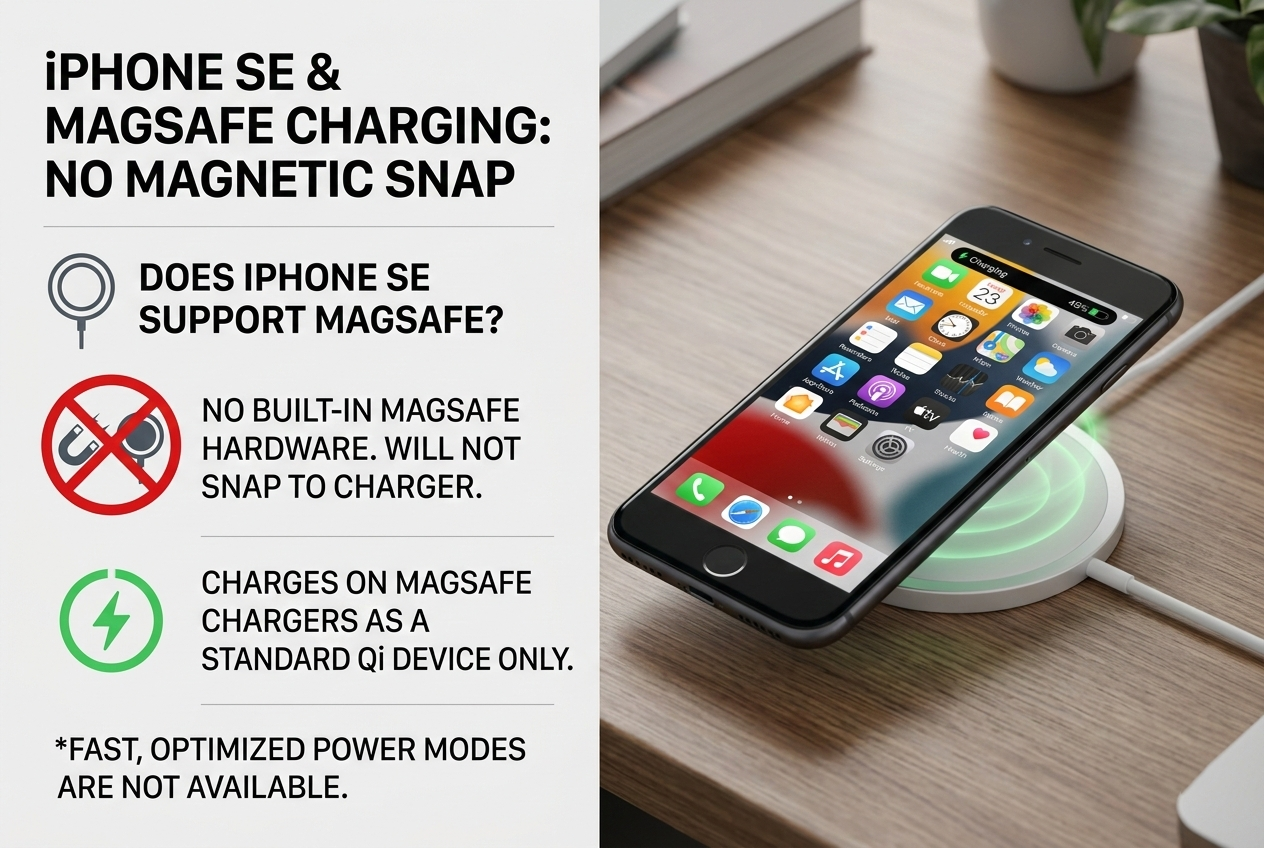
I placed an SE on a MagSafe charger. It charged, but it did not snap into place. It also did not reach the higher MagSafe wattages that MagSafe-capable iPhones can use. If magnetic alignment matters, consider MagSafe accessories or a MagSafe-capable iPhone.
MagSafe differences, accessories, and backward compatibility MagSafe combines a ring of magnets with a charging coil and a protocol for higher power and accessory detection. Phones with MagSafe hardware get a magnetic snap that keeps the phone aligned over the coil. This alignment improves efficiency and reduces heat from misalignment. MagSafe also allows some models to negotiate higher wireless power safely. The iPhone SE[^1] lacks this magnet array. A MagSafe charger will treat the SE as a standard Qi device. It will charge, but alignment will rely on placement and the mount. Some third-party magnetic cases add magnets, but they can interfere with wireless charging[^2] or trigger foreign object detection[^6]. Adding magnets or metal plates near the coil can reduce performance or cause safety issues. If you need secure magnetic mounting in the car or on the desk, consider MagSafe-ready models like iPhone 12 or newer. Otherwise, Qi pads and non-magnetic mounts work well with SE 2020/2022.
Conclusion
Does the iPhone SE[^1] support wireless charging[^2]? Yes, but only the glass-back iPhone SE[^1] (2020 and 2022) supports Qi wireless charging[^4]g] You can use any Qi-compatible charger to wirelessly charge it. Although the iPhone SE[^1] does not offer the latest MagSafe technology[^3], its support for Qi wireless charging[^4]g] provides a convenient and efficient way to charge your device without the need for cables.
[^1]: Find out the specific models of iPhone SE that support wireless charging and their features. [^3]: Discover how MagSafe technology enhances wireless charging and accessory compatibility. [^4]: Learn about the Qi standard, its advantages, and how it enables wireless charging. [^5]: Understand the design choices behind glass backs in smartphones and their impact on wireless charging. [^6]: Understand how foreign object detection enhances safety during wireless charging. [^7]: Learn about the safety features in wireless charging that prevent overheating. [^8]: Learn how battery management systems optimize charging and prolong battery life. [^9]: Discover the benefits of using USB-C to Lightning for faster wired charging.