Wireless charging has become a convenient and popular way to power up your devices. But with so many new features being added to smartphones, you may be wondering: Does the iPhone 11 support wireless charging?
In this article, we will explore what wireless charging is, whether the iPhone 11 supports it, and if it’s compatible with MagSafe technology[^1].
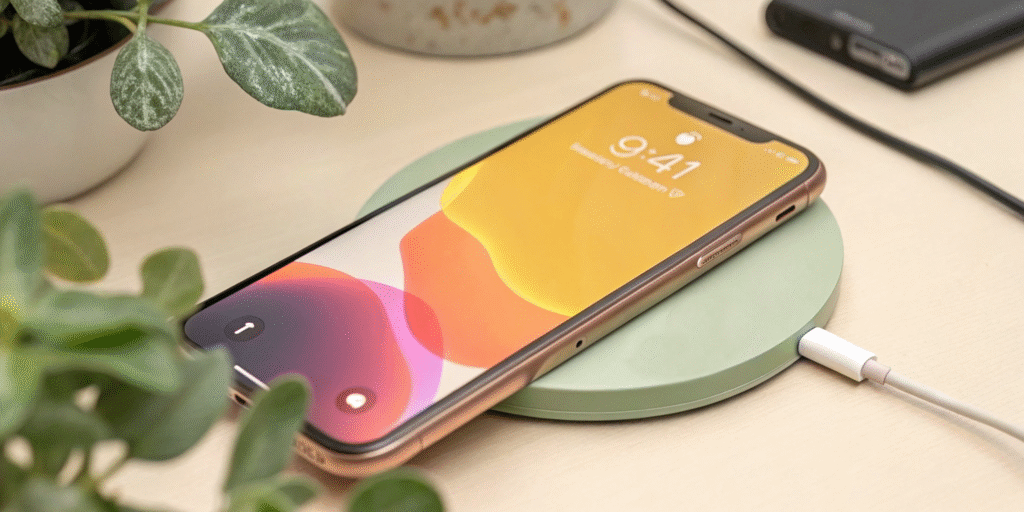
Yes. The iPhone 11 supports Qi wireless charging. It charges wirelessly at standard Qi speeds but does not have Apple MagSafe’s magnetic alignment or the faster MagSafe charging levels.
I learned this after borrowing a wireless pad to top up between meetings. The phone charged on the pad without cables. It worked well for short boosts. I still use wired charging when I need faster fill-ups.
Before you buy a pad or mount, check charging speed[^2], case thickness, and whether you need magnetic alignment.
What is wireless charging?
I wondered what actually moves power without a cord.
Wireless charging uses electromagnetic induction[^3]. A transmitter coil in the charger creates a magnetic field that a receiver coil[^4] in the phone converts back to electricity. Qi is the common standard.
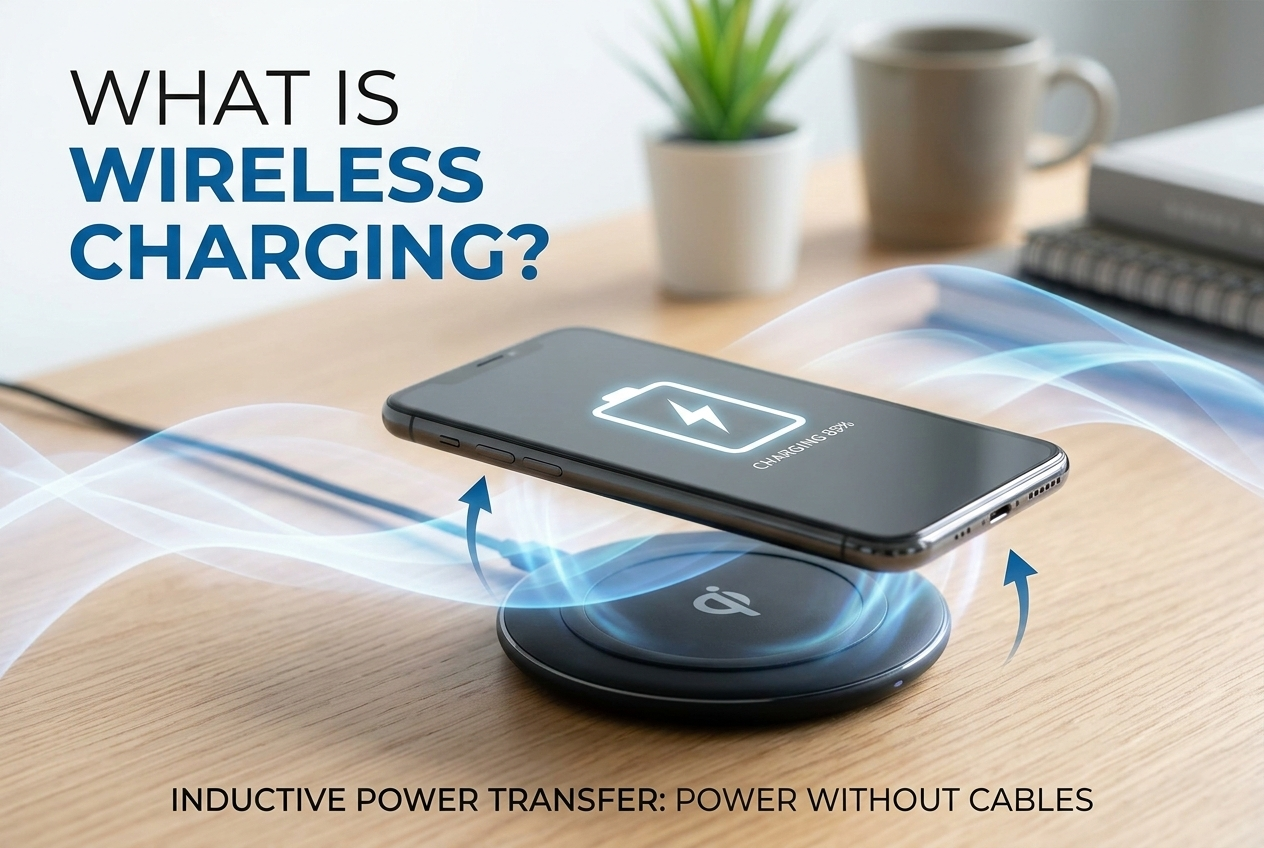
I remember the first time I put my phone on a pad and it just started charging. The pad sends alternating current through a coil. That creates a changing magnetic field. The phone’s coil picks up that field and generates current to charge the battery. The process needs alignment and close distance. Foreign metal or thick cases can block it. Standards like Qi define input and output levels, safety checks, and foreign object detection. That keeps charging safe and interoperable across brands.
how Qi works, safety, and real-world limits Qi wireless charging relies on resonant inductive coupling. The charger’s coil and the phone’s coil form a coupled circuit. When the charger drives current through its coil, it creates an oscillating magnetic field. The phone’s coil, when placed nearby, picks up induced voltage. A receiver circuit rectifies and regulates that voltage to feed the battery management system[^5]. Qi specifies handshake and power negotiation so the charger and phone agree on safe power levels. Safety features include foreign object detection (FOD), over-temperature protection, and auto-shutdown when misaligned. Real-world limits are efficiency losses and heat. Qi pads often deliver 5W to 15W nominally, but real output can be lower due to alignment, coil distance, and case materials. Thick cases, metal mounts, or objects between the coils reduce coupling and may stop charging. For in-car mounts or public pads, look for FOD and thermal cutoffs[^6] to avoid overheating. I always test a wireless pad with my phone and case to confirm actual performance before relying on it for long trips.
Does iPhone 11 Have Wireless Charging?
I checked Apple’s specs and tried a Qi pad myself.
Yes. The iPhone 11 supports Qi wireless charging up to the standard wireless rates supported by Apple at release. It does not include MagSafe magnets[^7] or MagSafe’s faster charging speed[^2]s.
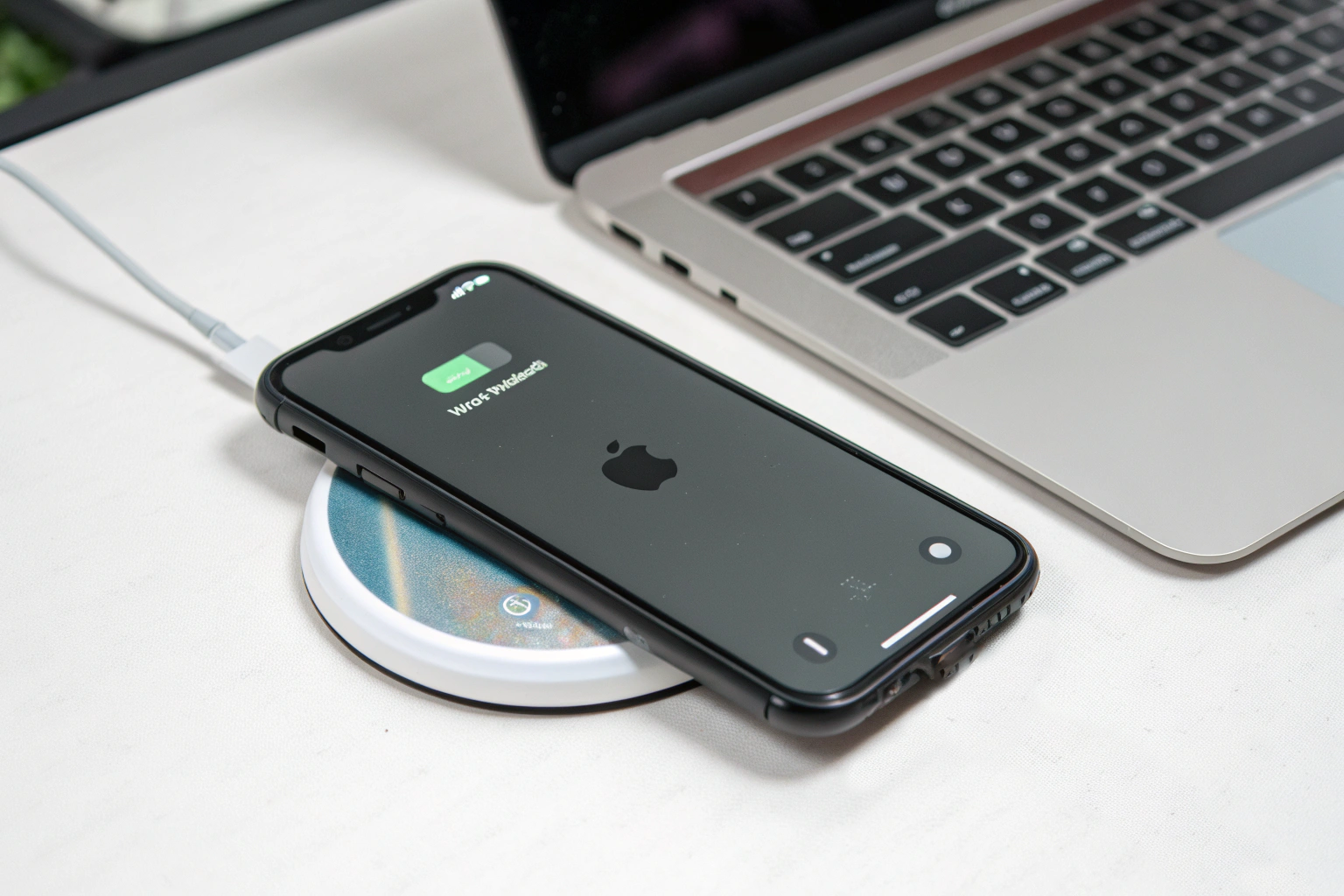
I put my iPhone 11 on several Qi pads. It charged reliably at everyday speeds. When I tested with a MagSafe charger, the iPhone 11 charged but without magnetic snap and without MagSafe’s optimized wireless power delivery. That means you lose the convenience of precise magnetic alignment and the higher MagSafe wattage available on later models.
real charge rates, cases, and practical tips In practice, the iPhone 11 charges on Qi pads at common wireless power levels. Typical real-world numbers are 5W to 7.5W on many pads. Apple’s own guidance historically allowed 7.5W wireless charging for iPhones with compatible chargers and adapters, though actual speed depends on the charger, cable, and adapter wattage. If you use a case, make sure it is thin and wireless-friendly. Thick or metal cases can block the signal. For car mounts, choose designs that do not put metal between the coil and phone. Also note heat. Wireless charging generates more heat than wired charging. When the phone warms, it may throttle charging to protect the battery. For faster fills, wired USB-C to Lightning[^8] with a PD adapter remains quicker. Still, Qi pads are handy for topping up when you can’t use a cable. I recommend testing the charger, adapter, and cable combination to confirm the actual wireless power you get with an iPhone 11.
A iPhone 11 e tshegetsa MagSafe?
I wanted to know if my iPhone 11 works like newer iPhones with magnetic snap.
No. The iPhone 11 does not have MagSafe hardware. It can charge on MagSafe chargers but it will not use MagSafe’s magnetic alignment or higher MagSafe charging modes.
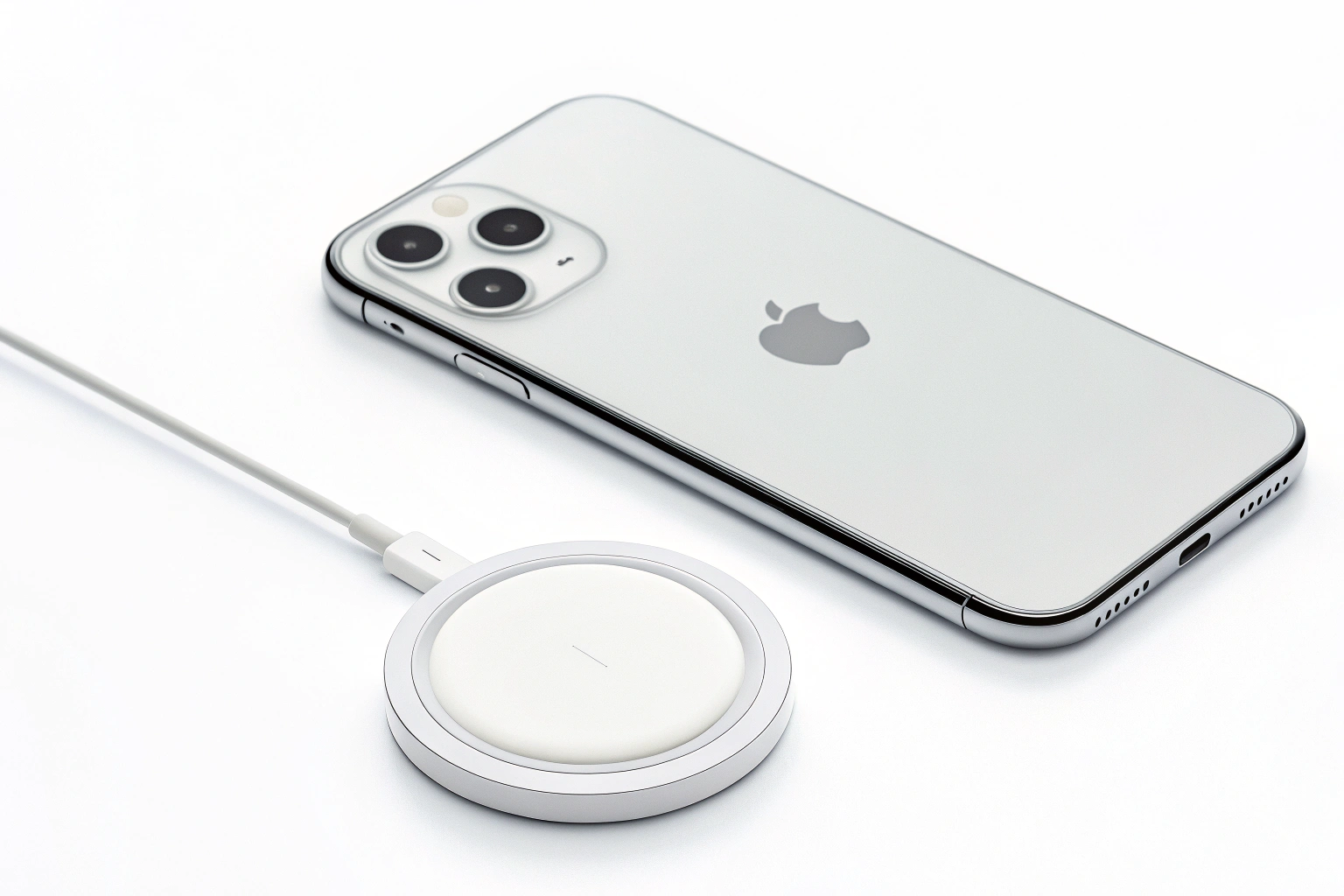
I tried placing an iPhone 11 on a MagSafe charger. It charged as a standard Qi device. The phone did not snap into a magnetically aligned position. It also did not reach the higher wattages Apple advertises for MagSafe on compatible iPhones. If you want magnetic mounting and faster MagSafe wireless charging, you need an iPhone model with MagSafe hardware (iPhone 12 and newer).
MagSafe differences, accessories, and backward compatibility MagSafe is more than magnets. It includes a ring of magnets for precise centering and a protocol that supports higher wireless power delivery and accessory communication. iPhones with MagSafe hardware can clamp to mounts and chargers with secure magnetic alignment. That improves efficiency by keeping the coils aligned. MagSafe can also support higher power levels and accessory interactions like cases and wallets designed for the magnet array. The iPhone 11 lacks that magnetic ring. As a result, a MagSafe charger treats it as a standard Qi device. It will charge but without snap-in alignment and without the MagSafe speed benefits. For users who want magnetic mounting in cars or on desks, third-party magnetic cases or adapters may help. But adding magnets or metal can interfere with wireless charging or trigger foreign object detection. If magnetic alignment matters, consider upgrading to a MagSafe-capable iPhone model. Otherwise, Qi pads and standard wireless mounts remain useful for the iPhone 11.
Conclusion
Does the iPhone 11 have wireless charging? Yes, it does. It supports Qi wireless charging, so you can charge it wirelessly with compatible chargers.
Does the iPhone 11 support MagSafe? No, MagSafe is not supported on the iPhone 11. MagSafe was introduced with the iPhone 12 series and is only available on those models and later.
If you're looking for faster wireless charging and a more seamless wireless accessory experience, consider upgrading to a newer iPhone model that supports MagSafe. However, the iPhone 11 still offers a solid wireless charging experience using the Qi standard.
[^1]: Understand how MagSafe enhances the charging experience and accessory compatibility. [^2]: Find out the factors that influence wireless charging speeds for better performance. [^3]: Delve into the science of electromagnetic induction and its role in wireless charging. [^4]: Explore the function of the receiver coil and its importance in the charging process. [^5]: Understand how battery management systems optimize charging and prolong battery life. [^6]: Learn how thermal cutoffs protect your device from overheating during charging. [^7]: Explore the technology behind MagSafe magnets and their benefits for iPhone users. [^8]: Learn about the advantages of USB-C to Lightning charging for faster power delivery.