I once feared fast charging[^1] after my phone heated and slowed down during a full-day shoot.Fast charging has become a standard feature on modern smartphones, promising to power up your device in minutes rather than hours. But many users still worry: Does fast charging[^1] damage your phone’s battery? To answer this, we need to understand how fast charging[^1] works and how it affects battery health over time.
Fast charging raises battery temperature[^2] and cycle stress, but modern phones manage this. Proper chargers and habits limit long-term harm. Fast charging does not inherently ruin batteries when used correctly.
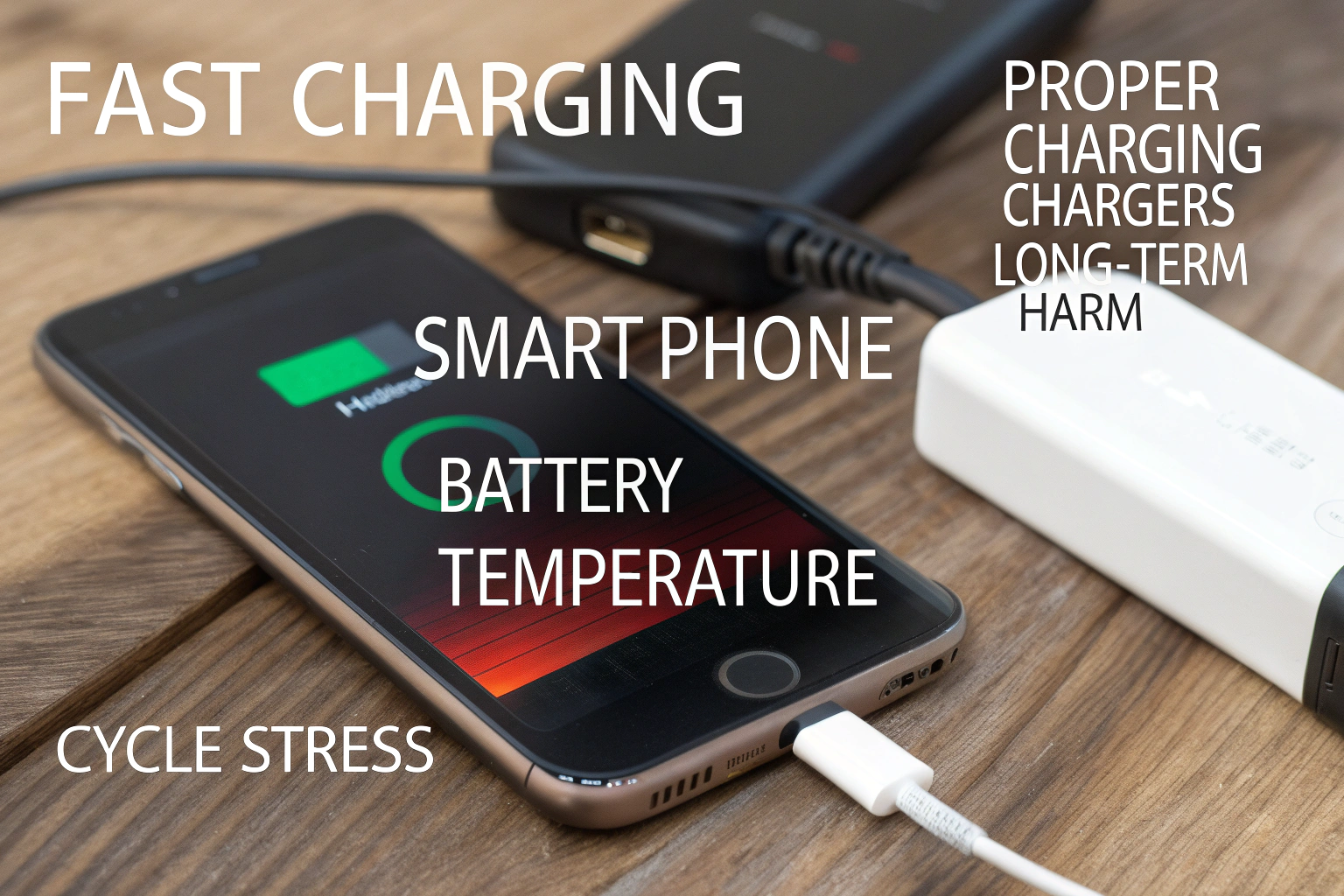
I worried after seeing battery health drop on an older phone. I learned the facts. Fast charging speeds up energy input. That creates more heat and stress than slow charging. Phone makers use battery management, thermal controls[^3], and smart charging[^4] to protect cells. Using the right charger, avoiding heat, and not leaving phones at 100% on a hot night keeps battery life healthy. Fast charging is safe when used with certified chargers and sensible habits.
I use fast charging[^1] daily but follow simple rules to protect battery health.
Is fast charging[^1] harmful for your phone?
I examined battery chemistry, phone controls, and real-world effects to answer this.
Fast charging can increase wear because it raises temperature and causes greater stress per charge cycle. But modern devices limit current, manage heat, and use algorithms to protect battery life. Harm is gradual, not immediate, with correct chargers and usage.
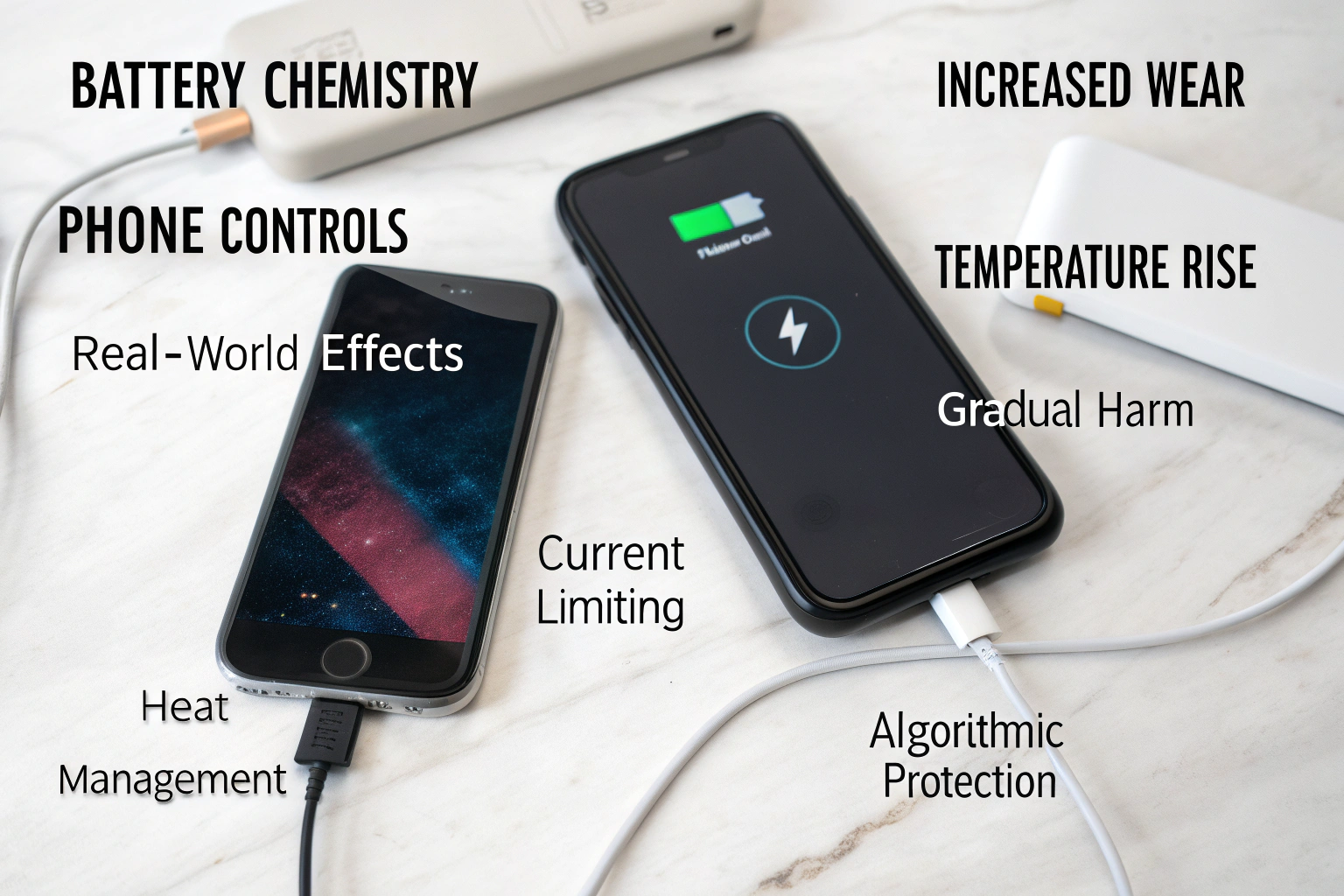
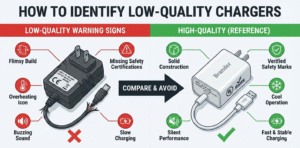
Lithium-ion batteries age through chemical changes tied to charge cycles[^5], heat, and high voltage. Fast charging pushes more current into the battery in less time. That tends to produce more heat and higher cell voltage during the final charge phase. Both factors accelerate capacity loss over many cycles. Phone makers add protections. They throttle charging when temperatures rise. They stop charging at 100% and may use trickle methods. Some phones use two-cell charging or split charging to reduce stress. Certified fast chargers communicate with the phone to negotiate safe power levels. Poor or counterfeit chargers[^6] may bypass safeguards and harm batteries. In practice, the average user will see a small extra wear from frequent fast charging[^1]. The impact is small compared to natural aging from cycles and heat. For most people, the convenience outweighs the gradual loss, but habits still matter.
Is it better to slow or fast charge a phone battery?
I compare pros and cons and give practical advice for everyday use.
Slow charging is gentler and produces less heat, so it can slightly extend battery lifespan. Fast charging is convenient and, with proper management, produces only modest extra wear. Mix both: use fast charging[^1] when needed and slow charging overnight.
Slow charging delivers lower current over a longer time. That reduces heat. It also reduces stress during the critical top 20% of charge where voltage is highest. Slow charging is best overnight and for routine top-ups. Fast charging is ideal when you need a quick boost. It is designed for convenience and emergency use. Many phones now include adaptive charging[^7] that slows the final phase and protects the battery. If you want to maximize long-term capacity, keep most charges between 20% and 80%. Avoid frequent full 0→100 cycles. Use slow charging for overnight fills. Use fast chargers sparingly for short boosts before leaving. Also avoid charging in hot places like direct sunlight or under heavy use (gaming) because heat compounds damage. In sum, neither method "destroys" batteries when used properly. Slow charging is kinder. Fast charging is fine when needed.
Does super fast charging[^8]g](https://www.pcmag.com/how-to/mobile-phone-fast-charging-is-everywhere-is-it-dangerous)[^1] drain battery faster?
I looked at super fast charging[^8]g](https://www.pcmag.com/how-to/mobile-phone-fast-charging-is-everywhere-is-it-dangerous)[^1], heat, and cycle impact to clarify long-term effects.
Super fast charging[^1] increases battery stress and heat more than standard fast charging[^1]. That can speed capacity loss over many cycles. But built-in controls and moderated use keep the effect modest for most users.
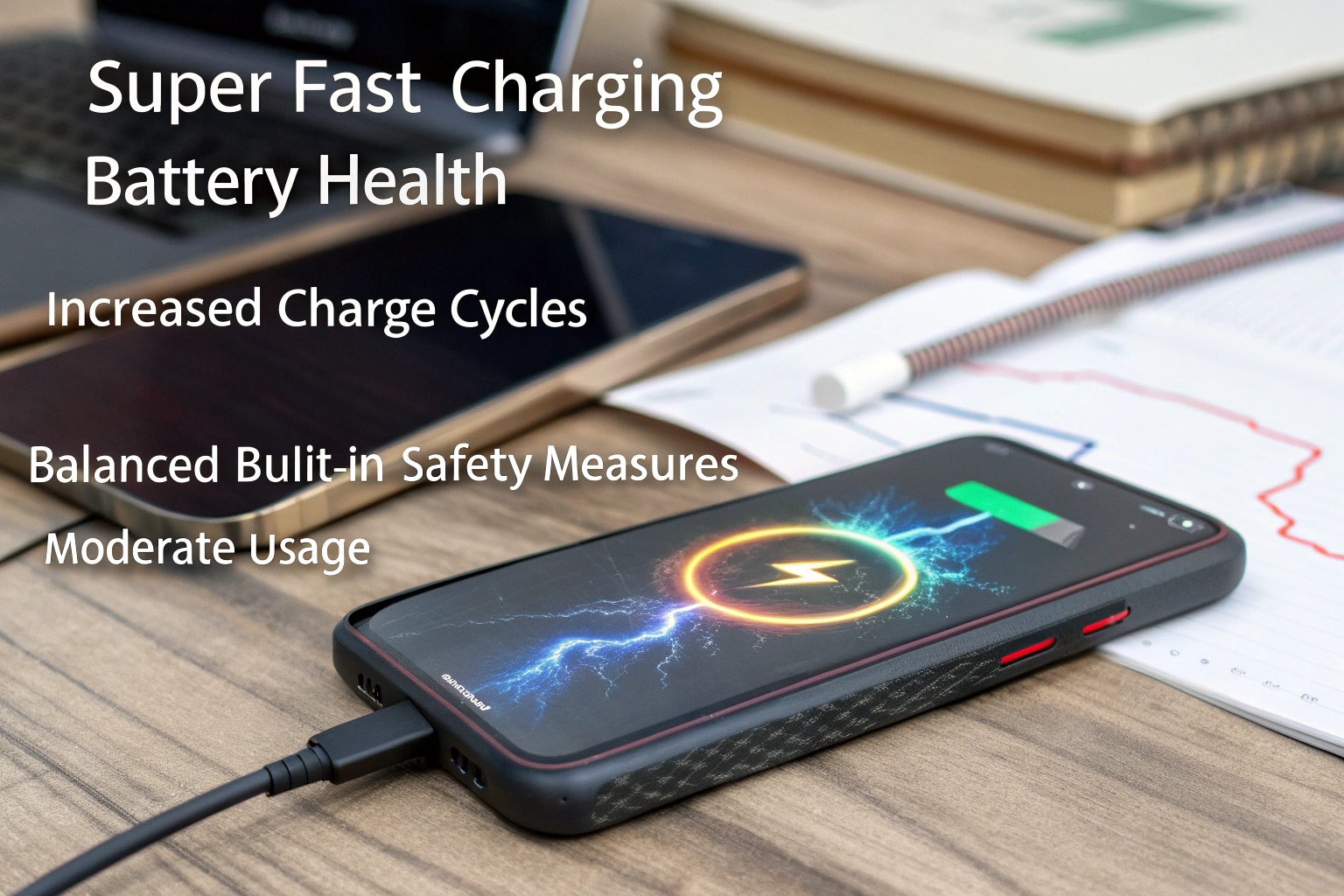 Super fast charging[^1] (100W+ or very high current) pushes cells hard. Manufacturers use split-cell designs, advanced cooling, and special charge profiles to limit damage. Even so, higher power raises peak temperatures and the rate of chemical degradation per cycle. The result is a slightly faster decline in maximum capacity compared with moderate charging. How much faster depends on usage patterns. If you always use super fast charging[^8]g](https://www.pcmag.com/how-to/mobile-phone-fast-charging-is-everywhere-is-it-dangerous)[^1] and frequently charge from low to full, you will see a faster capacity drop over years. If you use it occasionally, the practical impact is small. Phone software often reduces sustained peak power when it detects heat. Some brands limit super fast charging[^8]g](https://www.pcmag.com/how-to/mobile-phone-fast-charging-is-everywhere-is-it-dangerous)[^1] to lower percentages or require original chargers. To reduce wear, avoid frequent full rapid charges, keep the phone cool during charging, and prefer slower charging at night. For me, I use super fast charging[^8]g](https://www.pcmag.com/how-to/mobile-phone-fast-charging-is-everywhere-is-it-dangerous)[^1] only when I need a quick top-up.
I balance convenience and battery care: fast when needed, slow overnight, and keep the phone cool.
Conclusion
Fast charging does not damage your phone’s battery when used correctly. Modern smartphones are engineered to handle fast and even super fast charging[^8]g](https://www.pcmag.com/how-to/mobile-phone-fast-charging-is-everywhere-is-it-dangerous)[^1] safely through intelligent power management.
That said, heat is the real enemy of battery health. While slow charging is gentler, fast charging[^1] is perfectly safe for daily use—especially when balanced with good charging habits[^9].
[^1]: Explore the pros and cons of fast charging to understand its impact on your device's battery life. [^2]: Learn how battery temperature influences performance and longevity, crucial for smartphone users. [^3]: Understand how thermal controls protect your device from overheating and extend battery lifespan. [^4]: Find out how smart charging optimizes battery health and charging efficiency for your device. [^5]: Learn about charge cycles and their impact on battery longevity, essential for smartphone users. [^6]: Explore the risks of using counterfeit chargers and their potential harm to your smartphone's battery. [^7]: Discover how adaptive charging can enhance battery life and efficiency for your smartphone. [^8]: Investigate the effects of super fast charging on battery health and performance for informed usage. [^9]: Learn effective charging habits to maintain your smartphone's battery health and longevity.