When traveling internationally, many people are unsure whether their chargers can handle different voltages. This often leads to confusion between travel chargers, travel adapters, and voltage converters. Understanding the differences is essential to avoid damaging your devices or chargers.
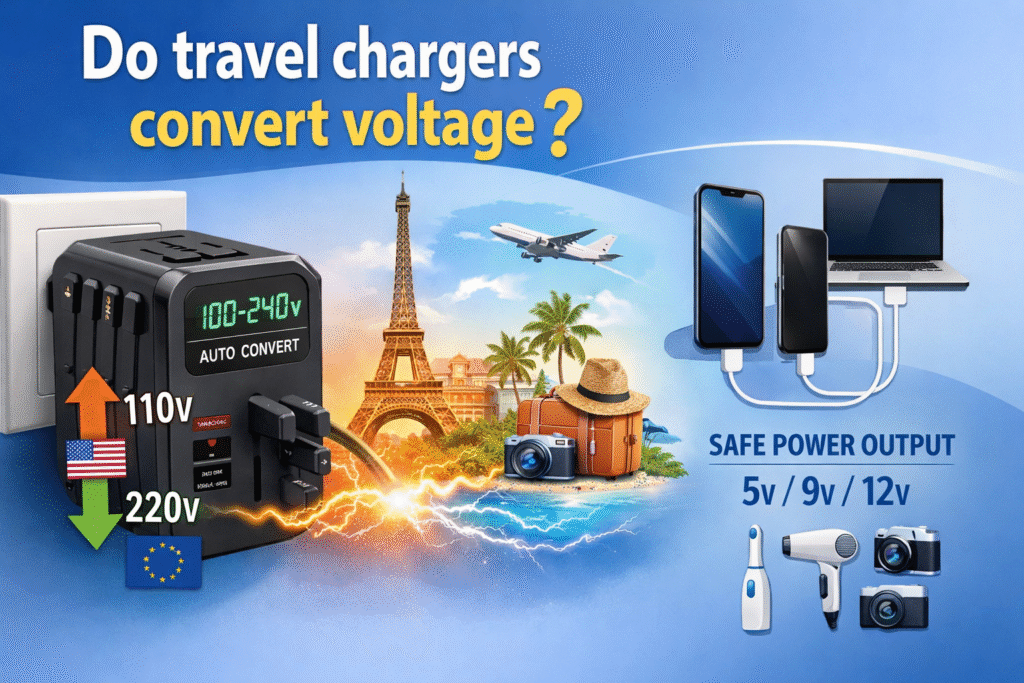
Most travel adapters do not change voltage; only voltage converters or chargers with wide input ranges handle different mains voltages safely.
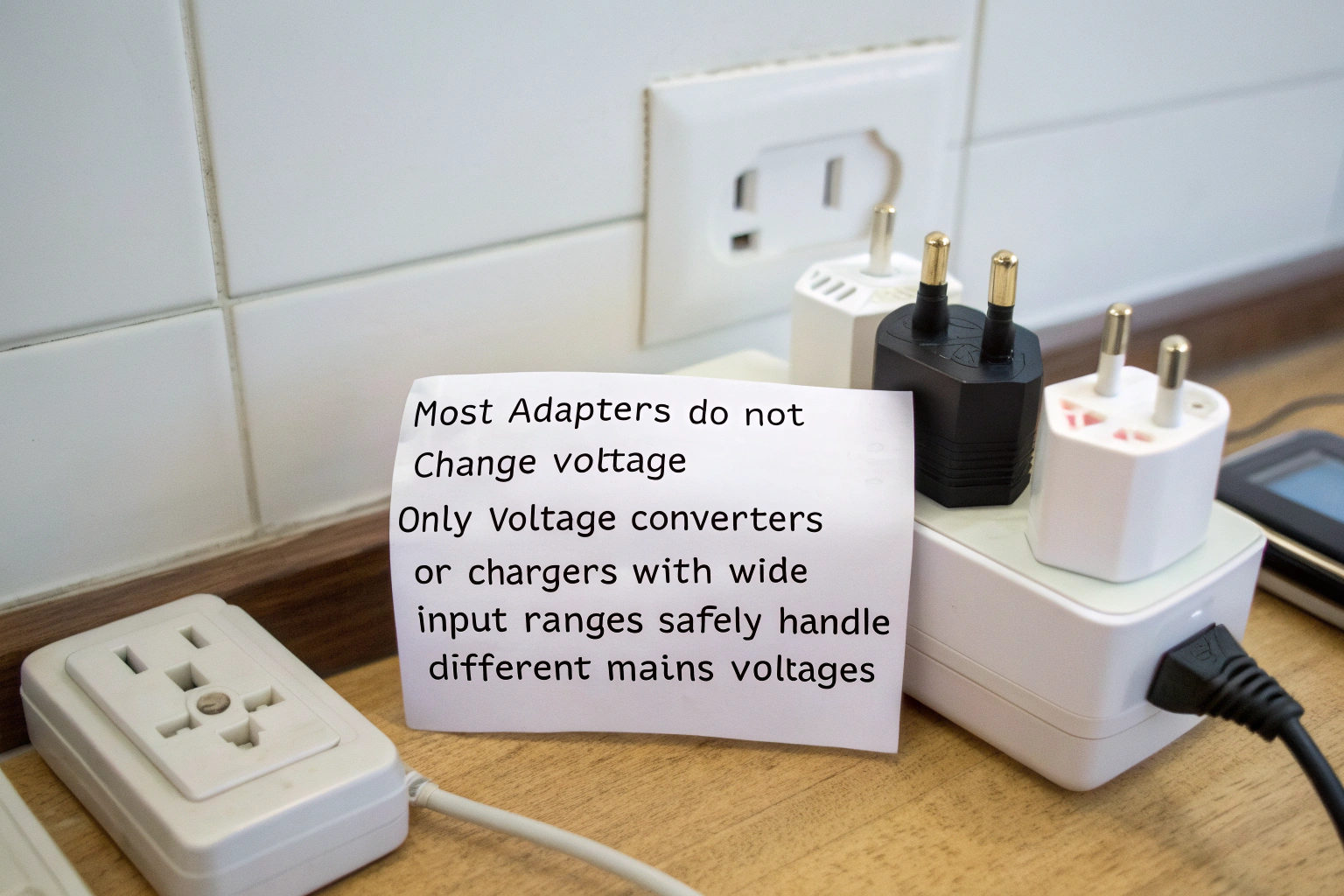
In short, most modern travel chargers do convert voltage internally, but not all travel accessories do. Let’s break it down.
Does a travel adapter change voltage?
I explain the core difference between plug adapters and voltage converters and the risks of assuming they are the same.
A travel plug adapter only adapts plug shape. It does not change the mains voltage. Only a voltage converter or an auto-ranging charger changes voltage.
A travel plug adapter simply lets your plug fit a foreign socket. It makes no electrical changes. Many wall outlets worldwide supply different voltages. For example, the US commonly uses ~120V, while Europe uses ~230V. If your device is not rated for the local voltage, a plug adapter alone will not help. Voltage converters (also called transformers) step voltage up or down. They come in heavy, bulky forms for high-power appliances and smaller electronic converters for low-power devices. Many modern phone or laptop chargers are "auto-ranging" and accept 100–240V. Those chargers include internal power supplies that convert incoming voltage to the DC output the device needs. For those, you only need a plug adapter for the right socket shape. Always check the input label on the charger. If it shows "100-240V 50/60Hz", it works globally without a voltage converter. If it only lists one voltage like "120V", you need a converter in a 230V country.
Do portable chargers need a voltage converter?
I cover power banks, USB power banks, and in-car chargers to show typical behavior and exceptions.
Portable power banks and USB chargers usually do not need a converter. They draw power from USB or batteries and have internal electronics that handle varied input when connected through wall chargers rated for 100–240V.
Most portable power banks charge via a USB input supplied by a wall charger or laptop. The power bank itself accepts low-voltage DC (usually 5V via USB, or 5–20V via USB-C PD) and charges its internal cells with built-in circuitry. The wall charger that supplies the USB input is the component that must be compatible with local mains voltage. If you use a wall charger rated 100–240V, the power bank will charge fine anywhere with a plug adapter. If your wall charger only supports a single mains voltage, you need a voltage converter for that charger, not the power bank. Some portable devices include internal AC inverters to power AC devices from the battery. Those inverters have limits and often need a converter only when you plug AC appliances rated for a different mains voltage. For example, using a travel hairdryer with a power bank inverter can cause problems if the device expects the other mains voltage. In short, portable USB power banks rarely need voltage converters. The wall charger you use with them is the critical part to check.
Dive deeper: portable charging tips and practical checks (150+ words) When I travel, I follow a simple routine to avoid voltage problems. First, I check every charger’s input label. If it reads "100–240V 50/60Hz", I know it will accept local mains voltage anywhere. If it lists a single value like "120V", I either leave it at home or use a proper voltage converter in high-voltage countries. Second, I separate plug adapters from voltage converters in my bag. Plug adapters are light and small. Voltage converters are heavier and made for appliances that need a different mains voltage. For electronics like phones, tablets, laptops, and most modern chargers, I rely on auto-ranging chargers and only carry small plug adapters. Third, I match the charger type to the device. USB-C PD chargers that say "100–240V" can supply high power safely worldwide. For devices with internal AC adapters or older chargers, I avoid cheap converters and choose branded, tested converters if needed. Fourth, I consider frequency (50Hz vs 60Hz) for some appliances. Many modern chargers tolerate both frequencies. Some motors or timing circuits in appliances may misbehave if frequency differs. Finally, I test gear before travel. I charge my power bank and laptop at home with the travel adapter to confirm everything works. This simple checklist has saved me from dead batteries and damaged gear.
What is the difference between a travel charger and a normal charger?
I define the two terms and explain why many "travel chargers" are just multi-plug adapters or universal chargers with extra features.
A travel charger often refers to a charger with multi-plug compatibility, foldable prongs, or universal sockets. A normal charger may be single-region and lack travel-friendly features. Functionally, modern travel chargers are usually auto-ranging like normal good chargers.
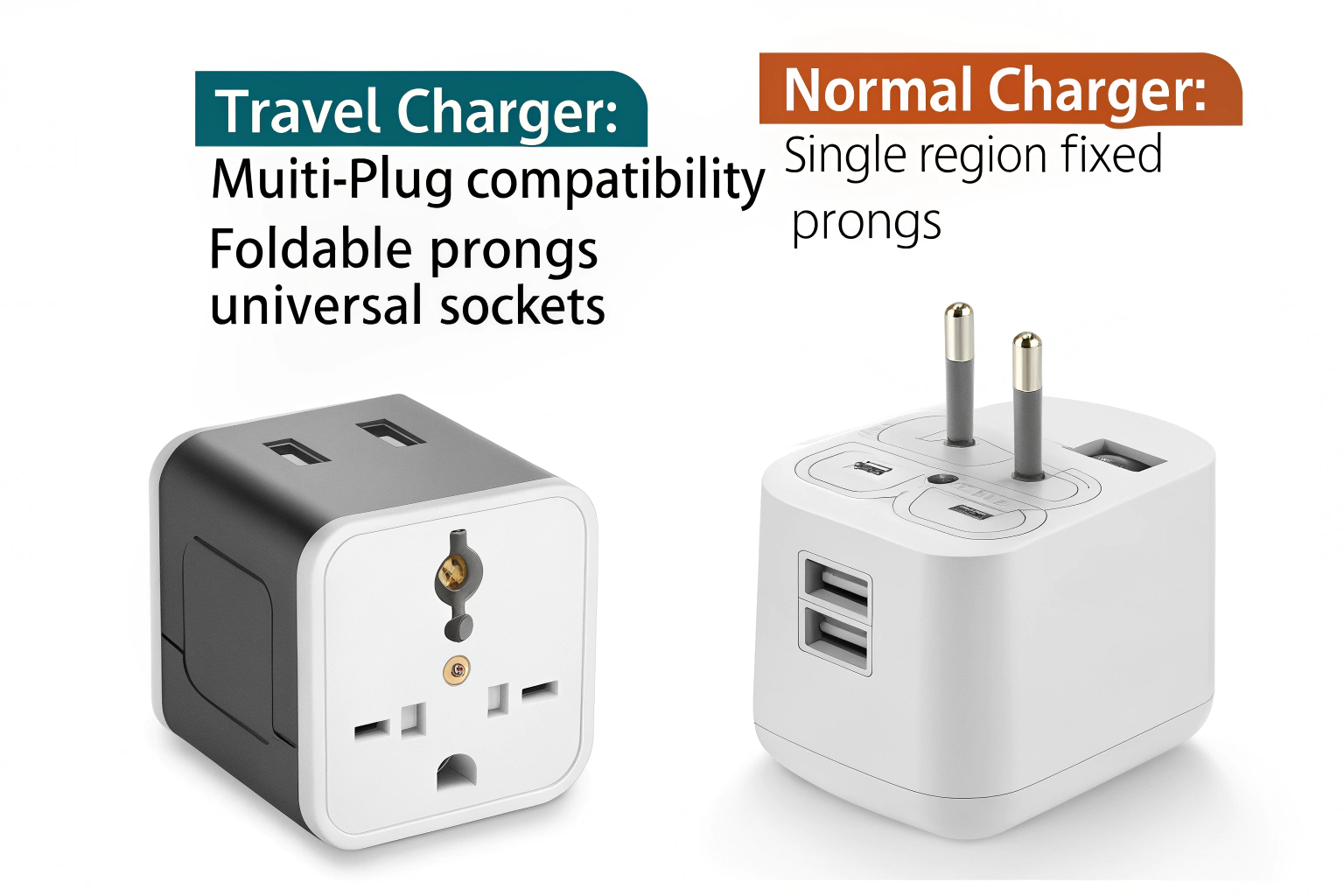
A "travel charger" in many shops is a compact unit that includes multiple plug fittings or foldable prongs. It may include USB-A and USB-C ports and sometimes PD support. A true travel-oriented product will accept 100–240V input so you can use it worldwide with only a plug adapter. A "normal charger" could be a wall adapter sold in one country and match local voltage and plug type only. That charger might not be practical overseas if it lacks the wide input range. Another difference is feature set. Travel chargers often combine ports to charge multiple devices, include surge protection, and use compact designs. Some travel chargers also include built-in USB-C PD and intelligent charging chips to negotiate safe power with devices. However, the key technical difference is not travel branding but the input voltage range and certification. Any charger rated 100–240V with proper safety marks (CE, UL, FCC, etc.) is fine for travel. Beware cheap "universal" chargers without clear input ratings or safety certifications. They can be unsafe and may damage devices or cause fires.
Dive deeper: choosing safe travel chargers (150+ words) I choose travel chargers with a strict set of criteria. First, I check the input rating and safety marks. I only buy chargers that state "Input: 100–240V 50/60Hz" and show recognized safety certifications for my destinations. Second, I prefer chargers with USB Power Delivery (PD) and at least one USB-C port. That gives me faster charging and compatibility with laptops and phones. Third, I look for build quality. A solid housing, good ventilation, and secure prongs reduce the risk of failure. I avoid thin plastic or loose plug fittings. Fourth, I consider power distribution. If I want to charge a laptop and phone simultaneously, I pick chargers that allocate power intelligently. Some multi-port chargers reduce laptop power when multiple devices connect. Fifth, I check surge protection and temperature control features. Travel environments vary and voltage spikes can occur. A charger with protection reduces risk. Sixth, I test the charger before travel. I plug my devices into it at home and watch for unusual heat or unstable charging. Finally, I keep a basic voltage converter only if I plan to use high-power AC appliances that are not dual-voltage. For typical electronics, a quality auto-ranging travel charger plus a lightweight plug adapter is enough.
Pick certified, auto-ranging chargers and reliable plug adapters to avoid voltage surprises abroad.
Conclusion
Understanding whether your charger converts voltage can save you from device damage and unnecessary purchases. In most modern electronics, especially USB chargers, voltage conversion is already built in. As long as your charger supports a wide input voltage range, a simple plug adapter is all you need for international travel.